Edinburgh’s Historic Old Town forms the ancient core of Scotland’s capital, a compact ridge of medieval streets, towering tenements, and hidden closes stretching along the Royal Mile from the crag of Edinburgh Castle to the abbey precinct of Holyrood. This area originated as a prehistoric hillfort, evolved into a royal burgh during the Middle Ages, endured Reformation conflicts and overcrowding, and now stands as a UNESCO World Heritage Site celebrated for its layered architecture and cultural resonance.
- Geological and Prehistoric Foundations
- Din Eidyn: Gododdin Hillfort and Northumbrian Conquest
- David I’s Royal Burgh and Early Medieval Layout
- Flourishing Medieval Burgh and Defensive Walls
- Mary Queen of Scots Era and Royal Drama
- Reformation Storms and Civic Consolidation
- 17th-18th Century Overcrowding and Underworld
- Enlightenment Pressures and New Town Exodus
- Victorian Slum Clearances and Rejuvenation
Geological and Prehistoric Foundations
Castle Rock, the Old Town’s dramatic foundation, surfaced 340 million times ago from stormy exertion during the Carboniferous period, forming a tough dolerite draw resistant to corrosion unlike girding sedimentary gemstone. This natural fort, rising 80 measures above the girding plain, attracted early humans during the Mesolithic period around 8500 BC, with flint tools and shell middens set up at near Cramond indicating littoral rustling communities reliant on fish, shellfish, and game.
Din Eidyn: Gododdin Hillfort and Northumbrian Conquest
Circa announcement 600, the Gododdin people, a Brythonic area straddling the Tweed- Forth fortified Din Eidyn on Castle Rock, erecting palisaded halls and defenses eternalized in the 13th- century grand Y Gododdin. This lyric describes 300 soldiers feasting on mead before their doomed stage at the Battle of Catraeth (near Catterick, circa 600), blending literal warbands with lyrical magnification to elicit a golden age of Old North resistance.
David I’s Royal Burgh and Early Medieval Layout
David I( r. 1124 – 1153) elevated Edinburgh to royal burgh status around 1130 via duty, allocating” tofts” long narrow plots facing the High Street from castle gate to Netherbow Port. merchandisers traded hair, hides, and swab, clustered around a request cross; timber- framed houses with overhanging storeys and central hearthstones housed extended families, while tradesmen enthralled alleys like Bakehouse Close.
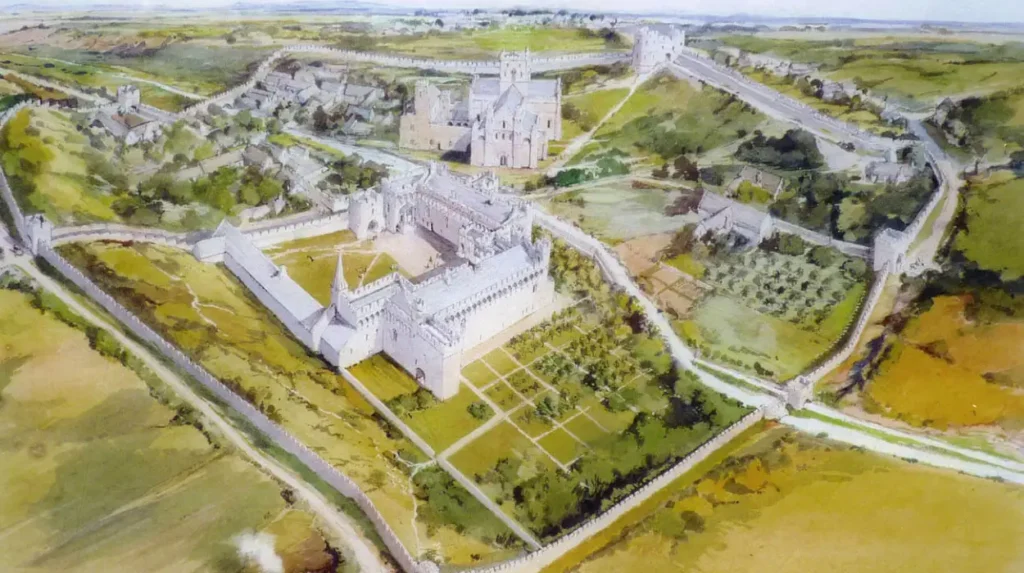
Holyrood Abbey’s foundation in 1128 by David birthed the separate Canongate burgh downhill, a mile-long ecclesiastical enclave with Augustinian canons managing estates and pilgrims. By 1170, a royal mint struck silver pennies bearing David’s bust, and the castle hosted coronations like Malcolm IV’s in 1153. The Wars of Independence scarred growth: Edward I captured the castle in 1296, holding David’s Tower; Thomas Randolph recaptured it in 1314 post-Bannockburn; English forces endured 1335–1341 before Scottish ransom funded repairs.
Flourishing Medieval Burgh and Defensive Walls
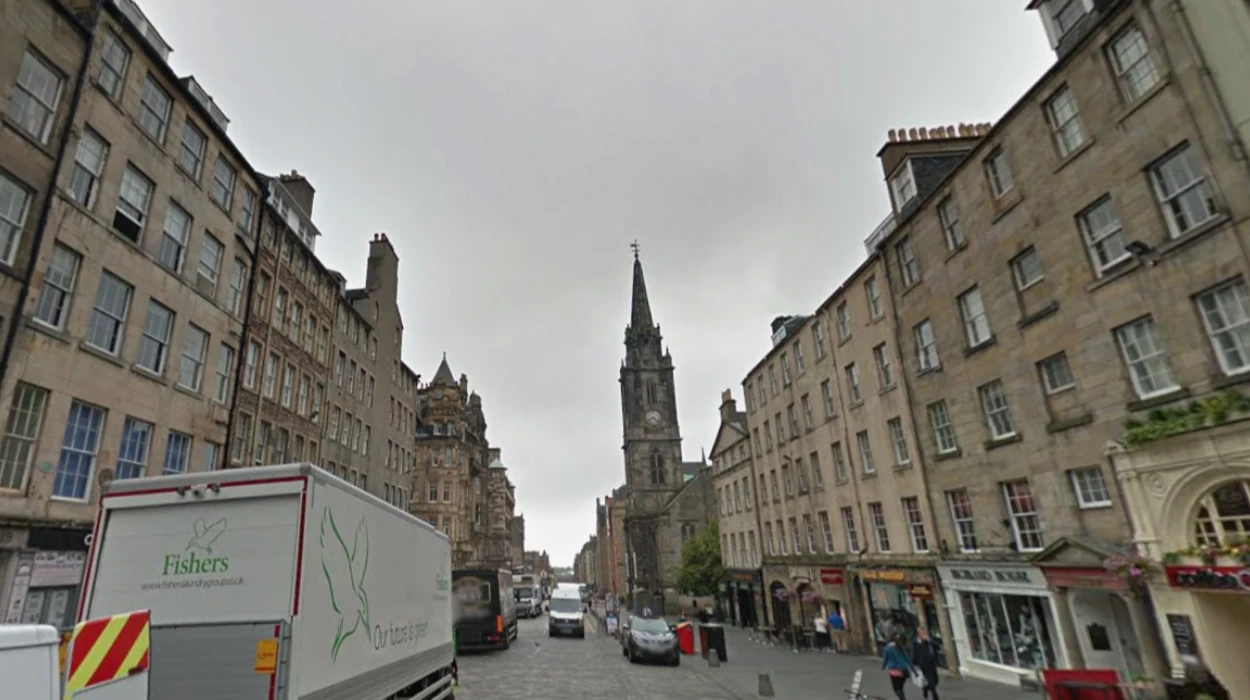
By 1365, French chronicler Froissart hailed Edinburgh as the “Paris of Scotland,” its 400 households contributing a quarter of national taxes through cloth fairs and Forth fisheries. High Street’s spine featured the Tolbooth (first timber version pre-1385, stone rebuilt 1460s) for courts, jail, and council, sited at the Heart o’ the Midlothian now a mosaic marking its scaffold.
Closes proliferated: Lawnmarket for goldsmiths and lairds, High Street for lawyers, Cowgate for butchers tanning hides in Nor Loch. St. Giles’ Cathedral (founded 1116) anchored spiritually, with trade altars and crown steeple added in 1495. The Battle of Flodden (1513), where James IV and much nobility perished, spurred the Flodden Wall: constructed 1513–1560, this 1.2-mile circuit of 24-foot-high, 6-foot-thick stone enclosed 140 acres via six ports West Port, Bristo Port, Potterrow Port—bolstered by bastions against English “Rough Wooing” raids.
Earl of Hertford’s 1544 invasion torched suburbs and gutted Holyrood, prompting stone rebuilding. Canongate’s mile boasted its own tolbooth (1591) and tron weigh-house for customs, fostering a semi-independent vibe within the royal burgh.
Mary Queen of Scots Era and Royal Drama
Mary Stuart’s 1561 triumphal entry from France unfolded pageantry along the Mile: West Port giants, Lawnmarket Herod plays, High Street mechanical angels, Mercat Cross wine fountains. Holyrood Palace apartments hosted intrigue David Rizzio stabbed 56 times in her supper room March 1566; Henry Darnley exploded at Kirk o’ Field February 1567, site now a garden plaque.
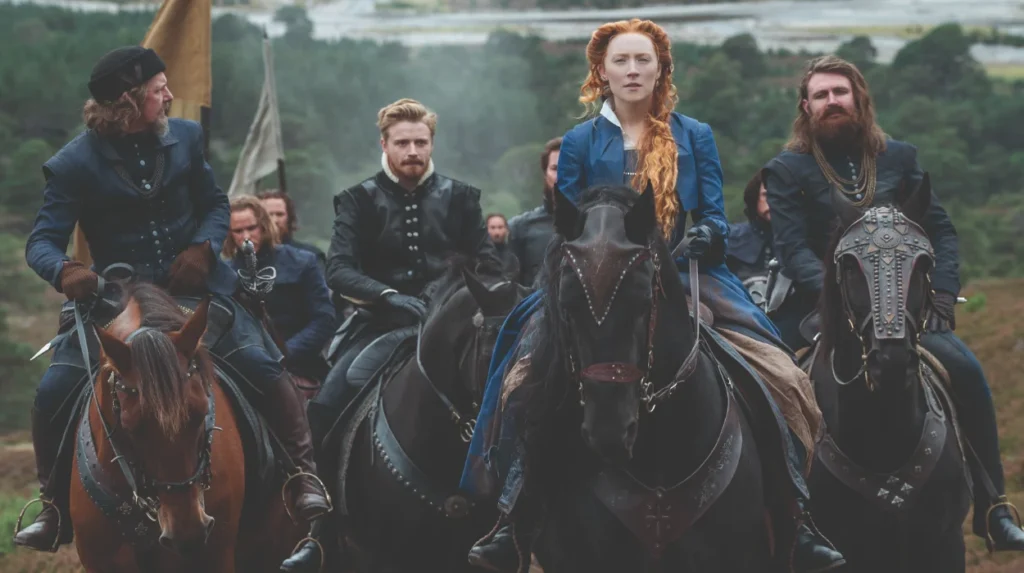
James VI’s 1567 coronation occurred at Stirling, but Old Town sieges defined the Marian civil war: pro-Mary forces held the castle until 1573 Lang Siege surrender. The palace was rebuilt 1671 by Sir William Bruce in Restoration grandeur, contrasting the ruined abbey.
Reformation Storms and Civic Consolidation
The 1560 Reformation Parliament at Parliament House abolished papal authority, stripping St. Giles’ of monastic role. John Knox preached fiery sermons there, sparking the 1564 “rascal multitude” riot when Jenny Geddes hurled a stool at the dean over an Anglican prayer book. The 1638 National Covenant, signed in Greyfriars Kirkyard amid graves, rallied Presbyterians against Charles I.
Cromwell’s 1650 invasion occupied Old Town, slighting castle defenses and quartering troops in Trinity College Kirk. Acts of Union 1707 dissolved Scotland’s Parliament in its High Street chamber amid riots torching portraits at Netherbow Port; 96 petitions decried betrayal. Porteous Riots 1736 saw Captain Porteous lynched from Tolbooth after firing on smugglers’ rescuers.
17th-18th Century Overcrowding and Underworld
By 1750, 20,000 souls crammed within walls at 1.5 persons per square yard Europe’s densest urban core with tenements soaring 11–15 storeys, landings sharing cesspit privies overhanging alleys. Nor Loch, a stagnant tannery dump and suicide spot, bred miasma; Mary King’s Close bricked plague victims alive in 1645 (half of 30,000 perished, Greyfriars mass graves).
Social shadows deepened: Burke and Hare murdered 16 in Tanner’s Close 1828 for anatomy schools; World’s End Close named for Netherbow’s finality; Grassmarket gibbets entertained crowds. Yet literati flourished David Hume at Rampayne’s tavern, James Boswell in Fortune’s Close, Adam Smith debating in wynds.
Enlightenment Pressures and New Town Exodus
Craig’s 1766 New Town grid drained Nor Loch (1759–1820 via mill lade), North Bridge opening 1772. Elites migrated, vacating Old Town for rookeries: Irish Famine influx to Cowgate, horse fairs in Grassmarket. Tron Kirk (1637) distributed relief post-1816 fires; Signet Library (1722) endured in Lawnmarket.
Heart o’ the Midlothian inspired Walter Scott’s novel; Gladstone Land (1617, five storeys) showcased painted beams and trompe l’oeil gardens.
Victorian Slum Clearances and Rejuvenation
Lord Provost Littlejohn’s 1865 report exposed” fever dens”; the 1867 Improvement Act demolished 5,000 closes, realigning thoroughfares. Ramsay Garden( 1892, Patrick Geddes) innovated Scots majestic reanimation with pepperpot turrets. Rail viaducts from the 1830s ringed the base, Usher Hall( 1914) hosted musical sales.
Portobello and Leith annexations swelled the crowd, but the core stabilized at 50,000. Scott Monument( 1844, 287 way, 61- cadence Gothic becket) lionized Waverley author.