Corstorphine stands as a vibrant suburb in west Edinburgh, blending rich medieval heritage with modern suburban life. Once an independent village, it offers residents and visitors a unique mix of green spaces, historic sites, and convenient amenities.
Origins and Etymology
The name Corstorphine derives from the earliest recorded form “Crostorfin” in 1128, likely meaning “Torfin’s crossing,” referring to a vital passage over marshy lochs in the area. Torfin, possibly a local Norse baron around 1000 AD, commanded a stronghold there amid landscapes dotted with small lochs like Gogar Loch and Corstorphine Loch, now drained. A discredited legend once claimed it came from “croix d’or fine,” a golden cross gifted to the church, but linguistic evidence points firmly to Norse roots in Scottish Gaelic “Crois Thoirfinn.”
This crossing point shaped early settlement on dry land between watery expanses, setting the stage for centuries of development. The area’s flat, marshy terrain initially suited grazing cattle and sheep, fostering local traditions like the famed Corstorphine Cream around 1740, one of Scotland’s first noted cream productions.
Medieval Foundations and the Forrester Legacy
Corstorphine’s documented history begins in the 13th century with proprietors like David le Mareschall under Alexander II, followed by Thomas le Mareschall and William de la Roche in the Ragman Rolls of 1296. By the 1360s, Adam Forrester, a prosperous Edinburgh burgess, acquired lands, securing the Lordship of Corstorphine from King Robert II between 1374 and 1377 after it passed from William More of Abercorn. Adam founded a chapel to St. John the Baptist linked to the parish church, laying spiritual groundwork.
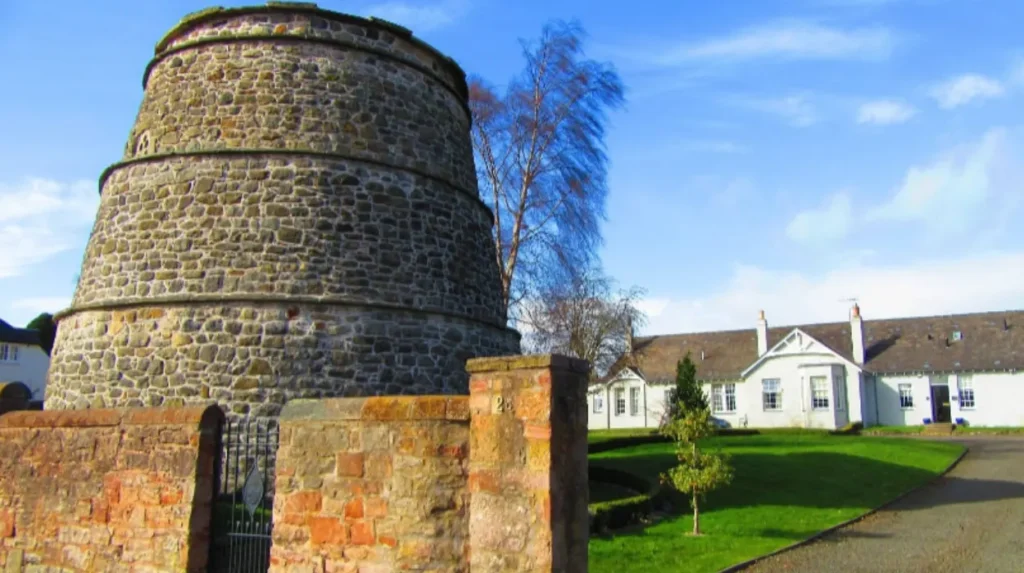
His son, Sir John Forrester, expanded holdings, receiving confirmation from James I in 1431 for the Barony of Corstorphine and likely establishing the Collegiate Church in 1429, now part of Corstorphine Old Parish Church. Sir John’s effigy and those of wives Jean Sinclair and Marian Stewart survive in the kirk from around 1445, testament to the family’s enduring presence. The Forresters held sway for over 300 years until 1698, naming streets like Forrester Road today. Their 14th-century Corstorphine Castle, home until its demolition in 1797, left only a 16th-century dovecote on Dovecot Road and Castle Avenue as reminders.
Turbulent times marked the 15th century; John’s son razed Barnton Castle in 1443, prompting retaliation that burned the Forrester house at Corstorphine. By the 16th century, poets like Roull of Corstorphin emerged, mentioned by William Dunbar around 1505, adding cultural depth. Mary Queen of Scots confirmed James Forrester in 1556, and the family donated a kirk bell in 1577, recast in 1728.
Turbulent 17th and 18th Centuries
Financial woes and political shifts challenged the Forresters mid-17th century; lands passed temporarily to figures like Sir John Gilmour in 1663 amid debts and Cromwellian grants. George Forrester became Lord Forrester in 1633, but scandal ended the line dramatically in 1679 when James Baillie, the last, was stabbed by his niece’s wife in his garden, leading to her execution at Edinburgh’s Cross. The estate sold to Hugh Wallace in 1698, then Sir James Dick of Prestonfield in 1713, whose merchant family held it until 1869.
Corstorphine avoided heavy industrialization in the 19th century, transitioning to a middle-class commuter haven. Incorporation into Edinburgh occurred on November 1, 1920, marking its shift from rural parish to urban suburb.
Iconic Landmarks and Attractions
Corstorphine Old Parish Church anchors the suburb’s heritage, one of Scotland’s best-preserved late medieval structures from the late 15th century on a 12th-century site, enlarged in 1429 as a Jerusalem Cross. Effigies, tombs, and the Forrester bell highlight its story. Nearby, the 1927 library by Ebenezer James MacRae succeeded a Carnegie-funded 1904 site in an 1891 hall.
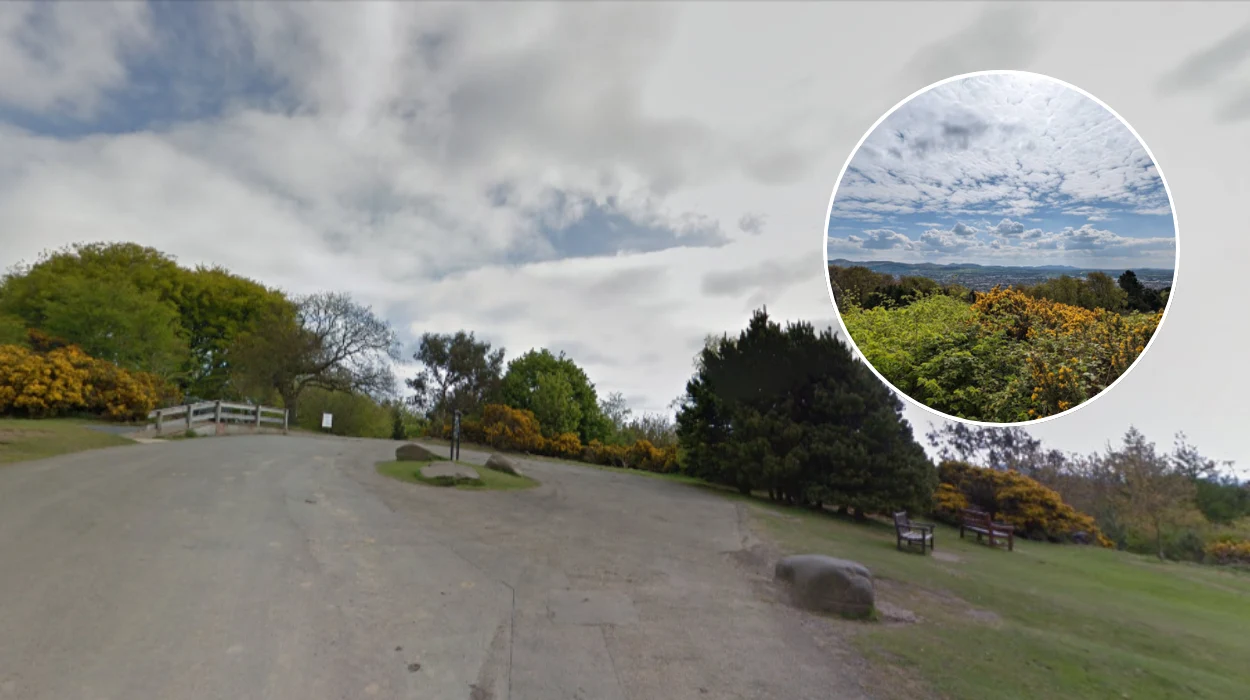
Dominating the skyline, Corstorphine Hill rises 161 meters as a Local Nature Reserve, Edinburgh’s largest urban woodland with oak, birch, ash, and introduced species across 75.8 hectares. Glacial dolerite forms its ridge, shaped by Pleistocene ice, with prehistoric cup-marks from 3600-1500 BC suggesting sacred sites. The 1871 Clermiston Tower, or Scott Tower, honors Sir Walter Scott’s centenary, offering panoramic views to Ben Lomond and the Pentlands. A restored walled garden from Hillwood House, featured on BBC’s Beechgrove Garden, adds charm, while a Cold War bunker in Barnton Quarry, Category-A listed since 2021, intrigues history buffs. Green Flag awarded since 2010, it hosts orienteering and the John Muir Way.
Edinburgh Zoo on southern slopes draws crowds with animals amid 82 acres, proximity boosting local trade. Sports thrive with rugby at Corstorphine Cougars and Forrester RFC near Murrayfield, football at Beechwood FC, cricket at RH Corstorphine, and tennis clubs over a century old. Golf courses like Ravelston and Murrayfield flank the east.
Community and Modern Life
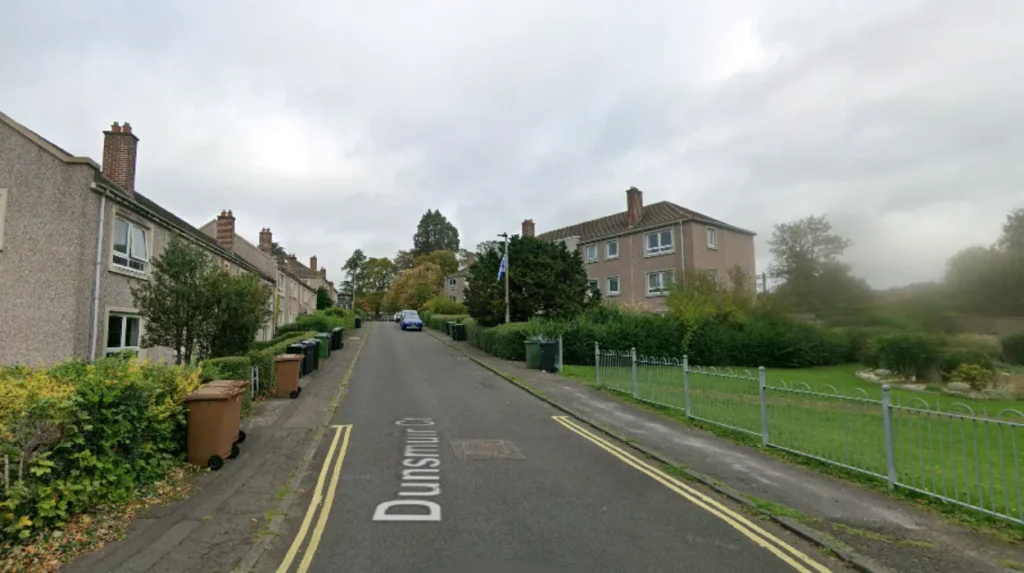
Today, Corstorphine thrives as a family-friendly suburb with a 2022 population of 23,401 in the Corstorphine/Murrayfield ward, density at 3,388 per km², 48% female, and ages skewed older with 25% over 65. Most residents (72%) were Scotland-born, supporting a stable community.
The High Street and St John’s Road bustle with independent shops, though retail parks like Gyle Centre challenge them; Tesco Extra at Meadow Place Road offers groceries and services. Community centres host arts, sports, childcare, and events, aligning with 20-minute neighbourhood goals in City Plan 2030. Corstorphine Connections enhances walking, cycling, and air quality via permanent traffic orders since 2024.
Education excels with Corstorphine Primary on High Street emphasizing literacy, numeracy, and expressive arts in Curriculum for Excellence frameworks. Nearby primaries include Carrick Knowe, East Craigs, and Gylemuir; Craigmount High serves secondaries, with St Augustine’s for Catholic students.
Getting Around Corstorphine
St John’s Road, part of the A8 to Glasgow, sees congestion but benefits from bus lanes and low-emission Lothian Buses like 1, 12, 26, X18, and Airlink 100. Trams from Saughton reach Princes Street in 15 minutes; trains from South Gyle or Edinburgh Gateway connect quickly. Disused Corstorphine station closed in 1968, now paths for cycles. Walking to central Edinburgh takes about 75 minutes.
Notable Figures from Corstorphine
Olympic cyclist Sir Chris Hoy grew up here, epitomizing local sporting pride. Poet Helen Cruickshank captured Renaissance spirit; suffragist Chrystal Macmillan pioneered science. Medieval bard Roull, advocate Sir Alexander Asher, banker Sir Robert Tuite Boothby, footballer Jimmy Leadbetter, and cricketer Henry Stevenson add luster.
Green Spaces and Wildlife Haven
Corstorphine Hill’s mature woods shelter foxes, badgers, buzzards, and orchids like common spotted and spring beauty. Grasslands and rocks complement geology as a Regionally Important Site, with glacial striations visible. Friends of Corstorphine Hill maintain paths and the walled garden, ensuring accessibility. Parks like St Margaret’s enhance recreation.
Events and Cultural Vibrancy
Annual Corstorphine Fair and Christmas Lights Switch-On on High Street foster community spirit. Rugby influx from Murrayfield bolsters pubs and hotels. Literary ties to Stevenson’s Kidnapped and Trainspotting nods enrich its narrative.
Why Corstorphine Endures
Corstorphine masterfully balances history, nature, and convenience, from Forrester tombs to hilltop vistas and zoo roars. Its evolution from marshy crossing to green suburb cements its place in Edinburgh’s west, inviting exploration year-round. As pressures from retail shifts and traffic persist, community efforts like Connections preserve its charm for future generations.