Nestled just seven miles southwest of Edinburgh’s bustling city center, Currie offers a serene escape that captures the essence of suburban Scotland. This evergreen gem in Midlothian seamlessly blends ancient heritage with modern living, making it a must-visit for locals and explorers alike.
- The Origins and Name of Currie
- Medieval Foundations and Royal Connections
- Industrial Flourish Along the Water of Leith
- Currie Kirk: The Spiritual and Historical Anchor
- Growth from Village to Suburban Haven
- Education at the Heart: Heriot-Watt’s Riccarton Campus
- Natural Beauty and Outdoor Pursuits
- Vibrant Community and Sports Spirit
- Dining, Pubs, and Local Flavors
- Modern Living and Connectivity
- Preserving Currie’s Timeless Allure
The Origins and Name of Currie
Currie traces its roots back thousands of years, with archaeological finds like a Bronze Age razor from around 1800 BC discovered at Kinleith Mill, alongside stone cists dating to 500 BC at nearby Duncan’s Belt and Blinkbonny. The name Currie likely derives from Scottish Gaelic “curagh” or “curragh,” meaning a wet or boggy plain, or possibly the Brythonic “curi,” referring to a dell or hollow, reflecting the area’s marshy terrain along the Water of Leith. Medieval records first highlight the region in 1249 when Robert of Kildeleith, from the chapel by the Leith (now Kinleith), became Chancellor of Scotland, underscoring its early significance.
By the 13th century, the area served as favored hunting grounds for lords and knights of Edinburgh Castle, as noted in charters from 1309-1413, though maps of the time omitted it, suggesting a modest settlement. A Christian presence emerged over 1,000 years ago, with archdeacons of Lothian establishing headquarters here in 1018, laying spiritual foundations that endure today.
Medieval Foundations and Royal Connections
The 14th century brought pivotal developments, including Currie Brig, a bridge over the Water of Leith reputedly dating back then, which played a role in 1666 when Dalziel of Binns crossed it to intercept Covenanters en route to the Battle of Rullion Green. Robert the Bruce gifted the Riccarton estate in 1315 as a wedding present, passing through notable hands like Bishop Wardlaw’s family in 1392 and Senator Ludovic Craig in 1612, before reaching the Gibson-Craigs in 1818.
Riccarton estate’s evolution mirrors Currie’s growth, transforming from feudal lands to a key educational hub. These royal and noble ties cemented Currie’s place in Scotland’s feudal tapestry, where the Lanark Road—known as “The Lang Whang”—emerged as a vital route south, fostering trade and travel.
Industrial Flourish Along the Water of Leith
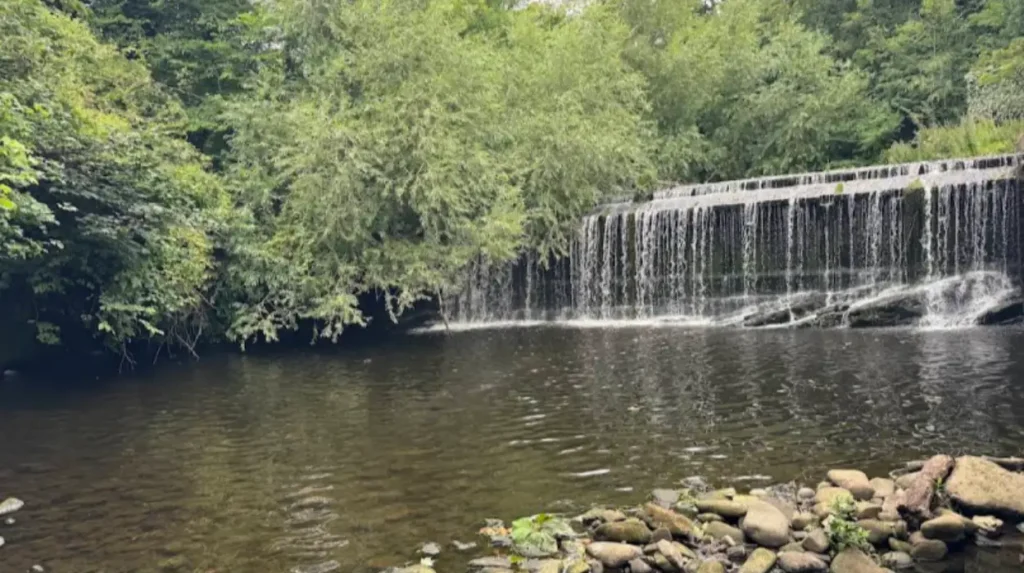
The Water of Leith powered Currie’s industrial heart from at least the 13th century, hosting over 70 mills across its course at its peak, with Currie prominent for paper and snuff mills. Blinkbonny snuff mill, started in 1749 near the Currie-Juniper Green border, exemplified this, grinding premium “sneeshin” for Edinburgh and beyond, contributing to the river’s reputation as a hub for high-fashion snuff production.
Kinleith Mill, tied to early records, symbolized this era, with local historian John Tweedie’s collections documenting paper, grain, and snuff operations. These mills not only drove the local economy but shaped the landscape, their remnants now integrated into scenic walkways, evoking Currie’s shift from industrial vigor to tranquil heritage.
Currie Kirk: The Spiritual and Historical Anchor
At Currie’s historic core south of Lanark Road West lies Currie Kirk, built in 1784 by James Thompson of Leith on foundations possibly from a 1296 church dedicated to Saint Kentigern. Remodeled in 1835 by David Bryce and with windows enlarged in 1848 by David Cousin, it features a simple rectangular form, pedimented entrance, and low central spire added later.
The surrounding graveyard spans centuries: an original section with 17th- and 18th-century carved stones, a Victorian tier, and a 20th-century extension. Notable burials include Alick Buchanan-Smith, Baron Balerno; Sir Stanley Davidson, Professor of Medicine; and William Henderson, co-founder of Scottish Widows. A medieval-style war memorial stands at the entrance, embodying community resilience.
Growth from Village to Suburban Haven
The 18th century saw poet James Thomson raised here, inspiring “Poet’s Glen” where Kinleith Burn meets the Water of Leith near his Mid Kinleith Farm cottage; streets like Thomson Road honor him. Post-1921, council housing expanded, accelerating in the 1950s-60s with private estates east of Curriehill Road, promoted as a commuter idyll.
Currie High School opened in 1966 on Dolphin Avenue, refurbished in 1997, serving Currie, Riccarton, Baberton Mains, and Juniper Green with a 350-year educational tradition. In 1972, the historic center became a Conservation Area, preserving its charm amid growth; by 2001, population hit 8,550 with 3,454 houses.
Education at the Heart: Heriot-Watt’s Riccarton Campus
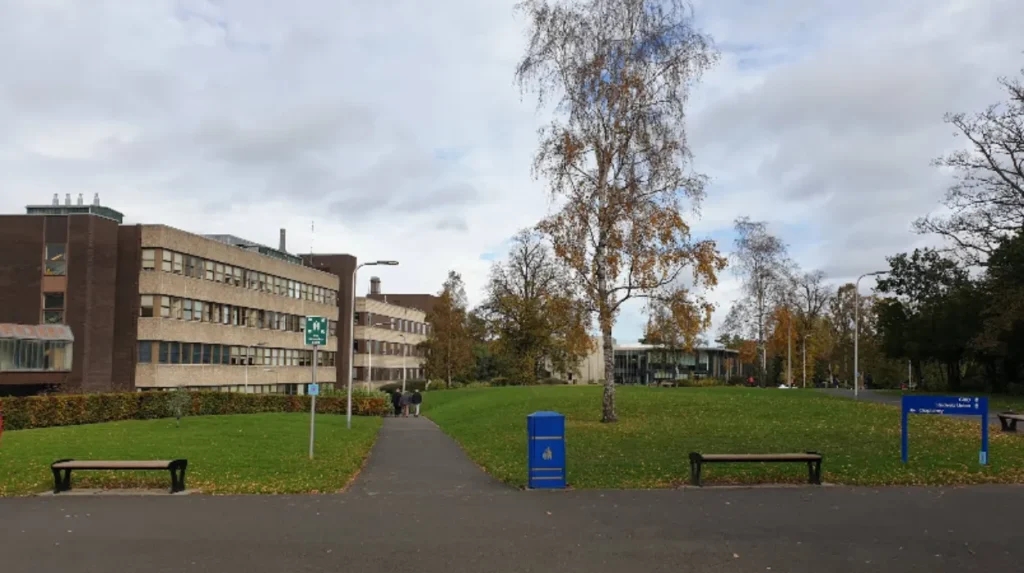
Heriot-Watt University’s Edinburgh Campus at Riccarton, on a 248-acre parkland estate gifted by Midlothian Council in 1969, anchors modern Currie. First academic buildings opened by 1974, with full relocation by 1992, offering cutting-edge facilities amid green expanses. While Edinburgh Napier operates other campuses, Riccarton’s legacy ties to Currie’s educational evolution, fostering innovation in a historic setting.
Currie Community High School complements this, providing comprehensive non-denominational education, reinforcing the suburb’s family-friendly appeal.
Natural Beauty and Outdoor Pursuits
Currie’s proximity to the Pentland Hills Regional Park invites endless exploration, with trails from nearby entry points like Hillend offering runs over Braid Law, Scald Law, and Carnethy Hill. Riccarton Hill provides panoramic views, while the Water of Leith Walkway traces mill history, ideal for peaceful strolls.
The Union Canal borders north, and the City Bypass offers access, blending urban convenience with wilderness; walking, wheeling, and cycling improvements enhance connectivity to Curriehill station.
Vibrant Community and Sports Spirit
Currie thrives through groups like the Currie and District Local History Society, meeting at Gibson Craig Hall, and Currie Community Council at currieccouncil@gmail.com. Currie Kirk’s choir entertains seasonally, while the 1958-opened youth club site now hosts the community center, once timber huts from Riccarton army camp.
Sports shine with Currie RFC, “Chieftains,” founded 1970, playing at Malleny Park in Balerno; they’ve risen through leagues, undefeated in National League entry 1979-80. Annual Riding of the Marches in May celebrates heritage, alongside youth football clubs.
Dining, Pubs, and Local Flavors
The Riccarton Inn on Lanark Road West, a 200-year-old pub, serves homemade Scottish fare like Cullen Skink, pies, and steaks by coal fires, with en-suite rooms and dog-friendly vibes. Community spots like Gibson Craig Hall host events, sustaining Currie’s warm hospitality.
Modern Living and Connectivity
With population around 6,500-8,550, Currie balances suburbia at 479 feet elevation, postcode EH14, dialing 0131. Curriehill station on the Glasgow-Edinburgh line offers 15-minute city trips; buses 44/45 and 24 to Livingston connect seamlessly. City of Edinburgh Council enhancements promote 20-minute neighborhoods via Future Streets.
Notable residents include mountaineer Dougal Haston, rugby’s Matt Scott, and Baron Carter of Barnes, adding prestige.
Preserving Currie’s Timeless Allure
Currie’s Conservation Area safeguards its core, from kirk to brig, while Heriot-Watt and schools propel forward momentum. Local history collections at Heriot-Watt, including John Tweedie’s 5,000 digitized photos from 1850s-1980s, chronicle mills, estates, and communities.
Whether hiking Pentlands, tracing Leith’s industrial past, or enjoying Riccarton Inn comforts, Currie embodies evergreen Scottish charm—historic yet vibrant, natural yet accessible. For Edinburgh Daily readers, it’s the perfect blend of yesterday’s legacy and tomorrow’s promise.