Nestled in a dramatic gorge along the Water of Leith, Dean Village captivates with its timeless charm and rich history. This former milling hamlet offers a serene escape from Edinburgh’s bustling streets, blending medieval roots with modern allure.
Origins of Dean Village
Dean Village traces its beginnings to the 12th century, emerging as a vital milling community powered by the Water of Leith. King David I’s charter around 1145 granted one of the Dene mills to Holyrood Abbey, marking the area’s early significance in grain production. By the 16th century, it was known as the “miller’s village,” appearing on maps during the Siege of Leith in 1560, and later called Water of Leith Village in 1585 town records.
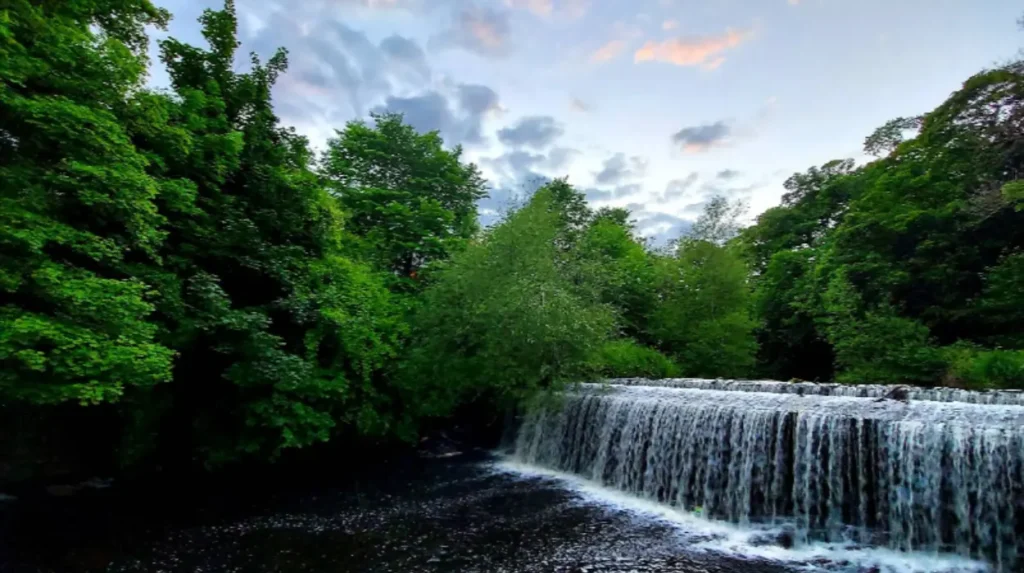
The village’s location in a deep valley—’dene’ in Scots—provided ideal conditions for harnessing the river’s flow. Eleven mills operated here at their peak, grinding flour essential for Edinburgh’s growing population, far from the original Royal Burgh. This isolation fostered independent development, with the Baxters’ Incorporation building their Tolbooth around 1675, solidifying ties to baking trades marked by carved plaques of bread and pies.
The Milling Golden Age
For over 800 years, Dean Village thrived as Edinburgh’s grain milling hub, its economy revolving around water-powered wheels and weirs. The Water of Leith Bridge at Bell’s Brae served as a key crossing on the route to Queensferry, rebuilt in the early 18th century for carriages. Mills like Bells Mill bustled with activity, supporting bakers and feeding the city while the village expanded with workers’ homes and warehouses.
In the 19th century, diversification brought textile mills and tanning operations, though the latter contributed to notorious odors that deterred residents. The Baxters’ influence persisted, linking the village to Edinburgh’s food supply chain amid rapid urbanization. This era defined Dean Village’s character, with stone buildings clustered tightly along the riverbanks, their architecture reflecting practical industrial needs.
Architectural Marvels
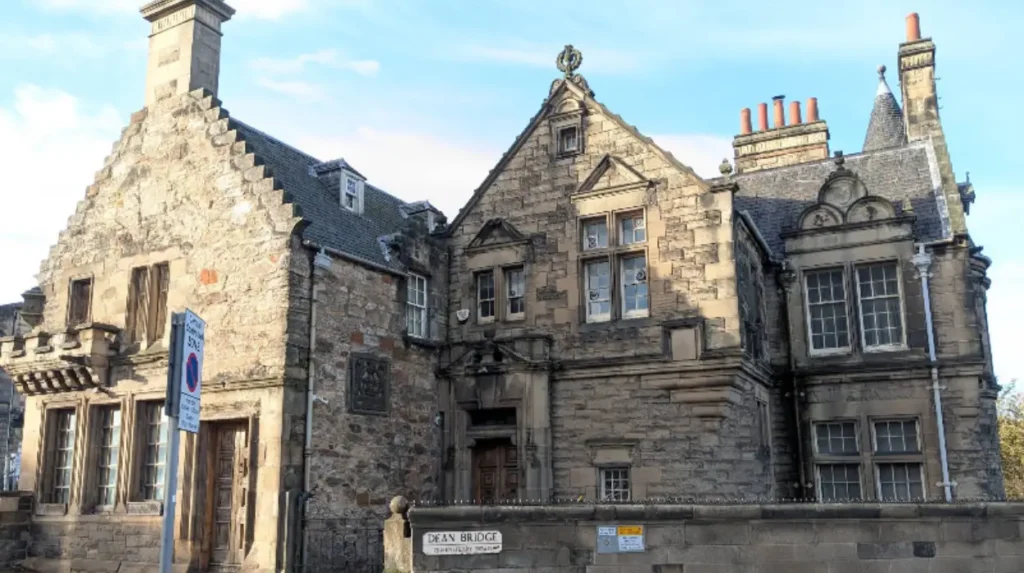
Dean Village’s architecture stands as a testament to its industrial heritage, featuring crowstepped gables, turrets, and robust mill conversions. Well Court, built in the 1880s as workers’ housing, exemplifies philanthropic design with its picturesque jumble of features, now a Category A listed gem. The five-storey clock tower of the former community hall adds a dramatic skyline element, praised by Patrick Geddes for community initiatives.
Stone from local quarries dominates, creating visual unity across high-quality buildings perched on the steep topography. Ruined millstones and plaques embedded in walls evoke the past, while varied roofscapes enhance the intimate scale. These elements contrast sharply with Edinburgh’s orderly Georgian New Town, offering an unregulated, organic charm.
Iconic Landmarks Nearby
Towering above the village, the Dean Bridge, engineered by Thomas Telford and completed in 1832, spans 106 feet over the gorge with four arches. Built at John Learmonth’s expense alongside road trustees, it bypassed the village, enabling New Town expansion while its parapets were later raised against 19th-century suicides.
St Bernard’s Well, constructed in 1789 by Alexander Nasmith, honors a natural spring with a neoclassical temple to Hygeia, goddess of health, promising cures for ailments like arthritis. Dean Cemetery, opened in 1847 on Dean House’s site—a 16th-17th century tower—holds notables like railway pioneer Thomas Bouch, with salvaged ceiling panels in the National Museum. These sites frame the village’s allure.
Decline and Revival
By the 19th century, larger Leith mills eclipsed Dean’s operations, sparking decline; a devastating 1824 fire razed mills and warehouses. Victorian developments engulfed the area, and by 1960, poverty and decay prevailed, with slaughterhouses worsening conditions.
Revitalization began in the 1970s, transforming derelict buildings into desirable homes. Edinburgh World Heritage granted £1.1m in recent years for Well Court’s restoration, preserving its UNESCO-site status within the Old and New Towns. The 1983 Water of Leith Walkway integrated it into city life, boosting its residential appeal. Today, projects like Belford Road’s heritage refurbishments continue this sensitive renewal.
Exploring Dean Village Today
Wander Hawthornbank Lane’s stone-lined paths or cross the footbridge to the Walkway, a 12-mile riverside trail from Balerno to Leith. The village’s quirky streets reveal hidden courtyards and river views, ideal for photographers seeking fairytale scenes. Proximity to Princes Street—mere minutes away—makes it a perfect half-day retreat.
Cafes and galleries dot the area, with modern apartments blending seamlessly. Spring blooms and autumn foliage enhance seasonal beauty, drawing locals for peaceful strolls. Its tranquillity contrasts Edinburgh’s vibrancy, offering timeless respite.
Why Dean Village Endures
Dean Village symbolizes Edinburgh’s adaptive spirit, evolving from industrial heart to heritage haven. Conservation efforts ensure its millstones and weirs inspire future generations, maintaining cultural significance. As a Category A conservation area, its topography and materials preserve authenticity amid urban growth.
For residents and visitors, it provides an accessible oasis, connected yet secluded. This enduring appeal secures its place in Edinburgh’s narrative, a living archive of the city’s past.