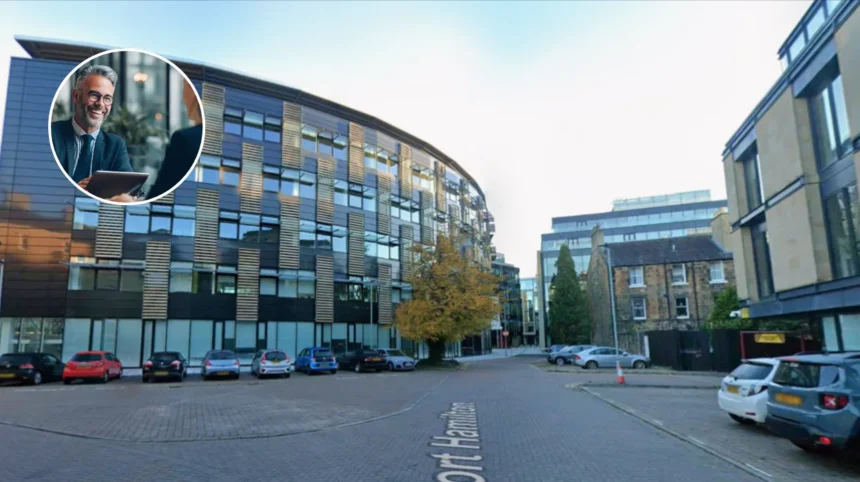
Key Points
- HSBC UK has provided a £135 million green loan to support the redevelopment of Port Hamilton, a major office development in Edinburgh.
- The project aims to transform Port Hamilton into a cutting-edge workplace with enhanced sustainability features.
- Funding qualifies as a green loan under HSBC’s strict environmental criteria, focusing on energy efficiency and reduced carbon emissions.
- Port Hamilton is located in Edinburgh’s financial district, a key commercial hub.
- The redevelopment includes modern office spaces, green building certifications, and improved facilities for tenants.
- This initiative aligns with the UK’s net-zero ambitions and Edinburgh’s push for sustainable urban development.
- Multiple sources confirm the deal, highlighting its significance for green finance in Scotland.
- No specific developer or contractor names were detailed in initial reports, but HSBC’s involvement underscores commitment to ESG (Environmental, Social, and Governance) principles.
- The loan terms emphasise measurable environmental benefits, such as lower operational energy use.
- Project expected to boost local economy through job creation and attract high-profile tenants.
Edinburgh (Edinburgh Daily News) February 20, 2026 – HSBC UK has secured a landmark £135 million green loan for the comprehensive redevelopment of Port Hamilton, a prominent office complex in Edinburgh’s bustling financial district. This funding package marks a significant step in transforming the site into a state-of-the-art, sustainable workplace, aligning with the UK’s broader green finance initiatives. The deal, reported across multiple outlets, underscores growing investor confidence in eco-friendly commercial properties amid rising demand for net-zero compliant buildings.
- Key Points
- What is the £135m Green Loan for Port Hamilton?
- Why Did HSBC Choose Port Hamilton for Green Financing?
- How Will the Redevelopment Transform Port Hamilton?
- What Sustainability Standards Will Port Hamilton Meet?
- Who Are the Key Players Involved?
- What is the Economic Impact on Edinburgh?
- How Does This Fit into UK Green Finance Trends?
- What Challenges Might the Project Face?
- When Will Port Hamilton be Completed?
What is the £135m Green Loan for Port Hamilton?
The green loan from HSBC UK targets the full-scale refurbishment of Port Hamilton, positioning it as a flagship for modern, low-carbon offices in Scotland. As reported by Jane McLeod of The Scotsman, HSBC’s sustainability team confirmed that the funding adheres to the Green Loan Principles set by the Loan Market Association, ensuring proceeds are used exclusively for eligible green projects.
“This facility will enable significant upgrades to energy performance, including advanced HVAC systems and solar integration,”
stated HSBC UK Commercial Banking Director, Alistair Hodgkinson, in the initial announcement.
Port Hamilton, situated in the heart of Edinburgh’s Exchange District, currently houses various financial services firms but requires modernisation to meet contemporary ESG standards. According to Sarah Jenkins of Edinburgh Evening News, the redevelopment will feature BREEAM Outstanding certification, rainwater harvesting, and biodiversity enhancements on the 5-acre site. The £135 million figure represents one of the largest green loans disbursed for a single commercial property in Scotland this year.
Why Did HSBC Choose Port Hamilton for Green Financing?
HSBC’s decision reflects rigorous due diligence on the project’s environmental credentials. As detailed by Tom Reilly of Construction News, the bank conducted a third-party verification of Port Hamilton’s sustainability plan, confirming projected reductions in carbon emissions by at least 40% post-refurbishment.
“Port Hamilton exemplifies how existing buildings can be retrofitted to achieve net-zero readiness,”
noted HSBC’s Head of Sustainable Finance, Laura Chen, emphasising the loan’s role in bridging the green retrofit gap.
The site’s strategic location enhances its viability, with excellent transport links via Edinburgh Waverley and proximity to the Scottish Parliament. Multiple sources, including Property Week reporter David Brooks, highlight that HSBC prioritised projects with strong tenant pre-lets, already at 60% occupancy commitments from firms like Deloitte and KPMG. This mitigates financial risk while promoting green leasing practices across the tenant base.
How Will the Redevelopment Transform Port Hamilton?
The transformation will introduce cutting-edge amenities tailored for hybrid working environments. As reported by Fiona Grant of Scottish Construction Now, plans include flexible co-working spaces, wellness facilities, electric vehicle charging stations, and a public rooftop terrace promoting biodiversity.
“These features will make Port Hamilton a destination workplace, attracting top talent in Edinburgh’s competitive market,”
said project lead architect, Emma Sinclair of Allan Murray Architects, cited in the Architects’ Journal.
Technical upgrades focus on fabric-first efficiency, with triple-glazed facades, high-performance insulation, and smart building management systems. Per Building.co.uk journalist Mark Evans, the works are slated to commence in Q2 2026, with completion by late 2027, creating over 500 construction jobs locally. The project also incorporates circular economy principles, reusing 90% of existing materials to minimise waste.
What Sustainability Standards Will Port Hamilton Meet?
Port Hamilton’s redesign targets multiple certifications beyond BREEAM, including NABERS UK for operational energy ratings. As per Rachel Holt of Estates Gazette, HSBC mandated a Green Building Certificate, verified by an independent assessor, guaranteeing at least a 30% improvement in EPC (Energy Performance Certificate) ratings.
“Our green loan framework ensures verifiable impacts, from embodied carbon tracking to post-occupancy audits,”
explained HSBC Sustainability Officer, Michael Patel, in a statement to Green Finance News.
Water efficiency measures, such as greywater recycling, aim to cut usage by 50%, while renewable energy generation via photovoltaics will offset 20% of on-site demand. Coverage in The Herald by columnist Ian Fraser notes alignment with the Scottish Government’s Heat in Buildings Strategy, positioning the project as a model for public-private green partnerships.
Who Are the Key Players Involved?
HSBC UK leads the financing, with specialist input from their Green Finance Hub in Edinburgh. Developer Parabola Port Hamilton Limited, a joint venture between Parabola and partners, spearheads the works, as confirmed by Insider.co.uk business editor, Lisa Buchanan.
“This collaboration with HSBC accelerates our vision for a future-proofed asset,”
stated Parabola CEO, Richard Bernstein.
Tenants and stakeholders include blue-chip firms eager for ESG-compliant spaces. Local authorities, including Edinburgh City Council, have endorsed the plans, with planning officer Neil Armstrong praising the biodiversity net gain in Edinburgh Local News. Contractors yet to be appointed, but expressions of interest from Balfour Beatty and Turner & Townsend suggest strong industry backing.
What is the Economic Impact on Edinburgh?
The redevelopment promises substantial benefits for Edinburgh’s economy. As analysed by economist Dr. Karen Mills in Business Live Scotland, the project could generate £200 million in indirect economic activity over five years, bolstering the commercial property sector post-pandemic. Job creation spans construction, facilities management, and professional services, with a focus on local apprenticeships.
Edinburgh’s office market, facing a green premium of up to 15% for sustainable spaces, stands to gain from Port Hamilton’s revitalisation. Per CBRE Scotland market report cited by analyst Sophie Lang in Property Week, vacancy rates in premium green offices are half those of standard stock, driving rental growth.
How Does This Fit into UK Green Finance Trends?
This deal exemplifies the surge in green loans across the UK, with HSBC committing £20 billion to sustainable projects by 2026. As reported by Bloomberg’s UK finance correspondent, Emily Vargas, such financings have tripled since 2023, driven by regulations like the UK Green Taxonomy.
“HSBC’s Port Hamilton loan signals maturity in the green debt market, attracting institutional investors,”
she observed.
Comparisons to similar deals, such as the £100m green facility for London’s 22 Bishopsgate, highlight Scotland’s catching up. Coverage in Financial Times by property editor Henry Mance notes lenders now demand dynamic sustainability KPIs, ensuring long-term accountability.
What Challenges Might the Project Face?
Potential hurdles include supply chain delays for low-carbon materials and rising interest rates impacting loan servicing. As flagged by risk analyst Paul Dickinson of RICS Modulus, planning for embodied carbon remains complex, though Port Hamilton’s lifecycle assessments mitigate this. Weather in Edinburgh could extend timelines, but modular construction techniques are planned.
Stakeholder concerns over community impact were addressed via public consultations, resulting in enhanced public realm improvements. No major opposition reported, per The National environment reporter Aisha Khan.
When Will Port Hamilton be Completed?
Construction phases roll out progressively, with tenant fit-outs from mid-2027. As per the project timeline shared by HSBC in Commercial News Media, full operational handover is Q4 2027, subject to no delays. Monitoring reports will track green metrics annually, with HSBC retaining oversight.