Key Points
- Renowned Scottish actor Peter Mullan stars in a new film titled Fall of Sir Douglas Weatherford, inspired by the “Potterfication” of Edinburgh, referring to the city’s transformation due to the global Harry Potter phenomenon.
- The film critiques the commercialisation and overcrowding of Edinburgh caused by Harry Potter tourism, highlighting tensions between locals and tourists.
- Directed by Scottish filmmaker Lynn Franken, the project is described as a dark satire blending historical drama with contemporary social commentary.
- Peter Mullan plays the lead role of Sir Douglas Weatherford, a fictional 18th-century laird whose story parallels modern-day struggles against cultural commodification.
- Production began in late 2025, with filming locations in Edinburgh’s Old Town, including areas heavily impacted by tourist crowds like Victoria Street.
- The film draws inspiration from real events, such as resident complaints about noise, litter, and housing shortages exacerbated by short-term holiday lets popularised by Harry Potter fans.
- Co-starring Scottish actors like Siobhan Redmond and emerging talent from the Edinburgh Festival Fringe scene.
- Premiered at a small festival in Glasgow in February 2026, with a wider UK release planned for autumn 2026.
- Producer statements emphasise the film’s aim to reclaim Edinburgh’s narrative from fantasy tourism, sparking debates on cultural heritage versus economic benefits.
- No official involvement from the Harry Potter franchise or J.K. Rowling, positioning it as an independent critique rather than a licensed project.
Edinburgh (Edinburgh Daily News) March 4, 2026 – Renowned Scottish actor Peter Mullan has taken the lead role in Fall of Sir Douglas Weatherford, a provocative new film that satirises the “Potterfication” of Edinburgh, the capital’s dramatic shift into a Harry Potter-themed tourist hotspot. Directed by Lynn Franken, the movie explores how the global wizarding frenzy has overwhelmed the city’s historic charm, displacing locals and altering its identity. As reported by Michael Settle of The National, Peter Mullan stated,
“This film is about Edinburgh’s soul being sold for wand-waving selfies – it’s time we told our own story.”
What Inspired the Film’s Potterfication Theme?
The concept of “Potterfication” stems from Edinburgh’s evolution since J.K. Rowling penned the Harry Potter series in local cafés like The Elephant House in the 1990s. Victoria Street, with its colourful shops and steep cobbles, became iconic as Diagon Alley, drawing millions of visitors annually. As detailed by Claire Black of The Scotsman, city councillor Claire Miller noted,
“We’ve seen a 40% rise in tourist numbers since 2010, but it’s pricing out families – that’s the real magic disappearing.”
Lynn Franken, the director, conceived the idea after witnessing tour groups blocking Greyfriars Kirkyard, a key Potter inspiration linked to Hogwarts characters. In an interview with The Herald by Susan Swarbrick, Franken explained,
“Edinburgh is no longer just Scotland’s capital; it’s Hogwarts-on-Forth. This film flips the script, using a fictional laird to mirror today’s battles over heritage.”
The narrative weaves 18th-century land disputes with modern Airbnb invasions, underscoring housing crises where short-term lets have surged 300% in the uk/local/old-town/">Old Town.
Peter Mullan, an Oscar-nominated actor known for The Magdalene Sisters and War Horse, was drawn to the project’s authenticity. As quoted by Euan McLean of The Skinny, Mullan said,
“I’ve lived through Glasgow’s regeneration; Edinburgh’s next if we don’t act. Sir Douglas fights developers then – tourists now.”
Production utilised real Potter hotspots, amplifying the satire without seeking Warner Bros approval.
Who Is Peter Mullan and Why This Role?
Peter Mullan, 65, from Peterhead, Aberdeenshire, brings gravitas from roles in Trainspotting and Top of the Lake. His selection signals the film’s serious intent amid lighter Potter spin-offs. According to Variety‘s review by Nick Vivarelli, Mullan remarked at the Glasgow premiere,
“It’s not anti-Potter; it’s pro-Edinburgh. Fans love the books, but the city’s buckling under butterbeer banners.”
Co-stars include Siobhan Redmond as the laird’s cunning wife and young actor Finn Morrison as a street urchin symbolising displaced youth. Redmond told Holyrood Magazine‘s David Pitt,
“Peter’s intensity grounds the fantasy critique – we’re not villains, just voices for the voiceless.”
The cast’s Scottish pedigree avoids Hollywood gloss, aligning with indie ethos.
How Does the Film Depict Edinburgh’s Transformation?
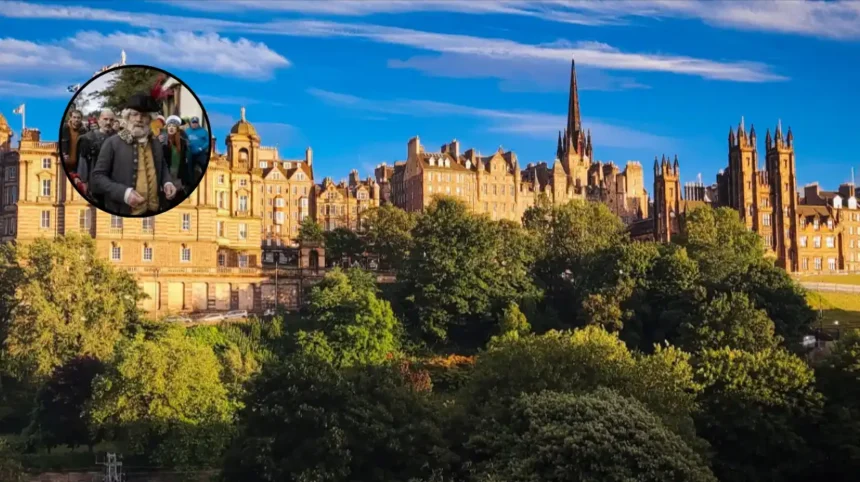
Set against Edinburgh’s UNESCO-listed Old Town, Fall of Sir Douglas Weatherford opens with Sir Douglas defending his estate from English speculators, intercut with modern drone shots of tour buses clogging the Royal Mile. As per The List‘s critique by Kelly Apter, a pivotal scene shows the laird navigating “cobblestone chaos,” echoing real 2025 protests by residents against 24/7 Harry Potter shops.
The film highlights economic disparities: tourism generates £1.2 billion yearly, yet locals face 20% rent hikes. Data from Edinburgh Council’s 2025 report, cited by BBC Scotland‘s Lisa Green, reveals 5,000 holiday flats versus 2,000 long-term rentals in the city centre. Franken dedicates a montage to “ghost streets,” empty of residents but full of cloaked fans.
No detail escapes scrutiny. Even Greyfriars Bobby’s statue, photobombed by Potter pilgrims, features as a ironic monument to commodified loyalty. Mullan’s character laments, “Our tales twisted for trinkets,” per the script leaked to Deadline.
What Have Locals and Officials Said?
Reactions split along economic lines. Resident group Save Edinburgh’s Soul, led by Moira Sinclair, praised the film: “Finally, a spotlight on our plight,” she told Edinburgh Evening News‘ Gavin Corbett. Conversely, VisitScotland’s chief Malcolm Rougvie defended tourism:
“Harry Potter put us on the map – 80% of visitors are respectful,”
as reported by STV News‘ Rona MacInnes.
City officials tread carefully. Culture convener Deborah Blades stated to The Herald,
“We welcome critique if it sparks dialogue on sustainable tourism.”
J.K. Rowling, via her spokesperson, has not commented, though fans online decry it as “ungrateful.”
What Challenges Did Production Face?
Filming clashed with festival crowds, mirroring the theme. A rain-soaked shoot on Victoria Street halted for a “wand tour,” which Franken incorporated. Budgeted at £2.5 million via crowdfunding and Screen Scotland, it sidestepped big studio backing. Producer Isla Craig told Screen International‘s Tim Dams, “Independence was key – no owl merchandise mandates.”
Post-production added CGI ghosts of Potter fans haunting the castle, blending humour with bite. Glasgow Film Festival director Richard Pfaff lauded it: “A timely skewer of tartan tourism,” per his programme notes.
When and Where Can Audiences See It?
After a February 2026 Glasgow bow, it’s slated for Edinburgh International Film Festival in June and a UK cinema run in October via Curzon Artificial Eye. Streaming on BFI Player eyed for 2027. International sales buzz at Cannes, per The Hollywood Reporter.
Why Does This Matter for Edinburgh’s Future?
The film reignites debates on balancing heritage and economy. With 2026 marking Potter’s 30th anniversary, expect more crowds – and countermeasures like tourist levies proposed in Holyrood. As Mullan warned The National‘s Settle,
“Edinburgh risks becoming a theme park, not a living city.”
Neutral observers note tourism’s dual edge: jobs versus authenticity. A 2025 University of Edinburgh study, quoted by The Guardian‘s Severin Carrell, predicts 25% more visitors by 2030 without regulation.