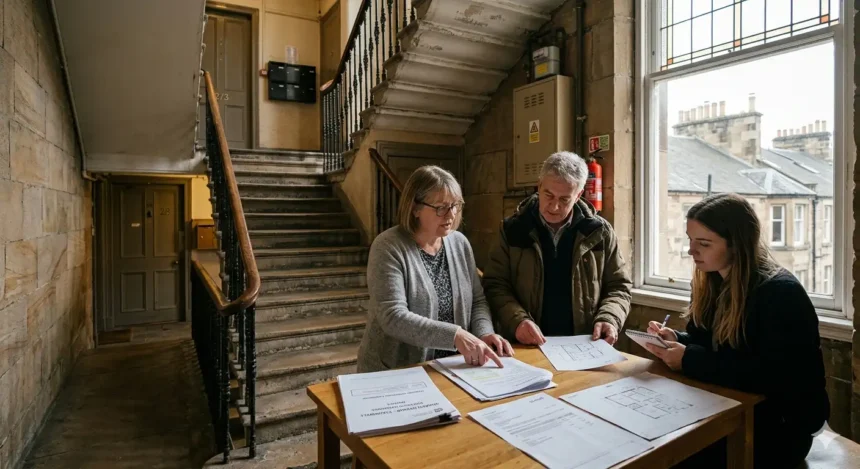
To organise a common repair in an Edinburgh tenement, identify shared areas needing work, notify all owners, hold a meeting to vote on quotes from tradespeople, collect funds, and carry out the repair. Use the City of Edinburgh Council’s free Shared Repairs Service for advice throughout. Local residents in areas like Balerno, Bruntsfield, and Dean Village can follow this process to resolve issues legally and efficiently.
Living in Edinburgh’s iconic tenements offers charm and community, but shared spaces like stairs, roofs, and closes often need upkeep. For residents of Balerno, Bruntsfield, Calton Hill, Colinton, Corstorphine, Currie, Dean Village, Duddingston, and Grassmarket, organising a common repair ensures safety and preserves property value. Edinburgh Daily News provides this evergreen guide to help local residents navigate the process smoothly.
Why This Issue Matters to Local Residents
Tenement buildings in Edinburgh, many Victorian in style, require regular maintenance due to age and weather exposure. Neglected common repairs can lead to hazards like leaking roofs or crumbling stonework, affecting daily life in neighbourhoods from Corstorphine to Duddingston.
Edinburgh Council emphasises that owners share responsibility for these areas, preventing disputes and costly emergencies. In Bruntsfield or Currie, timely action maintains the aesthetic appeal that draws residents to these vibrant spots. Addressing repairs promptly protects investments and fosters neighbourly cooperation.
Step-by-Step Actions to Solve the Problem
Start by spotting the issue early through regular checks. Document everything clearly to build consensus among owners.
Follow these structured steps, drawn from Edinburgh Council’s Tenement Toolkit:
- Step 1: Identify shared areas and liability. Review your title deeds or feu disposition to confirm who owns what, such as roofs or entrance doors. Shared parts are typically communal.
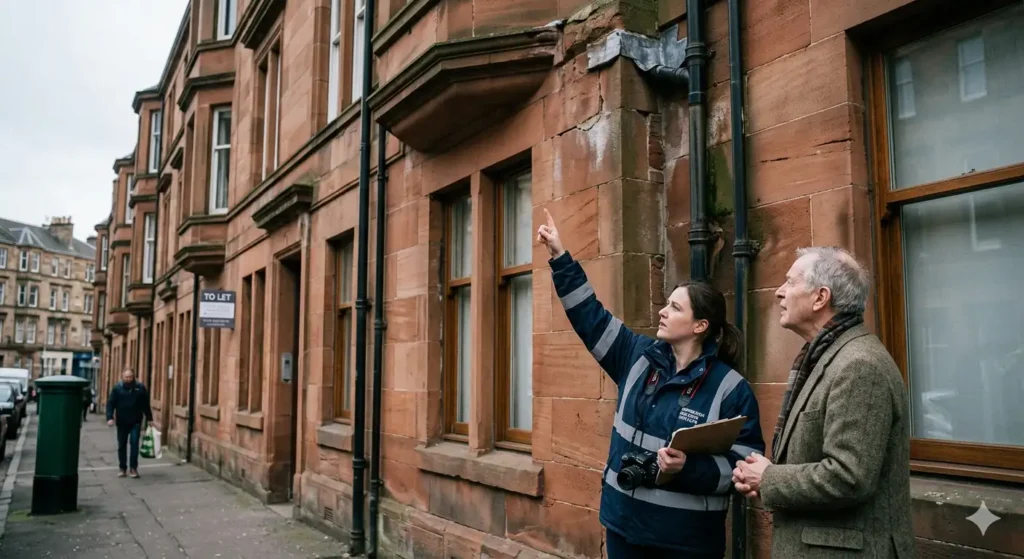
- Step 2: Inspect and document the repair need. Take photos, use a building inspection checklist, or hire a surveyor. Common issues include stair lighting, damp walls, or guttering.
- Step 3: Notify all owners. Send a standard notice using council templates, detailing the problem and proposed action. Include owners of neighbouring properties if affected.
- Step 4: Organise an owners’ meeting. Agree on repair scope, get multiple written quotes (at least two or three), and vote. Majority agreement suffices for most works under UK law.
- Step 5: Vote on options. Compare quotes for cost, timeline, and scope. Ensure quotes include VAT and fixed prices unless changes are agreed in writing.
- Step 6: Collect funds and proceed. Divide costs by ownership shares, often per flat. Pay tradespeople only after completion.
- Step 7: Oversee the work. Monitor progress and address issues promptly with the contractor.
This process, recommended by Edinburgh Daily News for local residents, keeps things fair and efficient.
Which Council Service Handles It
The City of Edinburgh Council’s Shared Repairs Service provides free advice for private owners in tenements. This helpline and toolkit guide residents through organisation without undertaking the work themselves.
They assist with disputes, templates, and process checks but focus on tenanted council properties separately. For Balerno or Grassmarket owners, this service simplifies compliance with local procedures.
Information or Documents Needed
Gather these essentials before starting:
- Title deeds or property documents to clarify shared responsibilities.
- Photos and inspection checklists of the defect.
- Owner contact details and property register extracts from Registers of Scotland.
- Written quotes from qualified tradespeople.
- Meeting minutes and voting records.
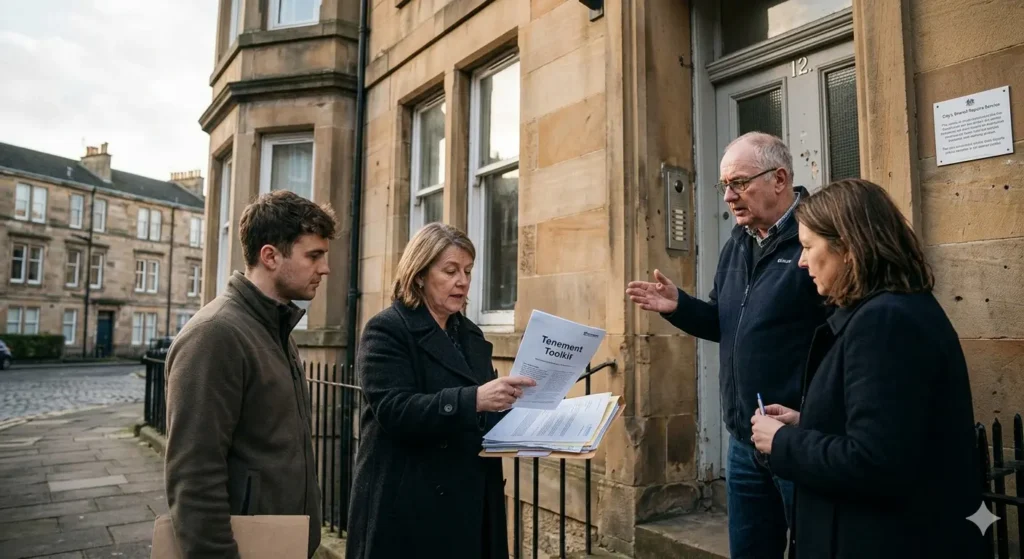
Edinburgh Council’s Tenement Toolkit offers free downloadable templates for notices and checklists. Keep records for potential disputes or insurance claims.
Expected Response Time
Most repairs can conclude in weeks if owners cooperate quickly. Initial council advice via the Shared Repairs Service is prompt, often same-day for calls.
Organising meetings and quotes takes 2-4 weeks; works like roof repairs may span 1-3 months depending on scale. Factors or professional surveyors speed this up in areas like Dean Village.
What to Do If Follow-Up Is Required
If consensus fails, revisit the Tenement Toolkit steps and document attempts. Contact the Shared Repairs Service for mediation; they may intervene for essential repairs with majority support and available resources.
Escalate to First-tier Tribunal (Housing and Property Chamber) for stubborn cases under the Tenements (Scotland) Act 2004. Retain all correspondence for evidence.
Rights and Responsibilities Under UK Rules
Under the Tenements (Scotland) Act 2004, all owners share liability for common parts proportional to ownership. A majority can authorise non-essential repairs; essentials like structural safety require action regardless.
Owners must act reasonably, contribute fairly, and allow access. Neglect can lead to tribunal orders for payment or works. Edinburgh Council upholds these to ensure safe housing across Calton Hill and Colinton.
Practical Tips to Avoid the Problem in Future
Prevent issues with proactive habits tailored to Edinburgh’s tenements.
Schedule annual inspections of roofs, drains, and stairs, perhaps via a factoring service. Clean gutters twice yearly to avoid water damage, common in Duddingston’s exposed spots.
Appoint a factor for ongoing management—they handle inspections, minor fixes, and major coordination. Form a residents’ group for regular communication in Bruntsfield tenements. Budget annually for contributions, around 1-2% of property value.
Use durable materials like lime-based renders for heritage compatibility. These steps, shared by Edinburgh Daily News, save time and money for local residents.
What does the Edinburgh Council repairs scandal teach tenement owners about organizing common repairs?
The City of Edinburgh Council repairs scandal involved corruption and mismanagement in the city’s statutory notice repairs system, which allowed the council to order essential repairs on shared tenement buildings when owners could not agree.