Noisy short-term let guests in Edinburgh should first be tackled by calmly speaking to the guests or host, then by keeping a clear noise log and reporting persistent disturbance to Edinburgh council’s relevant services and, if needed, Police Scotland for serious antisocial behaviour. Local residents in areas such as Balerno, Bruntsfield, Calton Hill, Colinton, Corstorphine, Currie, Dean Village, Duddingston and the Grassmarket have a legal right to reasonable peace and quiet, and the council has powers to act on noise nuisance and antisocial behaviour.
- Why noisy short‑term lets matter to local residents
- Step‑by‑step actions to solve the problem
- Which Edinburgh council service handles it
- Information or documents you will need
- Expected response time
- What to do if follow‑up is required
- Rights and responsibilities under UK and Scottish rules
- Practical tips to avoid problems in future
Why noisy short‑term lets matter to local residents
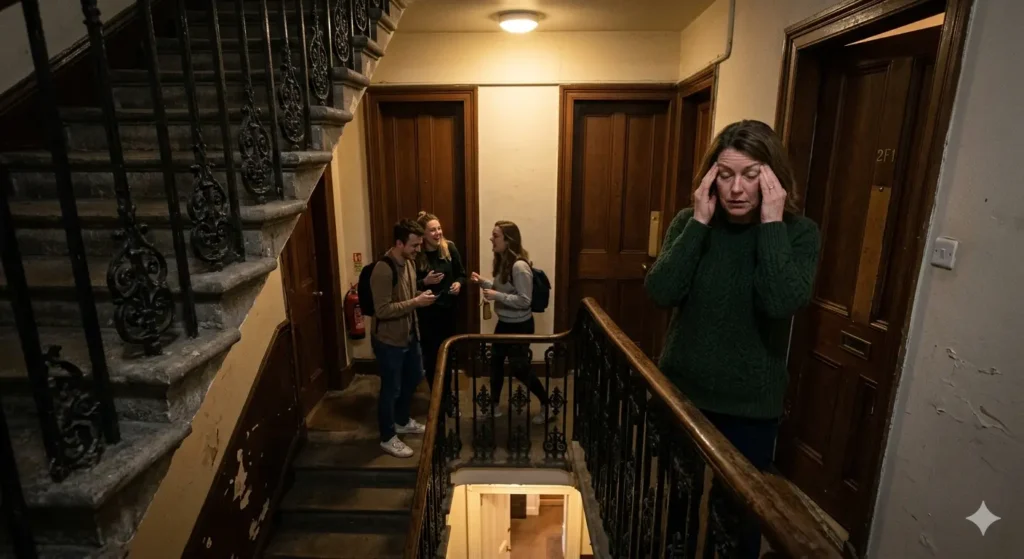
For people living in Balerno, Bruntsfield, Calton Hill, Colinton, Corstorphine, Currie, Dean Village, Duddingston and the Grassmarket, regular late‑night noise from short‑term let guests can disrupt sleep, affect work and school, and damage health and wellbeing. Repeated disturbance can also undermine community cohesion, especially in stairwells and tenements where sound travels easily.
In parts of Edinburgh with many short‑term lets, there is added concern about “party flats”, stair safety, damage to shared areas and an overall loss of neighbourliness for local residents. Edinburgh council has recognised these problems and treats noise and antisocial behaviour linked to short lets as a serious issue that can justify enforcement action.
Step‑by‑step actions to solve the problem
Follow these steps in order, moving on if the previous one does not resolve the issue or feels unsafe.
- Assess the situation and stay safe
- If there is violence, threats, criminal behaviour or serious disorder, contact Police Scotland on 999 in an emergency or 101 in non‑emergencies.
- If it is “only” noise but persistent or very loud, move to the next steps.
- Try polite, direct contact (if safe)
- If you feel comfortable, knock on the door at a reasonable time and calmly explain that the noise is disturbing neighbours.
- Sometimes guests do not realise how sound carries in Edinburgh tenements or in quiet streets like Balerno or Currie.
- Contact the host or managing agent
- Start keeping a written noise and incident log
- Note dates, start and end times, type of noise (music, shouting, dragging furniture), where you heard it, and how it affected you (e.g. “children woken”, “had to move bedroom”).
- Record photographs or short videos of common areas only if safe and lawful to do so, avoiding filming inside the property.
- Check if the property is a licensed short‑term let
- Report ongoing noise or antisocial behaviour to Edinburgh council
- Report criminal or immediate antisocial behaviour to the police
- The Scottish Government’s approach to antisocial behaviour recognises that threats, abuse and serious disturbance should involve Police Scotland alongside local authority action.
- Reference your existing reports to Edinburgh council where relevant so that records can be linked.
- Escalate if the noise becomes a statutory nuisance
- Under Part III of the Environmental Protection Act 1990, as applied in Scotland, and Part 5 of the Antisocial Behaviour etc. (Scotland) Act 2004, the council can treat serious or recurrent noise as a statutory nuisance and serve an abatement notice on the person responsible.
- Continued breach of an abatement notice can lead to fines and seizure of noise‑making equipment.
Which Edinburgh council service handles it
The main route is through Edinburgh council’s private housing and licensing teams, using the “Report a problem with a short term let” service. This allows the council to link noise and antisocial behaviour complaints to specific licensed or unlicensed short‑term lets.
For serious or repeated noise issues, the council’s environmental health or noise nuisance service can become involved, using powers under the Antisocial Behaviour etc. (Scotland) Act 2004 and related legislation. Where planning breaches are suspected (for example, a residential flat repeatedly used as a large party venue), the planning enforcement team can also investigate.
Information or documents you will need
When reporting a noisy short‑term let linked to guests in Balerno, Bruntsfield, Calton Hill, Colinton, Corstorphine, Currie, Dean Village, Duddingston or the Grassmarket, gather as much detail as you reasonably can.
Useful items include:
- Exact address of the flat or house, including stair and flat number where applicable.
- Your own address and contact details so Edinburgh council can keep you updated (you can request that your details are kept confidential from the host).
- Description of the noise and behaviour (e.g. “amplified music and shouting”, “regular late‑night parties with guests arriving in taxis”).
- Dates and times recorded in your noise log over a period of days or weeks, showing any pattern.
- Any evidence of short‑term letting, such as the name of the booking platform, listing ID if known, or comments from guests.
- Confirmation of any previous reports to the council or police, including reference numbers if you have them.
Expected response time
Response times depend on the level of risk and whether the complaint is about a one‑off episode or a recurring problem. Edinburgh council’s noise and antisocial behaviour services are empowered to provide up to 24‑hour cover where they implement a noise nuisance service under Part 5 of the Antisocial Behaviour etc. (Scotland) Act 2004.
In practice, urgent or out‑of‑hours cases are prioritised where there is serious disturbance, while less urgent pattern‑based complaints may take several days or weeks to progress through investigation and potential enforcement. Once a statutory nuisance is confirmed and an abatement notice is served, there are strict timescales for compliance and the council can move relatively quickly if the noise continues.
What to do if follow‑up is required
If the problem continues after your first report, keep updating your noise log and send further information to Edinburgh council using the same reference number so that officers can see the ongoing pattern. If you feel the response has been too slow or incomplete, you can ask for an update or escalation within the council’s complaints process.
Where the disturbance continues despite council involvement, mention all previous action when speaking to Police Scotland about ongoing antisocial behaviour. The Scottish guidance on antisocial behaviour expects local authorities, police and landlords to work together, and detailed records from local residents help them build a stronger case. In some cases, as reported by Scottish housing news sources, persistent issues have led to planning enforcement and the ending of unlawful short‑term let use at particular properties.
Rights and responsibilities under UK and Scottish rules
Local residents across Edinburgh have a right to a “peaceful life” under Scottish antisocial behaviour and environmental protection law. Serious or regular noise from short‑term let guests can amount to antisocial behaviour and, where it qualifies as a statutory nuisance, the council must take reasonable steps to investigate and, if appropriate, act.
At the same time, residents are expected to act reasonably – for example, tolerating everyday living noise, avoiding confrontation, and using formal routes where informal approaches fail. Hosts and landlords of short‑term lets have legal responsibilities to manage their guests’ behaviour, comply with licensing conditions and avoid causing a nuisance to neighbours, and Edinburgh council can take licensing or enforcement action if they do not.

Practical tips to avoid problems in future
Residents in Balerno, Bruntsfield, Calton Hill, Colinton, Corstorphine, Currie, Dean Village, Duddingston and the Grassmarket can take a few practical steps that reduce the risk and impact of noisy guests. While you cannot control who a host accepts, you can make sure issues are spotted and addressed early.
Consider the following tips:
- Build good communication in your stair or street so neighbours can check in with each other quickly when there is disturbance.
- If you share a stair with a known short‑term let, politely ask the host for a clear contact number and to share house rules that stress quiet hours and stair safety.
- Keep a simple template noise log ready so you can start recording dates and times as soon as a pattern emerges, rather than trying to remember later.
- For vulnerable residents, agree in advance who will contact the council or police if problems arise, so no one feels they must confront noisy guests directly.
Evergreen guidance from sources such as Edinburgh Daily News and official council pages stresses the value of early, accurate reporting and consistent records when dealing with noisy short‑term let guests. By following the clear steps above, local residents can use Edinburgh council procedures and Scottish law to stop persistent noise quickly and legally while helping protect their communities for the long term.
What are the current short-term let rules in Scotland that help residents deal with noisy Airbnb guests in Edinburgh?
Scotland requires all short-term let hosts to obtain a licence from their local council before operating. The licensing scheme, introduced in October 2022, sets safety and behaviour standards that hosts must follow.
If guests cause persistent noise or antisocial behaviour, neighbours can report the property to the local council. Repeated complaints can lead to licence conditions being enforced, suspended, or revoked, preventing the property from operating as a short-term let.