Edinburgh public spaces provide open access to centuries of architectural evolution and civic history without requiring an admission fee. Visitors can explore the preserved medieval layouts of the Old Town and the neoclassical designs of the New Town. These locations function as open-air educational environments illustrating the political, social, and military transformations of the Scottish capital.
- Why Is the National Museum of Scotland the Primary Free Cultural Institution?
- How Does Holyrood Park Illustrate the Volcanic Geology of the Region?
- What Free Art Collections Can Visitors Access in the City Centre?
- How Do Calton Hill Monuments Document the Scottish Enlightenment Era?
- Why Are the Free Public Gardens Essential for Urban Biodiversity?
- What Free Historical Walking Routes Exist Along the Royal Mile?
- How Do Free Literary Resources Benefit Public Education in Edinburgh?
- How Do Municipal Transportation Policies Affect Free Site Accessibility?
- FAQs About Free Things to Do in Edinburgh
- What are the best indoor free things to do in Edinburgh during rainy weather?
- Can visitors access the Scottish Parliament building for free?
- Are there any free public events during the Edinburgh Festival Fringe?
- How much time is required to walk up Arthur’s Seat safely?
- Is admission to the Royal Botanic Garden Edinburgh completely free?
The architectural heritage of Edinburgh includes distinct preservation zones established by the Civic Amenities Act 1967. The Old Town contains narrow alleyways called closes that branch off the main historic spine. The New Town showcases organized grids built between 1767 and 1850 to accommodate the wealthy merchant class. These public squares and roadways represent the historical urban segregation based on economic status during the Scottish Enlightenment.
The development of public parks across the municipal landscape served to improve public health during industrialization. The city council acquired private estates during the nineteenth century to establish recreational green spaces for factory laborers. These municipal actions transformed exclusive hunting grounds and private gardens into permanent public assets. Modern visitors utilize these zones to observe monumental sculptures and historical boundary markers.
Public architecture in the city center showcases the wealth generated through global trade networks. Buildings along the principal thoroughfares incorporate local gray sandstone quarried from Craigleith. The construction materials resist weathering and create a uniform visual identity across the urban environment. This preservation strategy ensures that the historical aesthetic remains intact for contemporary educational observation.
Why Is the National Museum of Scotland the Primary Free Cultural Institution?
The National Museum of Scotland provides comprehensive educational exhibits covering international science, technology, decorative arts, and Scottish history without charging an entry fee. Located on Chambers Street, the institution houses over twenty thousand artifacts across multiple gallery wings. It serves as the primary repository of national material culture and attracts over two million visitors annually.
The museum building comprises two distinct structural elements that reflect different architectural eras. The Victorian wing features a glass-roofed Grand Gallery completed in 1866 based on designs by Francis Fowke. The modern sandstone extension opened in 1998 to house the national historical collections chronologically. This spatial arrangement allows individuals to walk through Scottish history from prehistoric origins to the late twentieth century.
Artifacts within the Scottish galleries include international treasures like the Lewis Chessmen carved from walrus ivory. Visitors can observe the Maiden, an early form of guillotine utilized during the sixteenth century for public executions. The natural world galleries feature the taxidermy remains of Dolly the Sheep, the first mammal cloned from an adult somatic cell in 1996. These exhibits provide verified scientific and historical data to academic researchers and public groups.
The educational infrastructure inside the museum utilizes interactive displays to explain complex industrial processes. The science and technology galleries demonstrate the mechanics of steam power, digital automation, and renewable energy systems. The institution receives funding from the Scottish Government via National Museums Scotland to maintain free public access. This financial model ensures equitable access to cultural education for domestic and international student populations.
How Does Holyrood Park Illustrate the Volcanic Geology of the Region?
Holyrood Park provides immediate public access to ancient volcanic landforms and diverse ecological habitats situated within the urban boundary. The royal park encompasses 650 acres of terrain managed by Historic Environment Scotland for conservation purposes. The geographical feature contains Arthur’s Seat, an extinct volcano that rises 251 meters above sea level.
The geological formation of the park dates back approximately 340 million years to the Carboniferous period. Volcanic eruptions deposited layers of basalt lava and ash across the sedimentary basin. Subsequent glacial movement during the last ice age eroded the softer rock structures to expose prominent cliffs called crags. The Salisbury Crags display a classic sill formation where magma intruded between existing layers of sedimentary rock.
The park contains three freshwater lochs that support distinct populations of waterfowl and aquatic plants. St Margaret’s Loch, Dunsapie Loch, and Duddingston Loch serve as critical urban wildlife sanctuaries. Duddingston Loch remains the sole natural freshwater loch within the city boundary, as the others were constructed during the nineteenth century to improve the park aesthetic. These water bodies regulate local microclimates and prevent urban water runoff issues.
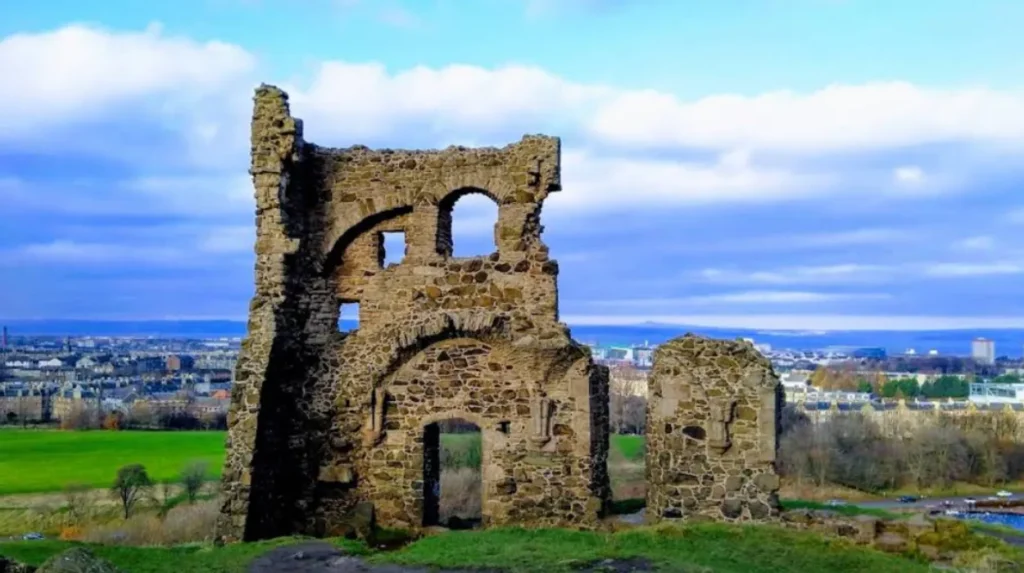
Human occupation of the volcanic landscape dates back to the Bronze Age, as evidenced by agricultural terraces on the hillsides. Visitors can view the ruins of St Anthony’s Chapel, a fifteenth-century stone structure overlooking the northern loch. The park remains free to enter at all hours, providing a natural laboratory for studying structural geology and botanical diversity. The path networks require appropriate footwear due to the steep gradients and exposed volcanic scree.
What Free Art Collections Can Visitors Access in the City Centre?
The National Galleries of Scotland manage multiple public art institutions that offer free admission to their permanent European and Scottish collections. The primary neoclassical buildings sit on The Mound, positioned directly between the Old Town and New Town districts. These galleries house masterpieces spanning the Renaissance to the contemporary era, ensuring public access to fine art education.
The National Gallery building, designed by William Henry Playfair, opened to the public in 1859. The interior spaces utilize natural toplighting systems to illuminate large-scale oil paintings without causing UV damage to the pigments. The permanent collection features prominent works by international artists, including Rembrandt van Rijn, Claude Monet, and Vincent van Gogh. Scottish portraiture and landscape art receive dedicated gallery space to highlight domestic artistic movements.
The Scottish National Portrait Gallery on Queen Street occupies a red sandstone Gothic revival building completed in 1889. The structure functions as a visual history of Scotland, displaying portraits of monarchs, scientists, and writers. The Great Hall features an extensive frieze painted by William Hole, illustrating key historical figures in chronological succession. This visual presentation provides biographical context to the political history of the nation.
Public access to modern art occurs at the Scottish National Gallery of Modern Art, located in the western parklands. The site consists of two opposing classical buildings surrounded by landscaped sculpture parks designed by Charles Jencks. The indoor galleries display twentieth-century art movements, including Surrealism, Cubism, and contemporary installation art. These free institutions implement strict environmental controls to preserve sensitive canvas and paper materials.
How Do Calton Hill Monuments Document the Scottish Enlightenment Era?
Calton Hill functions as a free civic acropolis containing classical monuments that commemorate military victories and intellectual achievements. The hill is a designated UNESCO World Heritage site located at the eastern end of Princes Street. The architectural structures reflect the nineteenth-century ambition to establish the city as the Athens of the North.
The National Monument of Scotland stands as the most prominent structure on the hill, modeled after the Parthenon in Athens. Construction commenced in 1822 to honor Scottish soldiers who died during the Napoleonic Wars. The project stalled in 1829 due to a lack of municipal funds, leaving twelve Doric columns intact. This incomplete structure represents the financial volatility of early nineteenth-century civic development programs.
The Nelson Monument occupies the highest point of the hill, built between 1807 and 1815 to commemorate the Battle of Trafalgar. The stone tower incorporates a mechanical time ball installed in 1852 by Astronomer Royal Charles Piazzi Smyth. The time ball drops at exactly one o’clock daily to provide a visual time signal for ships sailing in the Firth of Forth. This system operated in tandem with the acoustic signal from Edinburgh Castle.
The City Observatory on the hill represents the scientific advancement of the Scottish Enlightenment. Designed by William Henry Playfair in 1818, the Greek-revival compound housed astronomical instruments utilized for maritime navigation calculations. The site is now open freely to the public as a contemporary visual arts space. The surrounding walkways provide panoramic views utilized by urban planners to monitor the structural growth of the cityscape.
Why Are the Free Public Gardens Essential for Urban Biodiversity?
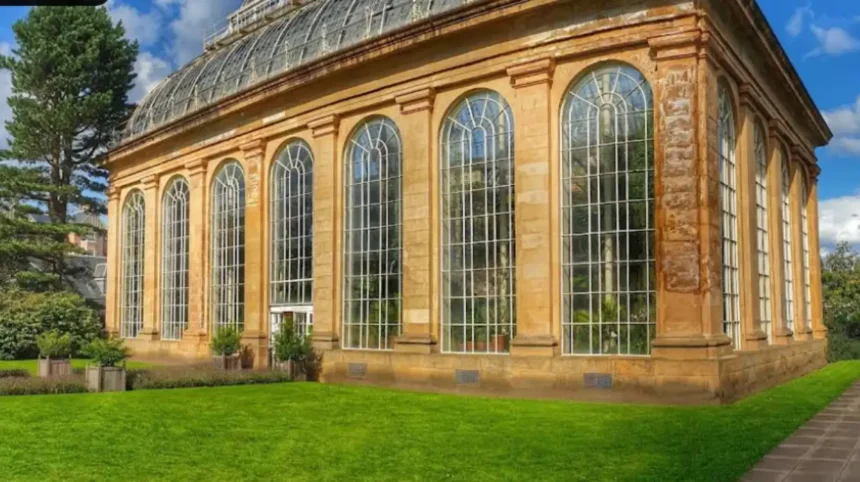
The Royal Botanic Garden Edinburgh offers free admission to its extensive outdoor living collection, which supports global botanical research and urban biodiversity. Founded in 1670 as a physic garden near Holyrood, the institution relocated to its current 70-acre Inverleith site in 1820. The garden contains over thirteen thousand distinct plant species organized by geographic origin and ecological niche.
The outdoor grounds feature specialized conservation areas, including a dedicated alpine house, a Chinese hillside, and a native Scottish heath garden. These microenvironments allow researchers to study plant responses to climate variations within a controlled urban setting. The arboretum contains mature tree specimens from North America, Asia, and Europe, some exceeding two centuries in age. This diverse canopy provides nesting sites for migratory bird populations and local insects.
The garden operates as a registered charity supported by the Scottish Government’s Rural and Environment Science and Analytical Services division. The primary scientific objective focuses on documenting and conserving endangered plant species from vulnerable global ecosystems. Visitors can access the outdoor landscape daily without payment, though specific indoor glasshouses require an exhibition ticket. The paths incorporate permeable surfaces to manage heavy rainfall events efficiently.
Smaller public green spaces like Dunbar’s Close Garden provide secluded habitats within the densely built Old Town. Located off the Royal Mile, this hidden garden recreation mimics a seventeenth-century formal parterre layout. The gravel pathways, clipped box hedging, and traditional fruit trees attract urban pollinators like bumblebees and hoverflies. These small-scale urban gardens mitigate the heat island effect caused by concrete paving.
What Free Historical Walking Routes Exist Along the Royal Mile?
The Royal Mile comprises a series of historic streets connecting Edinburgh Castle to the Palace of Holyroodhouse across a single Scots mile. This public thoroughfare serves as the primary walking route for exploring medieval urban architecture and political history. The street features multi-story stone tenements, historic marketplaces, and municipal buildings accessible to the public without cost.
Walking eastward from the castle esplanade, visitors cross the Lawnmarket, which historically hosted cloth merchants and outdoor markets. The street layout preserves the medieval burgage plots, characterized by narrow street fronts extending deep into back plots. The cobbles feature distinct paving patterns marking the locations of vanished historical structures like the Old Tolbooth prison. This prison functioned as the administrative heart of the burgh until its demolition in 1817.
The midsection of the route contains the Parliament Square complex and the High Kirk of Edinburgh, commonly known as St Giles’ Cathedral. The cathedral features a prominent fifteenth-century crown spire that dominates the central skyline. The interior contains the Thistle Chapel, noted for its intricate neo-Gothic wood carvings completed in 1911. The building remains open for public entry, allowing individuals to view historical stained-glass windows and military monuments.
The lower section, known as Canongate, operated as an independent burgh until its formal incorporation into the city in 1856. The Canongate Tolbooth, constructed in 1591, showcases a prominent projecting clock face and functions as a free social history museum today. The adjacent Canongate Kirkyard contains the graves of notable Enlightenment figures, including economist Adam Smith and poet Robert Fergusson. This walking route provides a continuous chronological narrative of Scottish urban governance.
How Do Free Literary Resources Benefit Public Education in Edinburgh?
Edinburgh was designated as the first UNESCO City of Literature in 2004 due to its deep publishing history and literary heritage. The city maintains public libraries and free literary exhibitions that support community literacy and historical research. These resources provide open access to rare manuscripts, local archive materials, and educational workspaces for the general population.
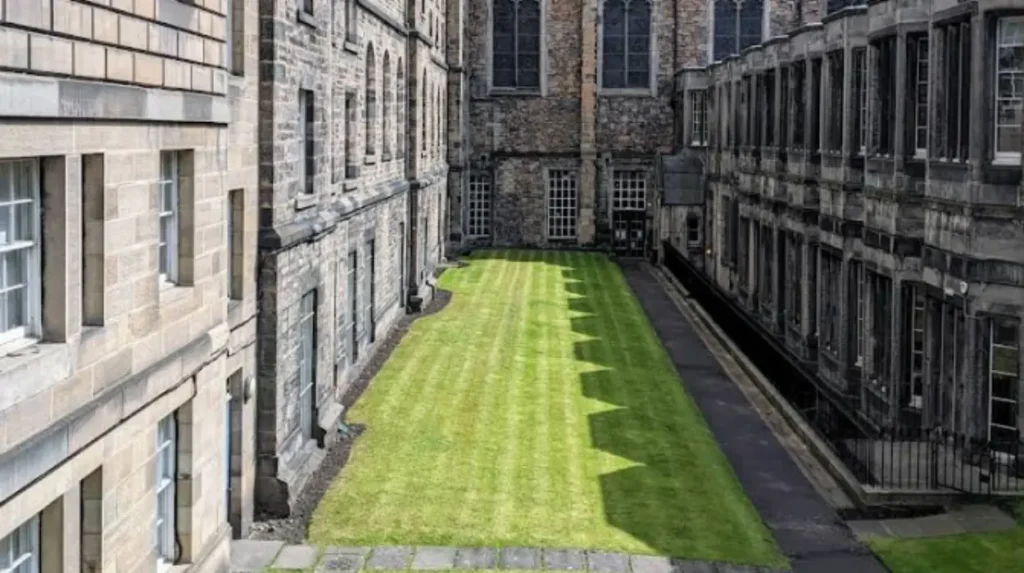
Des Nelson
The Central Library on George IV Bridge opened in 1890 using funding provided by philanthropist Andrew Carnegie. The building features a French Renaissance facade and contains specialized departments for reference, fine art, and local history. The Edinburgh Room houses historical maps, newspapers, and photographic prints documenting the urban evolution of the city since the seventeenth century. These archives remain free for public inspection under the guidance of trained archivists.
The Writers’ Museum, located in Lady Stair’s Close, celebrates the lives of Robert Burns, Sir Walter Scott, and Robert Louis Stevenson. The free museum occupies a seventeenth-century townhouse restored by Lord Rosebery in 1897. The exhibits display personal belongings, first edition books, and portraits of the authors who shaped national identity. This institution demonstrates the intersection of geography and creative writing during the nineteenth century.
The Scottish Poetry Library near the Royal Mile offers free access to a comprehensive collection of modern and classical poetry. The building features an award-winning architectural design by Malcolm Fraser, completed in 1999 using sustainable materials. The library provides public reading rooms, digital listening posts, and educational workshops to promote the spoken word. These literary institutions collaborate to maintain free public access to creative educational media.
How Do Municipal Transportation Policies Affect Free Site Accessibility?
The accessibility of free cultural sites depends on municipal transportation infrastructure and pedestrian zoning policies implemented by the city council. The city features a centralized transport hub at Edinburgh Waverley railway station, which facilitates the arrival of regional and international visitors. Integrated transport options include extensive bus routes, tram lines, and dedicated cycle networks that connect the urban periphery to the central historic core.
The City of Edinburgh Council implements the City Centre Transformation strategy to prioritize pedestrian movement over private vehicular traffic. This urban planning policy involves widening pavements, installing permanent cycle lanes, and restricting car access on historic streets like the Royal Mile. These interventions reduce localized air pollution and improve safety for individuals walking between free museums and parks. The pedestrian zones incorporate dropped curbs and tactile paving to assist individuals with mobility impairments.
Public transport links remain critical when industrial actions or technical failures disrupt standard rail networks between major metropolitan zones. Rail operations managed by ScotRail transport thousands of commuters and tourists daily into the city center from neighboring regions. When disruption occurs on these primary lines, passengers utilize alternative bus networks to reach the urban core. This multimodal transport resilience prevents economic losses for the free tourism sector during peak travel seasons.
The local tram network connects Edinburgh Airport directly to Newhaven via the city center, passing major free landmarks along Princes Street. This infrastructure project, completed in its expanded form in 2023, utilizes zero-emission vehicles to support local carbon reduction targets. The tram stops feature digital information boards displaying real-time arrival data and accessible boarding platforms. This integrated network ensures that visitors can access geographically dispersed free sites efficiently.
FAQs About Free Things to Do in Edinburgh
What are the best indoor free things to do in Edinburgh during rainy weather?
The National Museum of Scotland and the National Galleries of Scotland provide extensive indoor spaces with free public admission. Visitors can explore multiple floors of historical, scientific, and artistic exhibitions without exposure to precipitation. These institutions feature public amenities, cloaking facilities, and educational resource centers.
Can visitors access the Scottish Parliament building for free?
The Scottish Parliament building in the Holyrood area offers free public access to its exhibition spaces and public galleries. Individuals can view live parliamentary debates or take guided architecture tours by booking in advance through the official parliament website. The structure, designed by Enric Miralles, opened in 2004 and features unique modernist architecture.
Are there any free public events during the Edinburgh Festival Fringe?
The Edinburgh Festival Fringe features numerous free street performances along the Royal Mile and Mound Precinct throughout August. Public venues and comedy clubs also host non-ticketed shows under the Free Fringe model, where attendees can choose to donate at the conclusion. These options allow budget travelers to experience live performing arts.
How much time is required to walk up Arthur’s Seat safely?
A standard walk to the summit of Arthur’s Seat from the Holyrood park rocky paths requires between 60 and 90 minutes. The trail conditions vary from smooth grass paths to steep, uneven volcanic rock surfaces that become slippery when wet. Walkers must wear stable footwear and check local weather forecasts before commencing the ascent.
Is admission to the Royal Botanic Garden Edinburgh completely free?
Admission to the extensive outdoor landscaped grounds and arboretum of the Royal Botanic Garden Edinburgh is completely free for all visitors. The institution only charges an admission fee for entry into the specific indoor tropical glasshouse preservation units. The main outdoor gates remain open daily except during severe high-wind weather warnings.