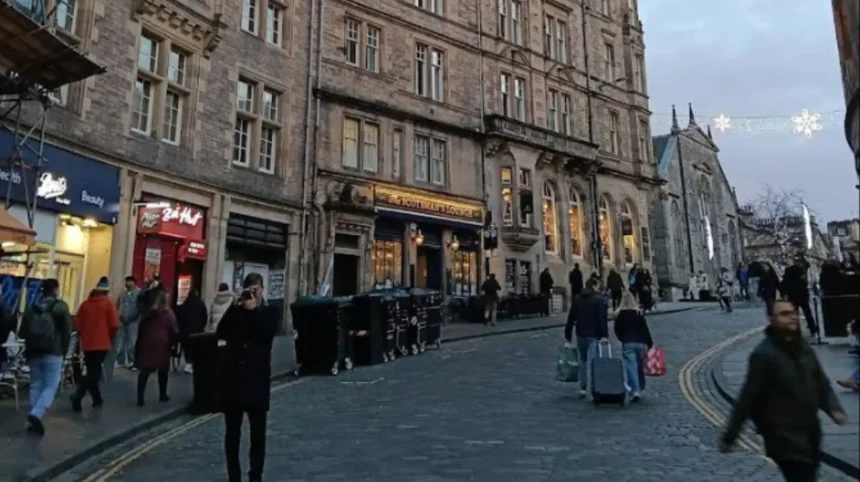
The central thoroughfare of Edinburgh, Scotland, known globally as the Royal Mile, represents the primary cultural and historical spine of the city. Stretching across the rugged volcanic landscape of the Old Town, this iconic route connects two foundational seats of royal power and has witnessed the transformation of Scottish society over nine centuries. Understanding its evolution provides direct insight into the political, architectural, and legal history of the Scottish capital.
- What is the Historical Origin of the Royal Mile in Edinburgh?
- What is the Architectural Structure and Geography of the Royal Mile?
- What are the Five Key Sectors of the Royal Mile?
- What is the Cultural and Political Significance of St Giles Cathedral?
- How do the Historic Closes and Underground Alleys Function?
- What is the Relationship Between the Royal Mile and Monarchical Power?
- How did Commercial Trade Shape the Evolution of the Street?
- What Role does the Royal Mile Play in Modern Tourism and Culture?
- FAQs About Famous Street in Edinburgh
- What is the difference between a close a wynd and a court?
- Why is the historic road called the Royal Mile if it is longer than a mile?
- Did the real-life historical events on this street inspire the story of Jekyll and Hyde?
- What was the dynamic purpose of the historic Flodden Wall across the High Street?
- How does the modern Scottish Parliament building integrate into the historic area?
What is the Historical Origin of the Royal Mile in Edinburgh?
The historical origin of the Royal Mile dates back to the twelfth century during the reign of King David I, who established Edinburgh as a royal burgh in the year 1125. The monarch granted trading privileges to the settlement, prompting the development of a central marketplace along the high ridge descending from the fortress rock. This geographic spine became a processional highway for Scottish kings and queens, establishing a permanent link between administrative, military, and religious institutions.
The street grew rapidly as a dense commercial corridor where merchants traded domestic goods, specialized textiles, and imported commodities. The construction of protective perimeters, specifically the King’s Wall and the later 1513 Flodden Wall, physically constrained the urban population within a narrow defensive zone. This spatial restriction forced the inhabitants to construct vertical tenements up to fourteen stories high, creating an early form of high-density urban infrastructure.
What is the Architectural Structure and Geography of the Royal Mile?
The geographic framework of the Royal Mile spans a precise distance of one Scottish mile, which measures exactly one point Roman eight kilometers, or one thousand eight hundred and eighty meters. The terrain follows a distinct crag-and-tail formation created by glacial erosion during the last ice age, sloping downward from the volcanic plug of Castle Rock at one hundred and thirty-five meters above sea level to the valley floor at thirty-five meters elevation. This linear route is divided into five distinct historical sectors, specifically Castlehill, Lawnmarket, High Street, Canongate, and Abbey Strand.
The architectural profile of this historic thoroughfare showcases building styles spanning five centuries, including medieval timber frameworks, Scots Baronial stone facades, and classical Georgian institutional structures. Branching symmetrically from the main pavement are narrow perpendicular alleyways known as closes, wynds, and courts. These narrow pathways served as dense residential arteries and defensive corridors, with deep tenements overhanging the cobblestone passages to maximize the utilization of limited space within the city walls.
What are the Five Key Sectors of the Royal Mile?
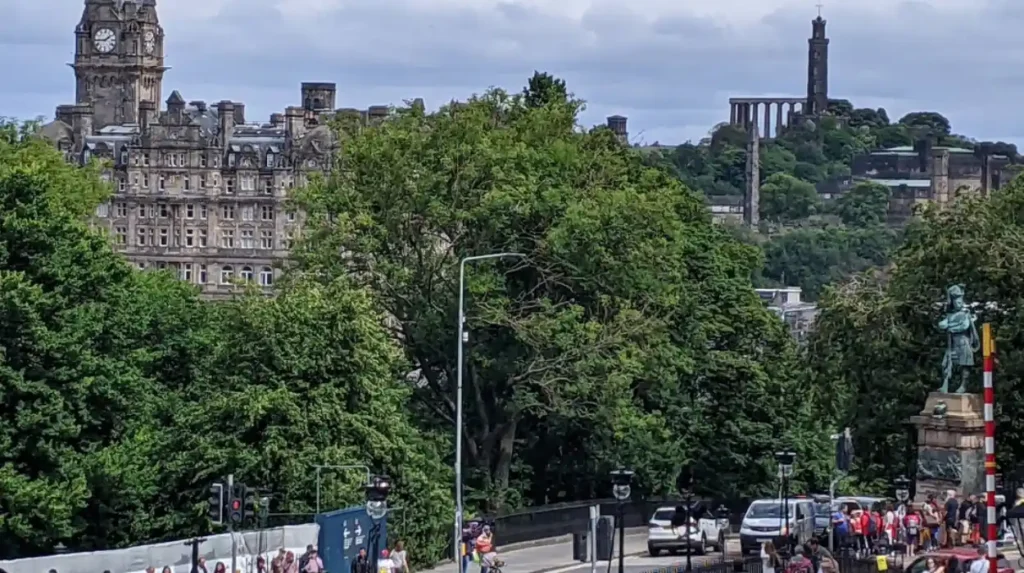
The continuous stretch of the Royal Mile is comprised of five separate street names that reflect the historical utility and administrative boundaries of the old municipality. Castlehill forms the uppermost western sector immediately adjacent to the castle esplanade, acting as the defensive vanguard of the ridge. Lawnmarket follows directly below, operating historically as an open-air marketplace for specialized fabrics, yarns, and linens.
High Street constitutes the civic and religious heart of the Old Town, anchoring the legal courts, municipal chambers, and ecclesiastical headquarters. Canongate extends further eastward, functioning until the year 1856 as an independent burgh governed by the Augustinian canons of the nearby abbey. Abbey Strand forms the final eastern terminus, providing immediate physical access to the royal palace grounds and historical sanctuary zones.
What is the Cultural and Political Significance of St Giles Cathedral?
St Giles Cathedral stands as the principal religious anchor of the High Street sector, founded in the year 1130 by King David I to serve as the mother church of Edinburgh. The architectural centerpiece features a prominent fifteenth-century crown steeple that dominates the Old Town skyline, constructed using precise ashlar masonry techniques. The interior houses the Thistle Chapel, which serves as the formal seat for the Most Ancient and Most Noble Order of the Thistle.
Politically, the cathedral operated as the central epicenter of the Scottish Reformation during the sixteenth century, driven by the intense sermons of the reformer John Knox. The building witnessed the radical transition of the nation from Catholicism to Presbyterianism, changing the governance models of Scottish society. The structure also accommodated various civil institutions across its history, including early legislative assemblies, judicial courts, and a municipal prison facility.
How do the Historic Closes and Underground Alleys Function?
The historic closes of the Royal Mile operate as a complex network of narrow pedestrian thoroughfares branching off the primary downhill road. Mary King’s Close remains the most complete surviving example of a seventeenth-century urban street grid, sealed beneath the City Chambers building in the year 1753. These subterranean rooms and lanes provide direct physical evidence of residential life, sanitation practices, and structural engineering during periods of industrial growth.
These alleys functioned as specialized micro-communities where distinct social classes lived in close vertical proximity within the same stone tenement structures. Wealthier citizens occupied the central floors to escape street filth, while low-income laborers inhabited the damp basements and drafty upper garrets. The spatial design restricted ventilation, which contributed significantly to the rapid transmission of bubonic plague outbreaks in the years 1645 and 1646.
What is the Relationship Between the Royal Mile and Monarchical Power?
The Royal Mile serves as the permanent physical corridor connecting the two primary symbols of monarchical authority in Scotland, specifically Edinburgh Castle and the Palace of Holyroodhouse. Edinburgh Castle occupies the western peak, functioning historically as a secure military fortress and royal treasury since the twelfth century. The stronghold houses the Honours of Scotland, which are the oldest crown jewels in the United Kingdom, alongside the Stone of Destiny.
At the eastern base lies the Palace of Holyroodhouse, which developed from a twelfth-century Augustinian abbey into the official residence of the British monarch in Scotland. The palace served as the principal seat of Mary, Queen of Scots, during her turbulent reign between the years 1561 and 1567. The physical journey down the street from the castle to the palace symbolizes the historical transition of power from military defense to domestic governance.
How did Commercial Trade Shape the Evolution of the Street?
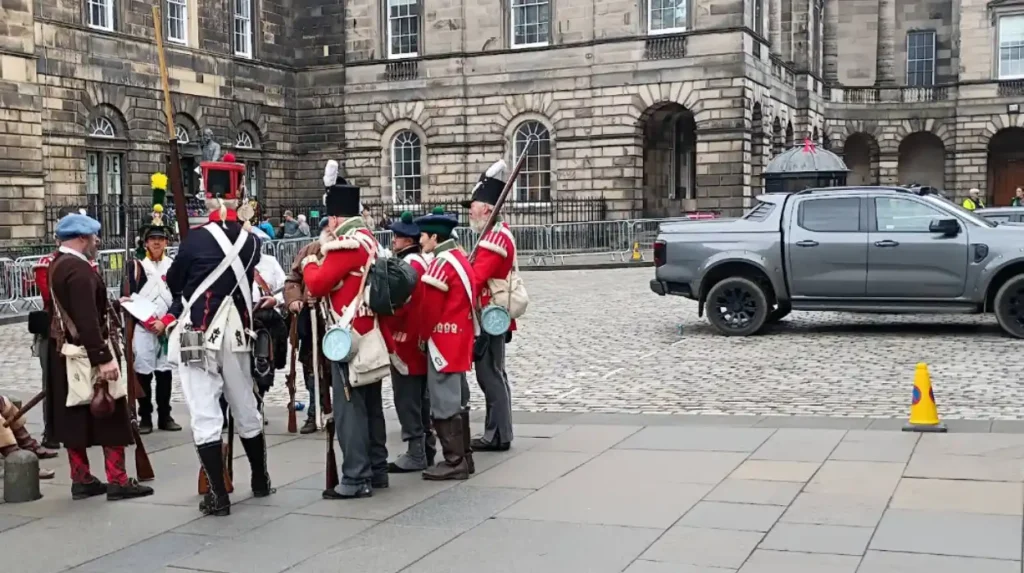
Commercial trade dictated the spatial organization, legal regulations, and architectural modifications of the Royal Mile throughout its history. The street functioned as a highly regulated market zone where the local government enforced strict quality controls and collection of tariffs. The Mercat Cross, reconstructed near St Giles Cathedral, served as the legal site where royal proclamations were read and commercial disputes were settled.
Specific commodities were restricted to designated zones along the street to maintain public order and optimize municipal tax collections. The Lawnmarket handled raw textiles, while the adjacent Grassmarket processed agricultural livestock, including cattle, horses, and bulk grain shipments. The financial capital generated by these intensive merchant activities funded the construction of massive stone civic structures and established Edinburgh as a primary trading hub within northern Europe.
What Role does the Royal Mile Play in Modern Tourism and Culture?
The Royal Mile functions today as the primary economic and cultural engine of Edinburgh, drawing millions of international visitors annually to its preserved historic landscape. The thoroughfare acts as the main staging ground for the Edinburgh Festival Fringe, established in the year 1947 as the largest arts festival globally. During the month of August, the High Street sector transforms into an open-air performance arena for theatrical companies, musicians, and buskers.
The street preserves its historical legacy while accommodating modern civic institutions, notably the Scottish Parliament building designed by architect Enric Miralles and opened in the year 2004. This contemporary granite, oak, and steel structure sits at the eastern end of the street, directly opposing the ancient stone castle. The coexistence of modern democratic assemblies, active commercial enterprises, and protected historical monuments preserves the global relevance of the thoroughfare.
FAQs About Famous Street in Edinburgh
What is the difference between a close a wynd and a court?
A close is a narrow private pedestrian passage that leads to residential tenements, while a wynd is a public lane wide enough for horse-drawn carts to transit. A court consists of an open residential square surrounded by high stone buildings, accessible via a covered entryway.
Why is the historic road called the Royal Mile if it is longer than a mile?
The street measures one standard Scottish mile, an ancient unit of measurement used before the adoption of the English statute mile in the year 1707. One Scottish mile equals one thousand eight hundred and eighty meters, making it roughly two hundred meters longer than a modern imperial mile.
Did the real-life historical events on this street inspire the story of Jekyll and Hyde?
Yes, the dual life of Deacon William Brodie, who was a respected town councilor by day and a midnight burglar along the Royal Mile, inspired the author Robert Louis Stevenson. Brodie was captured and executed at the Old Tolbooth gallows in the year 1788.
What was the dynamic purpose of the historic Flodden Wall across the High Street?
The Flodden Wall was erected by the city council in the year 1513 to defend the capital from an expected English military invasion following the death of King James IV. The wall physically enclosed the population and forced the development of vertical stone tenement architecture.
How does the modern Scottish Parliament building integrate into the historic area?
The building sits at the eastern foot of the Canongate sector, utilizing an abstract architectural style meant to mimic the surrounding hills of Holyrood Park. Opened in the year 2004, it places the modern legislative assembly within the oldest royal footprint of the city.