Edinburgh is not located in a county today, as Scotland abolished its traditional county system for administrative purposes in 1975. The city is currently a unitary council area known as the City of Edinburgh, separate from the surrounding Midlothian council area.
Historically, Edinburgh was the county town of Edinburghshire, also known as Midlothian. The city gained a unique status as a “county of itself” in 1482 when James III granted it administrative independence. This designation meant that for centuries, the city functioned as an entity separate from the surrounding rural shire. In 1975, the Local Government (Scotland) Act 1973 replaced counties with regions and districts, and later in 1996, these were reorganized into the 32 unitary council areas that exist today.
The City of Edinburgh Council currently governs the entire council area, handling local matters like planning, education, transport, and waste management. While the term Midlothian is still used for the neighboring local authority, it no longer encompasses the capital city. The historical county boundaries remain relevant for specific registration purposes, such as land records or ceremonial functions, but they no longer define local government authority or modern political administration.
What Was the Historical County of Edinburgh?
The historical county of Edinburgh, formally called Edinburghshire, served as the primary administrative division surrounding the city for centuries. It was synonymous with the region of Midlothian, encompassing the lands that provided support and resources to the capital city.
The origins of the county date back to the medieval period when it was defined as the territory surrounding the royal burgh of Edinburgh. Throughout its history, the area was often referred to interchangeably as the shire of Edinburgh or Midlothian. By the early 20th century, the name Midlothian became the preferred term for both the county and its local government body, the Midlothian County Council.
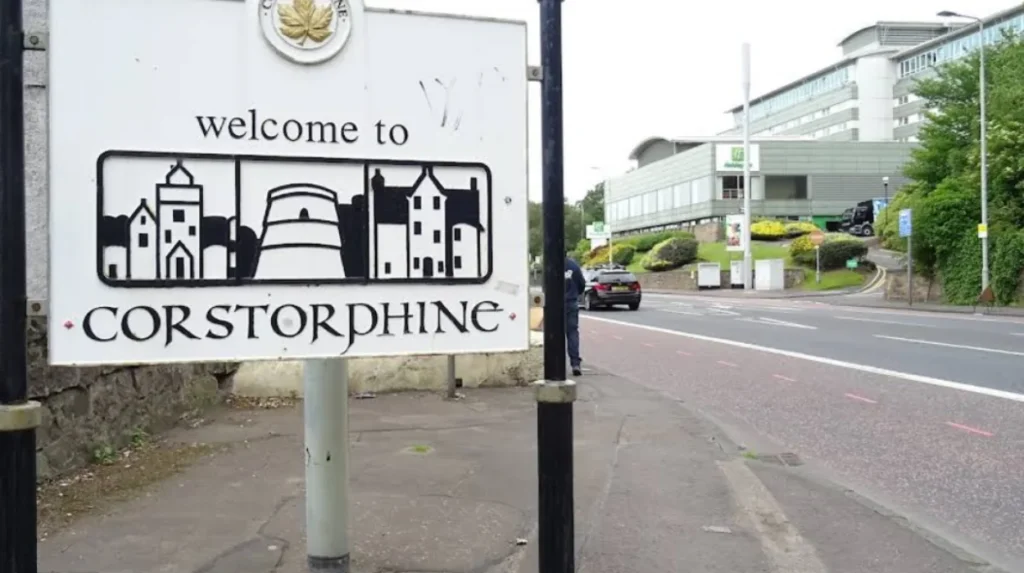
This historic county included various parishes, towns, and villages that have since been incorporated into the modern City of Edinburgh. Areas like Colinton, Corstorphine, Liberton, and Cramond were once distinct parishes within Edinburghshire before becoming part of the urban sprawl. The administrative complexity of these overlapping jurisdictions led to several boundary changes over the decades, culminating in the complete separation of the city into its own unitary authority.
How Does the City of Edinburgh Council Operate Today?
The City of Edinburgh Council is the local government authority responsible for the capital, operating as a unitary council area. It manages public services for over 530,000 residents across 17 distinct political wards throughout the entire city territory.
Established as a single-tier authority in 1996, the council replaced the previous two-tier system of regional and district governance. It holds responsibility for essential services including housing, social care, waste collection, and local economic development. The council consists of 63 elected councillors who represent the city population, with elections held every four to five years to ensure democratic representation.
The administrative functions of the council are headquartered at the City Chambers, with additional offices at Waverley Court. As a unitary authority, it has the autonomy to make decisions on local planning and infrastructure, such as the maintenance of the city transport network or the regeneration of areas like Leith. It works alongside the Scottish Parliament, which manages broader national issues like health, education, and the environment.
Why Do People Still Associate Edinburgh with Midlothian?
People often associate Edinburgh with Midlothian because the names were synonymous for centuries in historical, legal, and postal records. The historic county of Midlothian was formally known as the county of Edinburgh, leading to lingering cultural and geographic confusion.

The name Midlothian is derived from the wider Lothian region, which was divided into East, Mid, and West Lothian. Because Edinburgh served as the county town for Midlothian, many historical documents, family records, and maps display the city as the center of that county. Even after the 1975 reorganization, many older organizations, clubs, and institutions retained the name, embedding the association in local identity.
Furthermore, the term “county of Edinburgh” remained the official legal title for the shire until 1947, when it was formally changed to Midlothian by the Local Government (Scotland) Act 1947. Because these designations persisted in public records for so long, the transition to a standalone “City of Edinburgh” council area in 1996 did not fully erase the long-standing traditional association in the minds of residents and visitors.
How Did the 1996 Administrative Reform Change Edinburgh?
The Local Government etc. (Scotland) Act 1994, which took effect in 1996, established the City of Edinburgh as a modern unitary council area. This reform abolished the two-tier system of the Lothian Region and the City of Edinburgh District Council.
Prior to 1996, local government was fragmented between the Lothian Regional Council and the smaller District Council. The regional council held responsibility for major infrastructure such as transport and education, while the district council managed local services like libraries and sanitation. This structure was often perceived as complex and inefficient, leading to the push for a single, unified local authority.
By creating a unitary structure, the reform consolidated all local government functions under one umbrella, the City of Edinburgh Council. This change allowed for more streamlined management of the capital’s resources and clearer accountability for residents. The boundaries were set to match the previous district council area, ensuring that the entire city and its surrounding suburban districts remained under one unified administration.
Frequently Asked Questions
Is Edinburgh still considered part of the Midlothian area?
No, Edinburgh is not part of the modern Midlothian council area. While they are neighbors, they are two separate unitary authorities with their own independent councils, budgets, and administrative responsibilities for local services and planning.
What was the official name of the county that included Edinburgh?
The county was historically called Edinburghshire or the county of Edinburgh. It was formally renamed Midlothian in 1947 following a long period where the name Midlothian was used informally and in local government contexts to avoid confusion with the city.
Can I still use a county address for Edinburgh?
You do not need to use a county in your address for Edinburgh. Modern postal systems rely on the city name and the specific postcode, as the historic county system is no longer relevant for mail delivery or official government correspondence.
What is the difference between Lothian and Midlothian?
Lothian is a historic region comprising East Lothian, West Lothian, and Midlothian. Midlothian specifically refers to the central portion of that region, whereas “Lothian” is a broader geographical term that covers the entire area south of the Firth of Forth.
Who governs Edinburgh today?
The City of Edinburgh Council governs the city. It is a unitary authority consisting of 63 elected councillors representing 17 wards, and it is responsible for delivering all local government services within the city’s defined council area boundaries.