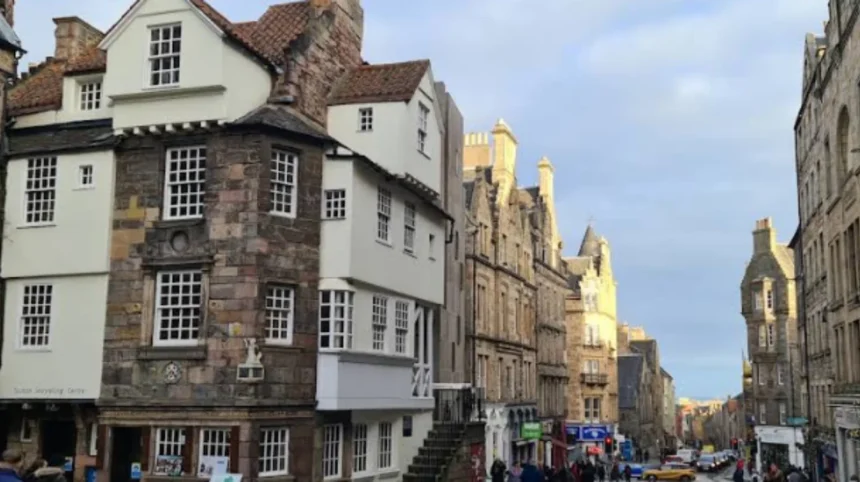
Hidden closes and wynds off the Royal Mile are narrow medieval alleyways branching off Edinburgh’s main historic thoroughfare. Closes were historically gated private alleyways leading to tenements, while wynds served as open public thoroughfares wide enough for horse-drawn carts.
- Why Were Edinburgh Closes and Wynds Constructed Under High-Density Urban Planning?
- Which Famous Closes Off the Royal Mile Offer Historic Architectural Features?
- How Can Visitors Locate and Explore Hidden Wynds Off the Royal Mile Safely?
- What is the difference between a close, a wynd, and a court in Edinburgh?
- Are the hidden closes of the Royal Mile free to visit?
- Why are some Edinburgh closes located underground today?
- What is the best time of day to photograph Edinburgh closes?
- Are Edinburgh closes accessible for wheelchairs and strollers?
Edinburgh’s Old Town developed inside defensive boundaries including the Flodden Wall built in 1513. Space constraints forced medieval builders to construct timber-framed tenements up to fourteen storeys high along steep terrain. This spatial layout created a distinct herringbone urban footprint extending from Edinburgh Castle down to Holyrood Palace. Over eighty historic closes and wynds remain preserved along the Royal Mile corridor today.
The word close derives from the Old French term clos, referring to an enclosed yard or private entrance way. Access to a close was restricted at night by heavy timber gates locked by property owners or burgesses. Wynds originated from the Old English verb windan, meaning to turn or bend, reflecting their winding geographic paths down the ridge slopes. These passageways structured daily commerce, residential access, and municipal sanitation during Scotland’s Early Modern period.
Each passageway acquired its name from prominent resident merchants, local tradesmen, landmarks, or nearby taverns. For example, Advocate’s Close was named after Sir James Stewart of Goodtrees who served as Lord Advocate of Scotland in 1692. Mary King’s Close took its name from a prosperous 17th-century burgess merchant who owned multiple properties within the alleyway.
Urban redevelopment during the 18th and 19th centuries altered many original alleyways. Construction of the Royal Exchange in 1753 buried portions of Mary King’s Close beneath massive stone foundations. Modern heritage conservation managed by Historic Environment Scotland ensures surviving closes maintain their architectural integrity under national preservation laws.
Why Were Edinburgh Closes and Wynds Constructed Under High-Density Urban Planning?
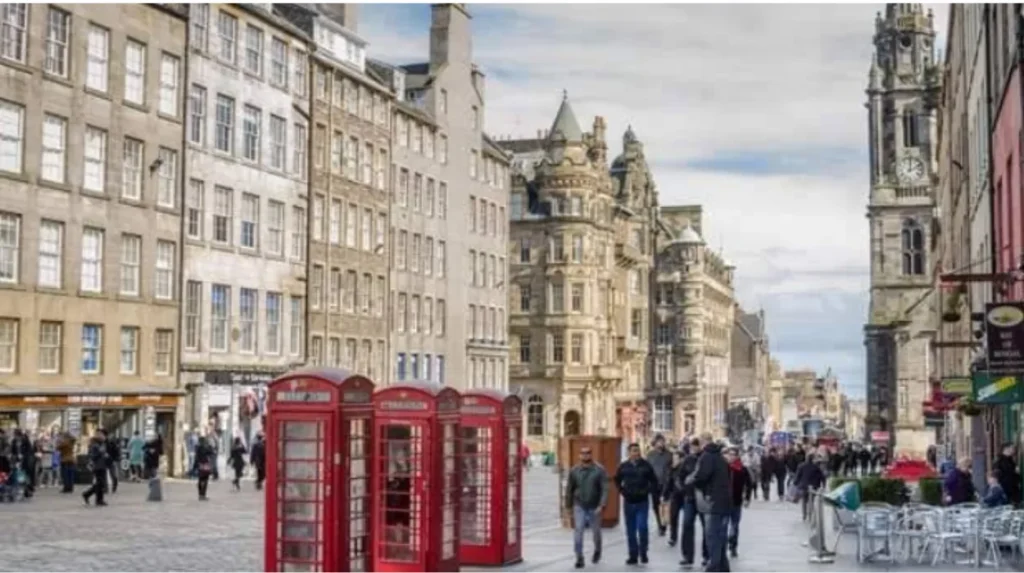
Closes and wynds off the Royal Mile were constructed to maximize real estate efficiency within defensive city fortifications. Land shortages inside the medieval walls forced architects to build vertically rather than horizontally, creating tightly packed tenement alleys.
The natural topography of Edinburgh’s volcanic crag-and-tail landscape dictated the structural orientation of the passageways. Glaciers carved steep drops to the north and south of the central ridge during the last ice age. Builders excavated narrow passages along these natural slopes to connect upper tenements with lower trading valleys such as the Cowgate.
Social hierarchy inside high-density tenement closes operated on a vertical elevation system. Wealthy merchants and nobles occupied the middle storeys which featured larger windows, cleaner air, and direct fireplace flues. Poorer residents lived in dark ground-floor rooms or damp basement vaults exposed to street runoff.
Substantial physical structures characterized the architecture of medieval closes. Buildings featured walls constructed from local sandstone blocks measure up to three feet thick to support tall structural loads. Timber galleries often jutted out over the alleyways, reducing direct sunlight at ground level to mere slivers. Sanitation relied on manual disposal, with household waste dumped onto cobblestones at designated hours under municipal decrees.
Three primary architectural styles defined historic Edinburgh closes: step-vaulted closes, arched entry wynds, and open-court tenements. Step-vaulted closes featured steep stone staircases tailored for foot pedestrian traffic along steep slopes. Arched entry wynds incorporated stone lintels designed for heavy transport carts. Open-court tenements expanded into wide central courtyards enclosed by high residential walls, such as Riddle’s Court built in 1590.
Systematic urban density contributed to major public health challenges, including outbreaks of the bubonic plague in 1645. Quarantine policies enforced strict isolation within sealed closes to prevent disease transmission across municipal districts. Modern city authorities later implemented the Edinburgh Improvement Act of 1867 to clear overcrowded structures while preserving core historic lanes.
Which Famous Closes Off the Royal Mile Offer Historic Architectural Features?
Famous closes off the Royal Mile include Lady Stair’s Close, Advocate’s Close, Dunbar’s Close, and Mary King’s Close. Each location preserves distinct architectural elements including turnpike staircases, carved lintels, and secluded formal gardens.
Lady Stair’s Close houses Lady Stair’s House, constructed in 1622 by Sir William Gray of Pittendrum. The building features a prominent turnpike stair tower and carved door lintel bearing the initials of its original owners alongside a moral inscription. Today the structure hosts The Writers’ Museum, celebrating Scottish literary figures Robert Burns, Sir Walter Scott, and Robert Louis Stevenson.
Advocate’s Close provides a framed architectural view of the Scott Monument on Princes Street. Dating to 1544, the close features steep stone steps, exposed 16th-century masonry, and restored timber-framed facades. The lower section connects directly to Cockburn Street, illustrating mid-Victorian urban engineering integrated with medieval lane alignments.
Dunbar’s Close preserves a 17th-century style knot garden hidden behind towering stone tenements. Restored in the 1970s by the Mushroom Trust, the garden features manicured box hedges, gravel pathways, and crushed stone borders designed to reflect formal Scottish Enlightenment landscaping practices.
Brodie’s Close is named after the family of Deacon William Brodie, a 18th-century cabinetmaker and city councillor who operated a secret criminal career as a burglar. The interior structures maintain period archways and historic timber beam ceilings that inspired Robert Louis Stevenson’s famous novella Strange Case of Dr Jekyll and Mr Hyde.
How Can Visitors Locate and Explore Hidden Wynds Off the Royal Mile Safely?
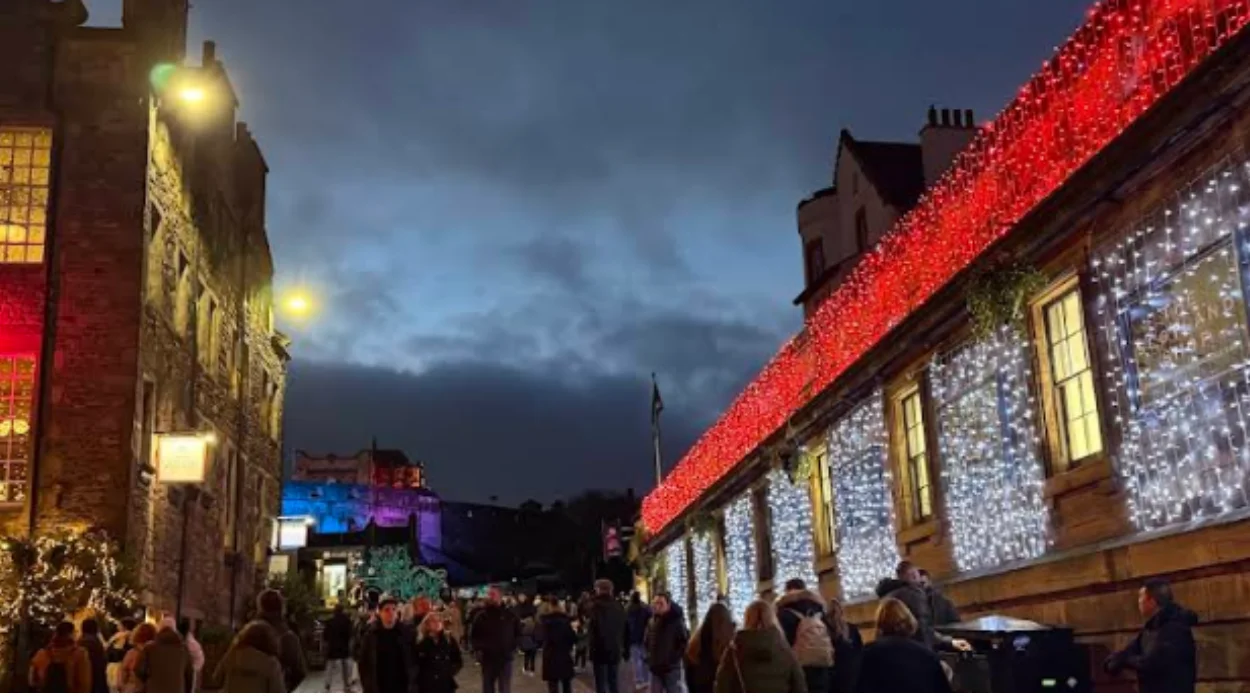
Visitors can locate hidden wynds off the Royal Mile by using street signboards, historical maps, and public pedestrian access routes. Navigating these narrow alleyways requires wearing proper footwear and exercising caution on steep, uneven cobblestones.
Self-guided foot tours begin at the upper Castlehill section near Edinburgh Castle and descend eastward toward Holyrood Palace. Signs erected by the City of Edinburgh Council identify close entrances with traditional blue stone plaques detailing historical names and founding dates.
Navigating steep urban terrain involves managing physical elevation changes along historic flights of steps. Public footpaths like Castle Wynd connect the high Royal Mile ridge directly down to the Grassmarket valley via multi-tiered stone staircases. Pedestrians should utilize installed handrails along steep sections during wet weather conditions.
Accessibility varies across historic closes due to medieval architectural constraints. While locations like Makars’ Court offer paved courtyard access, narrower lanes like Anchor Close feature steep gradients and narrow stone turns. Guided walking tours managed by licensed heritage organizations provide structured routes with detailed historical interpretation.
Night navigation requires awareness of low-light conditions along enclosed lanes. The municipal council maintains historic-style street lanterns along primary routes to preserve traditional aesthetics while providing visibility. Visitors should remain mindful of private residential properties located within shared close courtyards during exploration.
What is the difference between a close, a wynd, and a court in Edinburgh?
A close is a private, gated alleyway historically leading to residential tenements. A wynd is an open public thoroughfare wide enough for a horse and cart. A court is an open enclosed courtyard surrounded by tenement buildings.
Are the hidden closes of the Royal Mile free to visit?
Most outdoor closes off the Royal Mile are open public thoroughfares free to explore year-round. Underground attractions like The Real Mary King’s Close require paid admission tickets for guided historical tours.
Why are some Edinburgh closes located underground today?
Underground closes were buried in 1753 during the construction of the Royal Exchange, now the City Chambers. Builders truncated upper floors of tenements and capped alleyways to create flat foundations for the new exchange building.
What is the best time of day to photograph Edinburgh closes?
Early morning hours between 6:00 AM and 8:00 AM offer the best lighting conditions for photography. Morning light minimizes harsh shadows in narrow alleys and avoids heavy tourist foot traffic along the Royal Mile.
Are Edinburgh closes accessible for wheelchairs and strollers?
Accessibility is limited due to historic cobblestones, steep stone staircases, and narrow passages. However, flatter courtyard areas such as Makars’ Court and Riddle’s Court offer level paving suitable for mobility devices.