Key Points
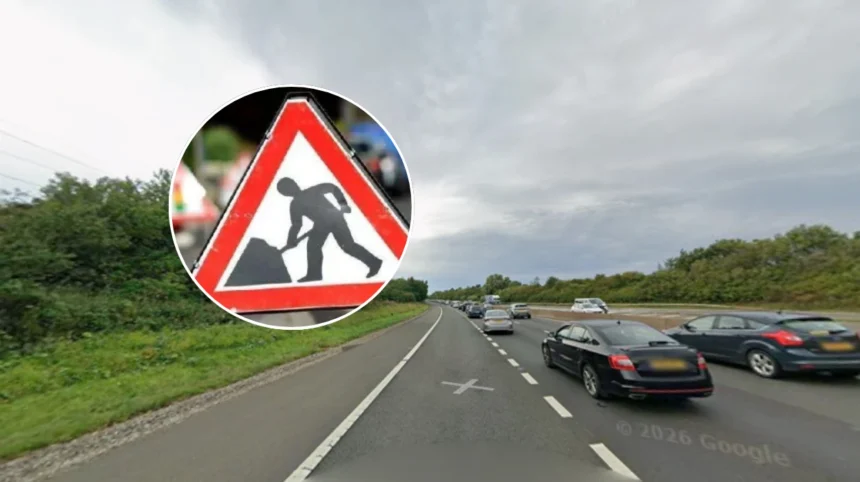
- BEAR Scotland is closing slip roads and carriageway sections on the A720 Edinburgh City Bypass overnight for scheduled roadworks and maintenance.
- The work includes repairing road surface defects, removing vegetation, and inspecting bridge structures.
- Signed diversion routes direct traffic onto local roads, including Gilmerton Station Road, Lasswade Road, the A701, and the A71, with dedicated diversions for heavy goods vehicles.
- Network managers scheduled the closures overnight to limit traffic delays and protect maintenance crews working on the carriageway.
- BEAR Scotland consulted emergency services and transport authorities before putting the traffic management plans into place.
Edinburgh City Bypass (Edinburgh Daily) September 12, 2026 – Motorists using the A720 Edinburgh City Bypass are being warned to prepare for journey delays and temporary diversions following the implementation of major overnight roadworks and maintenance projects managed by BEAR Scotland on behalf of Transport Scotland.
The vital trunk road is undergoing scheduled infrastructure upgrades, encompassing resurfacing operations, pothole repairs, gully cleaning, and essential landscape management across key junctions. To ensure the safety of road crews and traveling motorists, several slip roads and carriageway stretches are being subjected to total overnight closures between 20:30 and 06:00, or 22:00 and 06:00, depending on the specific operational phase.
As reported by transport correspondents covering infrastructure developments for BEAR Scotland, Tommy Deans, BEAR Scotland’s South East Network Manager, stated that: “It is essential for the safety of the workforce that we close these slip roads while work is taking place. Our advice if you need to use the A720 at night during this period is to plan ahead and allow additional time for your journey.”
How are the diversion routes structured for light vehicles and heavy goods vehicles (HGVs)?
To manage the volume of traffic displaced from the arterial bypass, signposted diversion routes have been deployed along neighbouring regional roads. For works surrounding Gilmerton Junction, traffic affected by off-slip and on-slip closures is being re-routed via Lasswade Junction, Gilmerton Station Road, and Gilmerton Road.
Where resurfacing and structural works impact the bypass near Lasswade Junction, specific HGV provisions have been mandated due to physical infrastructure constraints on local routes. As documented in official traffic bulletins by BEAR Scotland, the standard diversion for vehicles wishing to join the A720 westbound at Lasswade uses Lasswade Road and Lang Loan towards Straiton Junction.
However, due to height restrictions under a low railway bridge on Lasswade Road, a dedicated secondary diversion route for HGVs has been established. Heavy vehicles are being directed via the A768 Wadingburn Road, the B702 Clerk Street, and the A701 Straiton Road to avoid structural strikes and keep freight moving smoothly.
In relation to wider carriageway closures between Gilmerton, Sheriffhall Roundabout, Baberton, and Hermiston Gait, motorists are instructed to follow signed diversions utilizing the A772, A7, A71, and B701, which add between 0.4 miles and 2.9 miles (and up to 7 minutes) to journey times.
Why are these specific overnight roadworks necessary for the Edinburgh infrastructure network?
The maintenance campaigns form part of Transport Scotland’s ongoing investment strategy to preserve the durability and safety of the trunk road network in South East Scotland. Over time, heavy daily traffic volumes on the A720 lead to carriageway deterioration, including severe rutting, cracking, and pothole formation.
Additionally, routine cyclical tasks—such as vegetation control, tree removal to prevent ash dieback hazards, drainage gully clearing, and street sweeping—require unhindered access to the dual carriageway and adjacent embankments.
As reported by official road safety releases from Traffic Scotland, Tommy Deans of BEAR Scotland explained: “These surfacing improvements on the A720 trunk road will address and repair defects in the road surface such as potholes and cracks, creating safer and smoother journeys for motorists. It is essential for safety that we close the carriageway during these works, however we’ve scheduled them to be carried out during overnight hours to minimise any disruption.”
BEAR Scotland confirmed that extensive consultation took place prior to the deployment of physical traffic management. Discussions were held with emergency service providers, local authority transport teams, and key commercial logistics stakeholders to coordinate access routes and prevent conflicts with secondary local roadworks.
Background of the particular development
The A720 Edinburgh City Bypass serves as the critical transport spine for the Scottish capital, interconnecting major regional thoroughfares including the M8, M9, A1, A7, and A702. Originally constructed in phases between the late 1970s and 1980s to relieve severe traffic congestion in central Edinburgh, the bypass now handles tens of thousands of vehicle movements daily, operating well beyond its original design capacity.
Because of its heavy reliance by freight carriers, local commuters, and long-distance travelers, daytime lane closures cause immediate gridlock across the South of Edinburgh. As a result, Transport Scotland and its network management operators consistently schedule major structural maintenance, resurfacing projects, and routine ecological clearance overnight.
Over recent years, maintaining structural integrity across the bypass’s numerous grade-separated junctions—such as Hermiston Gait, Calder, Straiton, and Sheriffhall—has required regular capital investment to prevent major road failures and maintain public safety standards.
Prediction: How this development can affect motorists and local businesses
Immediate Impact on Night-Time Commuters and Logistics Providers
For local night-shift workers, evening commuters, and freight logistics companies, the overnight closures present temporary operational friction. Haulage operators routing heavy goods through the Lothians will experience slight increases in transit times and fuel consumption owing to low-speed regional diversions.
Drivers using smaller secondary arterial roads—such as Gilmerton Station Road, Lasswade Road, or the A701—may encounter minor localized congestion during peak evening transition hours (between 20:30 and 22:00) as vehicles transition off the trunk network.
Long-Term Benefits for the Regional Economy
Once the multi-stage maintenance programmes are completed, the infrastructure improvements will deliver direct operational benefits to the traveling public. The elimination of surface defects such as potholes and rutted tarmac reduces the risk of vehicle wear-and-tear, tire damage, and braking instability.
Furthermore, proactive drainage maintenance and vegetation management significantly reduce the likelihood of standing water during winter months and lower the frequency of unscheduled, emergency lane closures in the future. Overall, the short-term disruption protects the long-term reliability of Edinburgh’s primary transport link.