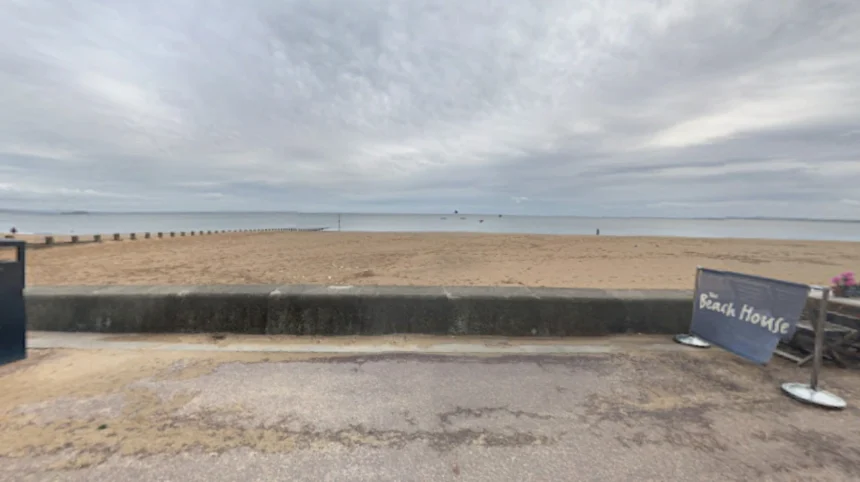
Portobello is a historic coastal suburb located three miles east of Edinburgh city centre, featuring a two-mile sandy beach along the Firth of Forth. It combines Victorian architectural heritage, independent businesses, and community recreation to serve as the capital’s primary coastal destination.
- How did Portobello evolve from rural moorland to a Victorian resort?
- What key attractions define the Portobello seafront experience?
- What natural environment and wildlife exist along Portobello Beach?
- How does Portobello contribute to Edinburgh’s modern local economy?
- What public transportation and routes connect Edinburgh to Portobello?
Portobello functions as the principal coastal retreat for the population of Edinburgh, providing immediate access to open maritime space. The geographic layout spans two miles of fine sand stretching from the Figgate Burn outlet in the west to the rocky outcrops of Joppa in the east.
The suburb sits within the municipal boundary of the City of Edinburgh Council. Transport networks connect the city centre directly to the seafront via Lothian Buses routes 26, 45, and 124, making the area accessible within twenty minutes.
The urban topography transitions from dense Georgian and Victorian stone tenements to a broad coastal promenade. This structural boundary separates the residential grid from the intertidal zone of the Firth of Forth.
The economic and social composition of Portobello centers around its public beachfront and High Street. Independent retailers, bakeries, cafes, and restaurants line the main thoroughfare and promenade, replacing the mass industrial brickworks and potteries that occupied the coastline during the eighteenth and nineteenth centuries. Environmental protections govern the marine waters, which hold designated bathing water status monitored by the Scottish Environment Protection Agency.
The coastal corridor forms part of the Firth of Forth Special Protection Area, supporting wintering wildfowl and waders. Modern Portobello integrates year-round residential living with seasonal recreation, drawing visitors for open-water swimming, kayaking, beach volleyball, and walking.
How did Portobello evolve from rural moorland to a Victorian resort?
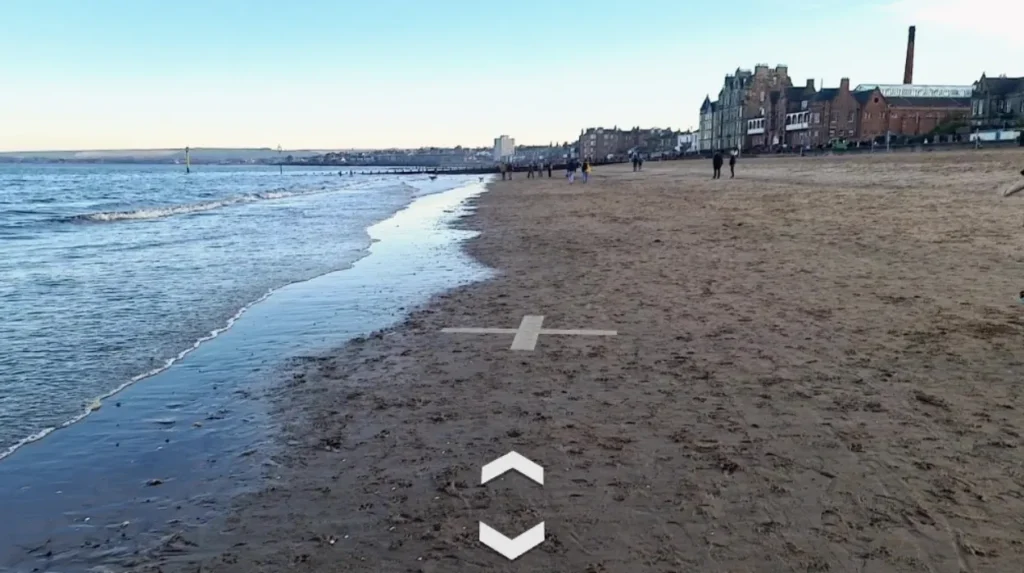
Portobello developed from an isolated eighteenth-century hut named Portobello House into a bustling nineteenth-century Victorian resort. The arrival of railway infrastructure, mineral baths, and industrial manufacturing transformed the former Figgate Whins moorland into an urban seaside destination.
The land occupying present-day Portobello was originally known as the Figgate Whins, an uncultivated expanse of moorland and gorse. The area served as a pasture ground and a strategic coastal route used by military forces, including Bonnie Prince Charlie’s Jacobite army in 1745.
The name Portobello originated around 1742 when George Hamilton, a former seaman who served under Admiral Edward Vernon during the 1739 capture of Porto Bello in Panama, constructed a cottage on the desolate road. The cottage became known as Portobello Hut, establishing the permanent toponym for the surrounding settlement as development expanded around the site during the late eighteenth century.
Industrial growth began in the 1760s following the discovery of extensive clay deposits along the Figgate Burn. William Jamieson established brickworks and potteries, producing building materials and drainage pipes. The industrial sector expanded to include glassworks, lead works, and specialized ceramic manufacture, such as the Buchan Pottery works.
The urban character shifted significantly in 1807 when Portobello was erected into a burgh, leading to formal street planning, tenement construction, and public amenities. Wealthy citizens built Georgian villas along the seafront, recognizing the economic value of maritime recreation.
The resort infrastructure expanded rapidly following the opening of the Edinburgh and Dalkeith Railway in 1832 and the North British Railway line in 1846. These rail connections transported thousands of industrial workers from Edinburgh and Glasgow directly to the coast. The Portobello Pier, designed by Sir Thomas Bouch, opened in 1871 and extended 1,250 feet into the Firth of Forth to accommodate pleasure steamers.
The municipality constructed the paved promenade in 1864 to stabilize the coastline and provide a formal public walkway. By the end of the nineteenth century, Portobello was established as Scotland’s premier urban holiday resort.
What key attractions define the Portobello seafront experience?
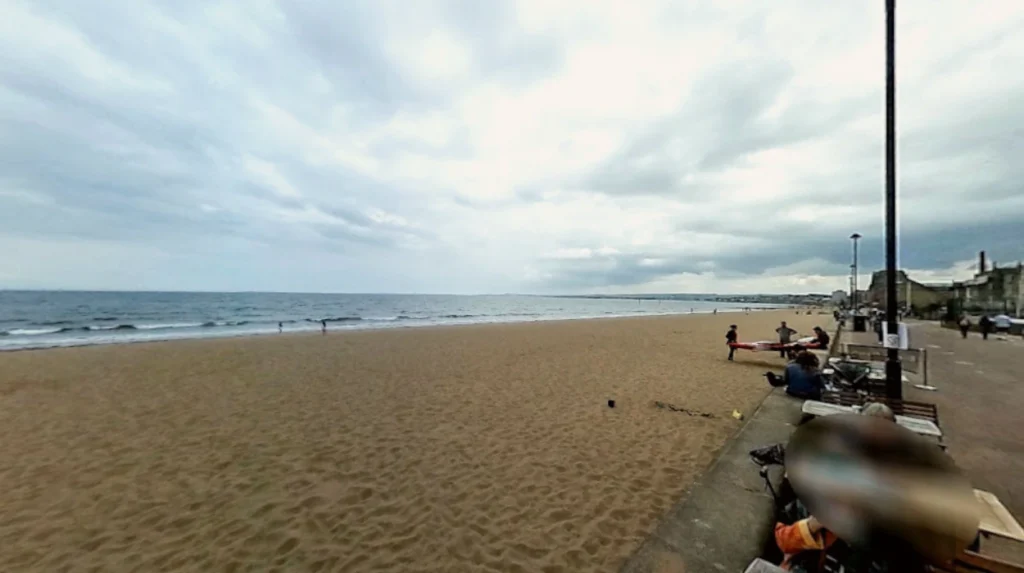
The Portobello seafront features a two-mile beach, a paved Victorian promenade, historic Turkish baths, and surviving industrial bottle kilns. These physical landmarks combine architectural history, public leisure infrastructure, and marine recreation along the Firth of Forth.
The central physical feature of the seafront is the two-mile sandy beach that extends continuously across the intertidal zone. The intertidal variance ranges between 20 meters at high tide and 310 meters at low tide, revealing flat sand composed of quartz grains and shell fragments.
The adjoining promenade measures 2.2 miles in total length, running parallel to the shoreline. It provides a wide, barrier-free paved surface designed for pedestrians, runners, and cyclists. Cast-iron Victorian lamp posts line the route, while stone sea walls protect the adjacent residential properties from tidal surges during winter storms.
At the eastern section of the promenade stands the Portobello Swim Centre, an Victorian municipal facility designed by city architect Robert Morham and opened in 1898. The building contains one of only three operational Victorian Turkish Baths in Scotland. The facility includes cooling rooms, hot rooms of varying temperatures, steam rooms, and a tiled plunge pool, maintaining traditional thermal bath architecture.
Nearby, on Pipe Street, two historic brick bottle kilns represent the last remaining structural traces of Scotland’s potteries industry. These kilns fired ceramics for Buchan Pottery until production ceased in 1972.
Public open spaces along the seafront include Straiton Place Park and the Portobello Community Garden. The community garden houses the Coade Stone Pillars, ornate architectural columns fabricated in the early nineteenth century using Coade stone, a durable artificial ceramic material.
Aquatic activities concentrate around the Portobello Sailing and Kayak Club, which coordinates water sports on the Firth of Forth. Rowers, windsurfers, and open-water swimmers utilize the beach access points throughout the year.
What natural environment and wildlife exist along Portobello Beach?
Portobello Beach belongs to the Firth of Forth Special Protection Area, housing a marine ecosystem that supports diverse shorebird populations and intertidal organisms. The coastal marine environment features sand flats, mud flats, and varied algal species.
The intertidal zone of Portobello Beach provides habitats for wildlife species adapted to dynamic coastal conditions. The beach is an integral component of the Firth of Forth Special Protection Area, designated under international conservation frameworks to protect migratory and wintering bird species.
Shorebirds forage on the exposed sand flats during low tide, feeding on marine invertebrates. Eurasian oystercatchers are prevalent along the water line, using long red bills to extract blue mussels and worms from sand substrate. Other avian species observed along the shoreline include redshanks, ringed plovers, turnstones, and herring gulls.
The intertidal flora comprises multiple species of macroalgae attached to rocky outcrops and sea walls. Bladder wrack is distributed across the intertidal zone, using air-filled vesicles to float upright during high tide to maximize light absorption for photosynthesis. These algal beds serve as microhabitats for small gastropods, periwinkles, and marine worms. Bivalve mollusks, particularly blue mussels, form dense beds on fixed structures like stone piers and submerged rocks, stabilizing local marine sediments.
The water body facing Portobello is the Firth of Forth, an estuary where fresh water from the River Forth mixes with salt water from the North Sea. Surface water temperatures range from 5 degrees Celsius in February to 14 degrees Celsius in August.
Environmental monitoring by the Scottish Environment Protection Agency assesses microbial levels during the official bathing season from June to September. The Braid Burn, known locally as the Figgate Burn, discharges into the sea at the western end of the beach, carrying freshwater drainage from its 32-square-kilometer catchment area.
How does Portobello contribute to Edinburgh’s modern local economy?
Portobello contributes to Edinburgh’s regional economy through independent retail density, hospitality services, property market valuation, and cultural tourism. The localized economy relies on sustainable resident spending and domestic visitor traffic.
The commercial structure of Portobello centers on independent small and medium enterprises located along Portobello High Street and the beachfront promenade. National retail chains remain sparse, allowing locally owned businesses to capture community expenditure.
Food and beverage establishments generate economic activity year-round. Coffee roasters, artisan bakeries, seafood shacks, and traditional fish and chip shops line the coastal strip. Independent businesses benefit from high pedestrian traffic during summer weekends, while maintaining a stable customer base of local residents during winter months.
Residential real estate in Portobello represents a high-value sector within the broader Edinburgh property market. Victorian streetscapes, stone tenements, and beachfront Georgian terraces command above-average sale prices per square meter compared to eastern Edinburgh averages.
The demand for housing is driven by proximity to the seafront, established transport links to the central business district, and high-performing local schooling infrastructure, such as Portobello High School. Property developments convert disused industrial land into modern residential housing, expanding the tax base of the City of Edinburgh Council.
Cultural tourism and community-led events generate seasonal revenue for hospitality operators. The annual Portobello Art Walk, held every September, attracts thousands of visitors to contemporary art exhibitions, installations, and open studios spread across residential homes, public spaces, and local shops.
The event showcases local artists and increases footfall for independent retailers. Additionally, community markets, beach volleyball tournaments, and water sports events sustain hospitality trading across all four quarters of the year.
What public transportation and routes connect Edinburgh to Portobello?
Portobello connects to central Edinburgh via municipal bus services, dedicated cycling paths, and arterial road networks. Lothian Buses operates high-frequency routes that cover the three-mile distance in twenty minutes.
Public transport represents the primary transit mode for visitors traveling from central Edinburgh to the Portobello coastline. Lothian Buses operates several routes connecting Princes Street and the Old Town directly to Portobello High Street and Sir Harry Lauder Road.
Route 26 provides direct, high-frequency service operating every ten minutes during peak hours, linking West Musselburgh through Portobello to the city centre and western suburbs. Routes 45 and 124 offer additional transit capacity from suburban terminals. The average bus travel duration from Princes Street to Portobello High Street ranges between fifteen and twenty-five minutes depending on traffic conditions.
Active travel infrastructure allows cyclists and pedestrians to access the seaside without motor vehicles. The National Cycle Network Route 1 and local coastal paths link Leith and Edinburgh city centre to Portobello. A dedicated, off-road cycle path follows the former railway line through Restalrig and Kraigmillar, providing a grade-separated corridor for commuters.
Cycling from the foot of Leith Walk along the coastal path to Portobello Promenade takes approximately twenty minutes at a moderate speed. Walkers can access the seafront via continuous footpaths originating in Holyrood Park and passing through Meadowfield Park.
Motor vehicle access relies on the A1140 road and the A1 arterial route connecting east Edinburgh to the City of Edinburgh Bypass at Old Craighall. On-street parking operates along the promenade, Portobello High Street, and surrounding residential side streets. Parking regulations set by the City of Edinburgh Council include designated pay-and-display zones and permit spaces to manage vehicle density during peak summer periods.
What is the best time of year to visit Portobello Beach?
The summer months between June and August offer the warmest weather for visiting Portobello Beach. Weekday mornings before 10 AM provide a quiet environment with minimal crowds along the promenade. Winter visits are ideal for crisp coastal walks, photography, and visiting indoor cafes.
Can you safely swim in the sea at Portobello?
Portobello Beach is a designated bathing water monitored regularly by the Scottish Environment Protection Agency during the summer season. Water temperatures remain cold year-round, averaging 10 to 14 degrees Celsius in summer. Open-water swimmers should wear wetsuits and check tidal conditions before entering the Firth of Forth.
How long does it take to walk the full length of Portobello Promenade?
Walking the full 2.2-mile length of the Portobello Promenade takes approximately 40 to 50 minutes at an average walking pace. The route is entirely flat, paved, and fully accessible for wheelchairs and strollers. Ample seating and cafes line the pathway for rest stops.
Are dogs allowed on Portobello Beach throughout the year?
Dogs are permitted on Portobello Beach and the promenade 365 days a year without seasonal restrictions. Owners must keep dogs under control, especially near bird nesting areas along the Firth of Forth Special Protection Area. Cleaning up after pets is strictly enforced by municipal council wardens.
What historic architecture can you see in Portobello?
Portobello features diverse historical architecture, including late Georgian stone villas, Victorian tenement blocks, and old industrial sites. Key structures include the 1898 Victorian Swim Centre housing operational Turkish baths and the industrial brick bottle kilns on Pipe Street.