Edinburgh offers a unique combination of dramatic volcanic landscapes, protected coastal wildlife, expansive public parklands, and accessible urban hiking trails, allowing nature enthusiasts to experience diverse outdoor adventures without leaving the capital boundary.
- What Is the Ultimate Outdoor Itinerary for Saturday in Edinburgh?
- How Should Outdoor Lovers Plan Their Sunday Exploration in Edinburgh?
- Where Are the Best Hiking and Walking Trails in the City?
- What Essential Gear and Preparation Are Required for Edinburgh Outdoor Trips?
- How Can Travelers Access Edinburgh’s Green Spaces via Sustainable Transport?
Edinburgh sits on an ancient geological foundation shaped by extinct volcanoes and glacial erosion over millions of years. The City of Edinburgh Council and Historic Environment Scotland protect over 4,500 hectares of green space across the city, making it one of the greenest urban areas in Europe. Outdoor lovers can transition from urban streets to wilderness within minutes.
The geographic positioning between the Firth of Forth and the Pentland Hills creates distinct microclimates and habitats. Visitors can explore freshwater lochs, craggy basalt cliffs, ancient oak woodlands, and sandy coastal stretches inside a forty-eight-hour trip. The compactness of the Scottish capital eliminates the need for lengthy transport, allowing maximum time outdoors.
Historically, royal protection preserved key spaces like Holyrood Park from urban encroachment starting in 1541 under King James V. Today, public rights of access guaranteed by the Land Reform Scotland Act 2003 give walkers, runners, and cyclists legal access to land across the municipality. This legal framework ensures uninterrupted access to trails, hillsides, and coastal routes year round.
For active travelers, Edinburgh balances physical challenge with educational exposure. The city features 112 formal parks, two regional parks nearby, and dozens of designated nature reserves. Understanding the structure of a weekend itinerary ensures visitors capture the full ecological and topographical diversity available within the local landscape.
What Is the Ultimate Outdoor Itinerary for Saturday in Edinburgh?
A Saturday outdoor itinerary begins with a early morning hike up Arthur’s Seat, followed by a scenic walk through Holyrood Park, an afternoon exploration of Hermitage of Braid, and an evening stroll along the Water of Leith.
Saturday morning starts at Holyrood Park, a 650-acre royal park containing Arthur’s Seat, an extinct volcano standing 251 meters above sea level. The climb to the summit takes approximately 45 to 60 minutes via the radical road or the grassy eastern ridge from Dunsapie Loch. The summit provides 360-degree views across the Lothians, the Fife coastline, and the Highland fault line.
After descending past St Margaret’s Loch, the itinerary shifts south to the Hermitage of Braid and Blackford Hill Local Nature Reserve. This green corridor covers 60 hectares of broadleaf woodland centered around the Braid Burn.
Walking trails lead up Blackford Hill, where the Royal Observatory stands, offering views of the southern city skyline. The woodland below supports native species including otters, kingfishers, and badger populations.
In the late afternoon, join the Water of Leith Walkway at Dean Village. This 13-mile foot path follows the river from the Pentland Hills down to the port of Leith. The section between Dean Village and Stockbridge passes through deep gorge scenery, historical industrial mills, and stone bridges designed by Thomas Telford.
Ending the day along the riverbank provides exposure to urban aquatic wildlife, including grey herons and brown trout. The physical output for Saturday averages 15 to 18 kilometers of total walking distance, covering varied terrain from steep volcanic basalt to flat riverbanks.
How Should Outdoor Lovers Plan Their Sunday Exploration in Edinburgh?
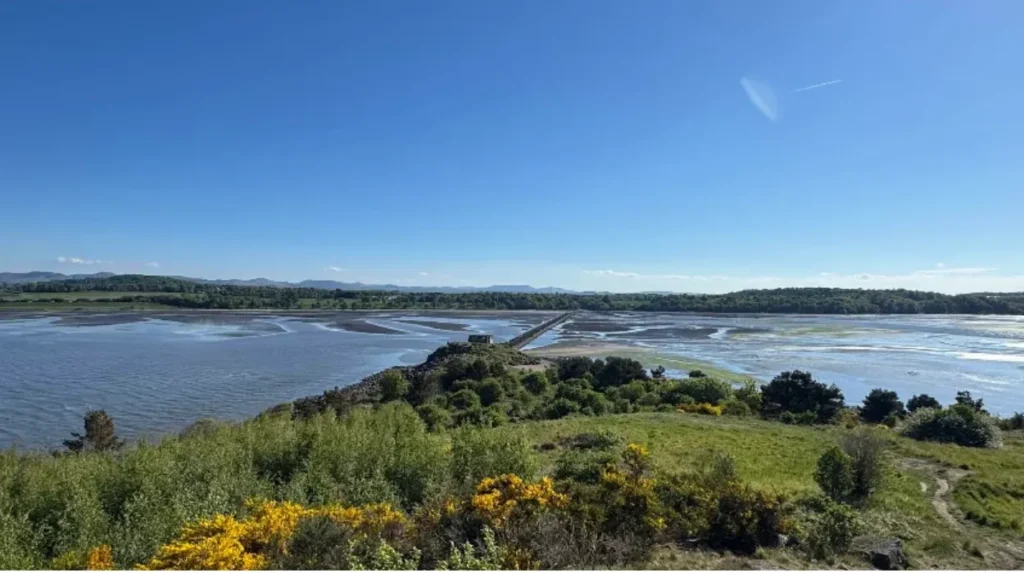
Sunday focuses on coastal exploration along the Firth of Forth, beginning at Cramond Island, continuing through the Lauriston Castle grounds, and concluding with a coastal hike from Portobello Beach to Musselburgh.
Sunday morning begins at Cramond Village, situated at the mouth of the River Almond. The primary feature here is Cramond Island, a tidal island connected to the mainland by a concrete causeway built during World War II. Visitors must check the tides maintained by the Maritime and Coastguard Agency, as high tide submerges the causeway for several hours daily.
Crossing to the island at low tide reveals historic military fortifications, concrete pylons, and rock pools filled with marine life. The causeway walk measures approximately 1.2 kilometers each way. After returning to the mainland, the route follows the coastal path eastward past Lauriston Castle, an estate featuring Japanese gardens and woodland paths overlooking the Forth Bridges.
In the afternoon, travel to Portobello, Edinburgh’s historic seaside resort. The sandy beach stretches for two miles along the Firth of Forth, providing an ideal surface for shore walking, wild swimming, and paddleboarding. The marine environment hosts seabirds such as eider ducks, terns, and gannets diving for fish offshore.
The coastal trail continues east from Portobello toward the Ash Lagoons near Musselburgh, a designated Special Protection Area. This site serves as a feeding ground for migratory waterfowl and shorebirds. Completing Sunday along the coast balances the hilly, volcanic terrain of Saturday with coastal ecology and marine scenery.
Where Are the Best Hiking and Walking Trails in the City?

The best hiking trails include the Arthur’s Seat Summit Loop, the Water of Leith Walkway, the Blackford Hill Woodland Circuit, the Corstorphine Hill Nature Reserve Trail, and the Calton Hill Path Network.
Arthur’s Seat offers several distinct ascent routes catering to different fitness levels. The steep rocky stairs of the zig-zag path from the Palace of Holyroodhouse demand good footwear, while the gentler slope from Dunsapie Loch allows a steady climb. The route covers 4.5 kilometers with an elevation gain of 250 meters.
The Water of Leith Walkway offers a continuous off-road route traversing the city from southwest to northeast. The path is fully surfaced, suitable for walking, running, and cycling, passing through Colinton Dell, Slateford, and the Royal Botanic Garden. It offers an easy gradient suitable for recovery walks.
Blackford Hill and the Hermitage of Braid feature a 3.8-kilometer circular loop. The path ascends through native oak and beech woodland before reaching the grassy ridge of Blackford Hill. This trail provides elevated terrain without the crowd density found at central monuments.
Corstorphine Hill, situated on the western side of the city, provides woodland walking across a low basalt ridge. The 5.2-kilometer path leads to the Corstorphine Hill Tower, offering views toward the Loch Lomond and Trossachs National Park on clear days.
What Essential Gear and Preparation Are Required for Edinburgh Outdoor Trips?
Visitors require waterproof outer layers, sturdy hiking footwear with traction, layered synthetic clothing, a reliable map or GPS device, and sufficient hydration and energy snacks to handle rapidly changing Scottish weather.
Scottish weather is famously unpredictable due to maritime climate influences from the Atlantic Ocean and the North Sea. Rain showers and high winds can develop rapidly, even during summer months. A waterproof jacket rated to at least 10,000mm hydrostatic head is essential for maintaining core body temperature during outdoor activities.
Footwear must feature slip-resistant rubber outsoles with adequate lug depth. The volcanic rock on Arthur’s Seat and Salisbury Crags becomes slippery when wet. Ankle-supportive hiking boots or technical trail running shoes are necessary for navigating loose scree, wet mud, and uneven stone steps safely.
Layering clothing using the three-layer principle regulates body heat effectively. A moisture-wicking base layer removes sweat from the skin, an insulating fleece or down mid-layer retains warmth, and a windproof waterproof outer shell protects against precipitation. Avoid cotton garments, as cotton retains moisture and accelerates heat loss.
Navigation requires preparation. While paths within city parks are clear, mist and low clouds can reduce visibility on elevated peaks like Arthur’s Seat or the Pentland Hills. Carrying a fully charged smartphone with offline digital maps, alongside a paper map and compass, ensures route adherence. Pack at least 1.5 liters of water per person and high-density energy snacks for a full day outdoors.
How Can Travelers Access Edinburgh’s Green Spaces via Sustainable Transport?
Travelers can reach all major green spaces using Edinburgh’s extensive public transit network, which includes Lothian Buses, the Edinburgh Trams system, and dedicated municipal cycle paths.
Lothian Buses operates an all-electric and hybrid bus fleet covering every quadrant of the city. Services run at frequent intervals from the city center to trailhead access points. Routes 2, 14, and 36 provide direct access to Holyrood Park, while routes 11 and 16 connect to the Hermitage of Braid and Blackford Hill.
The Edinburgh Trams line connects Edinburgh Airport directly to the city center and down to Ocean Terminal in Leith. This light rail option allows travelers to access the coastal trails at Leith and the Water of Leith Walkway. Trams run every seven minutes during peak operational hours.
Cycling infrastructure in Edinburgh includes off-road greenways built along former railway paths. The National Cycle Network Route 1 and Route 75 pass through the city, offering car-free routes for cyclists. Bicycle rental services, including electric bike sharing schemes, operate stations across the downtown core.
Using public transportation eliminates parking difficulties at busy trailheads like Holyrood Park or Cramond. Integrated tap-in tap-out contact payment systems on buses and trams make multi-stop outdoor itineraries simple and cost-effective for international and local visitors alike.
What is the best time of year for an outdoor weekend in Edinburgh?
The best time to visit is between May and September, when daylight hours extend up to 17 hours and weather conditions are generally milder. Spring offers blooming gorse on the hills, while autumn delivers vibrant foliage across woodland areas like the Hermitage of Braid.
Are outdoor trails in Edinburgh suitable for beginners?
Yes, Edinburgh offers trails for all mobility levels. The Water of Leith Walkway and Portobello Promenade are flat and paved, making them fully accessible. Hills like Arthur’s Seat and Blackford Hill require basic fitness but feature well-established paths suitable for novice hikers.
Can you visit Cramond Island at any time during the day?
No, Cramond Island is accessible only during low tide via a paved causeway. Visitors must consult the daily tide tables issued by the Coastguard prior to setting out, as incoming tides cut off access to the mainland and create dangerous water currents across the path.
Do I need to pay an entrance fee for Holyrood Park or Arthur’s Seat?
No, Holyrood Park and Arthur’s Seat are free public land open 24 hours a day under Historic Environment Scotland management. Visitors can access all hiking trails, lochs, and viewpoints without purchasing tickets or booking permits in advance.
Is wild camping allowed within Edinburgh city parks?
Wild camping is generally prohibited within municipal city parks and Holyrood Park under local authority bylaws and park regulations. Visitors planning multi-day camping trips should head south to the Pentland Hills Regional Park, where responsible camping under the Scottish Outdoor Access Code is permitted.