Key Points
- Edinburgh’s Lighthouse Bookshop cancelled an event with author Julian Sayarer.
- The decision came after online posts by Sayarer about Jewish people were flagged as problematic.
- The bookshop stated the move aligns with its safe-space guidelines and ethics policy on social media conduct.
- The cancellation prompted debate across Scottish literary and political circles over author accountability and platforming policies.
Edinburgh (Edinburgh Daily) October 16, 2026 – Lighthouse Bookshop, an independent radical bookstore situated in Edinburgh, has officially cancelled a scheduled literary event with author Julian Sayarer following the emergence of controversial social media posts regarding Jewish people.
The venue, known for championing progressive and left-wing literature, pulled the plug on the planned engagement after community members and readers raised concerns regarding the author’s public commentary.
Bookshop representatives stated that hosting the event would conflict with the shop’s core values, safe-space guidelines, and commitment to inclusivity.
Why Was the Lighthouse Bookshop Event Cancelled?
The decision to cancel the upcoming talk arose after several online statements made by author Julian Sayarer were brought to the attention of the management at Lighthouse Bookshop.
The venue had been scheduled to host Sayarer for an evening author talk and reading session next week. However, following a review of the author’s recent public posts on social media platforms, the bookshop leadership determined that the nature of the remarks was unacceptable for their audience and institutional ethos.
As reported by journalists at The National, representatives for Lighthouse Bookshop confirmed the cancellation, explicitly describing the social media posts linked to the author as “problematic” in relation to Jewish people.
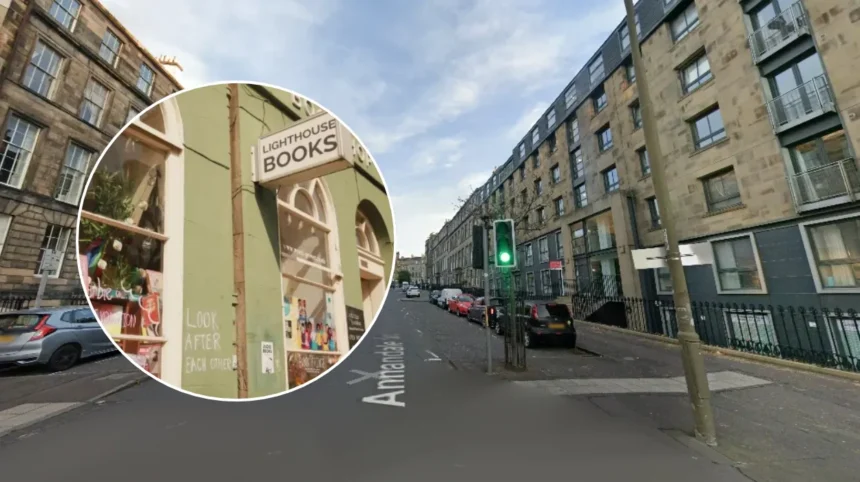
The independent establishment, which operates from West Nicolson Street in Edinburgh, reiterated its policy on refusing to platform content or speakers that cause harm or distress to marginalized communities.
How Did the Bookshop and Author Respond?
Lighthouse Bookshop, originally founded as Word Power Books before being rebranded, has built a reputation across the United Kingdom as a politically engaged, radical bookseller specializing in feminist, LGBTQ+, anti-racist, and left-wing texts. Consequently, the management noted that maintaining rigorous standards regarding the public conduct of invited speakers is essential to upholding trust within its customer base.
“Lighthouse Bookshop was due to host author Julian Sayarer for an event next Wednesday, but has now pulled out after a series of posts were discovered that were considered problematic regarding Jewish people,” reported the news team at The National.
The bookshop management confirmed that ticket holders for the planned event would receive communication regarding automatic refunds or options to convert their tickets into store vouchers. The author, Julian Sayarer—known for his travel writing, political commentary, and books detailing long-distance bicycle journeys—has faced heightened scrutiny over his recent online commentary regarding geopolitical issues and Jewish identity.
“An Edinburgh bookshop has cancelled an event with an author over his ‘problematic’ posts related to Jews,” stated reporting from The National covering the sudden schedule change in the capital’s literary calendar.
Background of the Particular Development
Lighthouse Bookshop has operated as a cornerstone of Edinburgh’s independent literary scene since taking over the legacy of Word Power Books on West Nicolson Street. Known for its explicit stance on social justice, anti-capitalism, and minority rights, the shop routinely hosts panel discussions, book launches, and educational workshops aimed at promoting marginalized voices.
Over recent years, independent booksellers across Britain have faced increasing pressure to navigate complex debates around public figures, online speech, and platforming ethics.
Julian Sayarer has previously gained recognition in the British publishing world for his non-fiction travelogues documenting life as a courier and his journeys across world regions.
However, as public scrutiny over social media discourse intensifies, cultural institutions, independent vendors, and festival organizers throughout Scotland and the wider UK have adopted stricter vetting policies to prevent public backlash and enforce safe-space regulations within physical community venues.
Prediction: How This Development Can Affect the Particular Audience
This development is expected to directly impact Edinburgh’s literary community, local readers, political activists, and independent publishers who rely on grassroots venues for discourse.
For the primary audience—patrons of radical and independent bookshops—this action reinforces the expectation that literary spaces will actively police boundaries surrounding online rhetoric, antisemitism, and discrimination.
In the broader context, the cancellation signals a continuing trend where independent cultural venues enforce strict public conduct clauses for visiting authors and commentators. Authors and public figures engaging with radical or community-focused venues will likely face greater preview checks regarding their digital footprints.
While some patrons will view the decision as a necessary step to safeguard minority groups and uphold institutional values, it may also reignite ongoing discussions within the publishing industry regarding the boundaries of free speech, author accountability, and event platforming in political bookstores.