Key Points
- Police Scotland are investigating violent disorder and anti-social behaviour across Edinburgh on Bonfire Night.
- Groups of youths targeted emergency workers with fireworks, bottles, and bricks in several areas, including Oxgangs.
- Youths blocked Oxgangs Road North with wheelie bins before setting them alight and starting fires in local parks.
- No police officers were injured during the incidents in Edinburgh, but several emergency vehicles were damaged.
- Detectives have asked local residents to check private CCTV, ring doorbells, and dashcams for video footage of the suspects.
EDINBURGH (Edinburgh Daily) November 9, 2026 – Police Scotland detectives have launched a public appeal seeking witnesses and private footage following widespread Bonfire Night disorder that targeted emergency service responders across south Edinburgh.
- Key Points
- What Happened During The Edinburgh Bonfire Night Incidents?
- How Are Police Scotland Investigating The Disturbance?
- Was Operation Moonbeam Effective In Suppressing Violence?
- How Did The Rest Of Scotland Fare On Bonfire Night?
- What Is The Background Of Firework Disorder In Edinburgh?
- How Will This Development Affect Local Communities And Emergency Services?
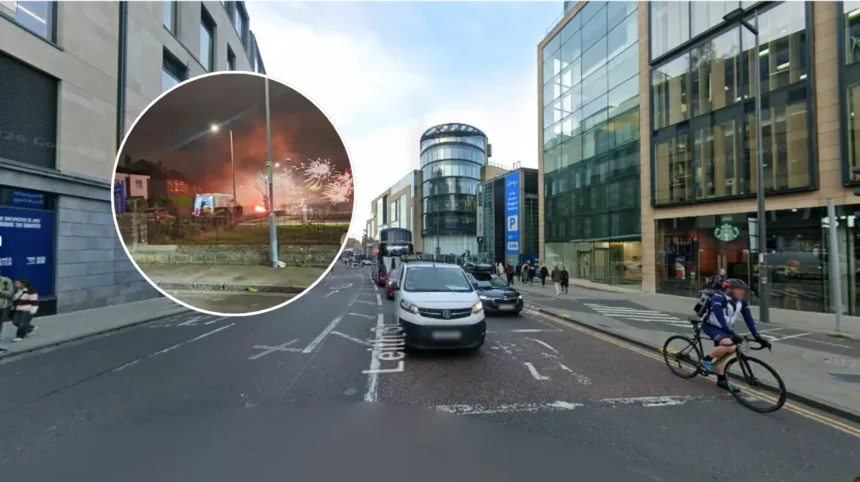
Officers from Police Scotland were called to Oxgangs Road North at approximately 17:30 GMT on Thursday, 5 November 2026, after reports surfaced of a large group of youths gathering in the area and obstructing traffic.
Upon arrival, public order units and responding crews were met with hostiles who launched fireworks, glass bottles, and street debris directly at emergency vehicles and uniformed personnel.
The Scottish Fire and Rescue Service was simultaneously dispatched to deal with multiple fires deliberately set in wheelie bins and public parks adjacent to residential housing estates.
Despite the high intensity of the anti-social conduct in the capital, authorities confirmed that no emergency workers suffered injuries during the specific Oxgangs disruptions.
As reported by Calum Loudon of STV News, Detective Inspector Sophie McWhinnie stated that “Anti-social behaviour, disorder and targeting officers in this way is completely unacceptable and will not be tolerated”.
What Happened During The Edinburgh Bonfire Night Incidents?
Trouble began early in the evening as groups gathered in public areas, taking advantage of Bonfire Night celebrations to engage in anti-social activity.
Youths pushed wheelie bins into the main thoroughfares along Oxgangs Road North before setting them alight to create street barricades.
When police units arrived to manage the road blockages, individuals within the crowds aimed pyrotechnics directly at officers and emergency service vehicles.
Firefighters attempting to douse small fires burning across local parks were similarly met with resistance and hostility from masked youths.
Specialist resources deployed under Police Scotland’s Operation Moonbeam were drafted into the neighborhood to restore order and safeguard residents.
How Are Police Scotland Investigating The Disturbance?
Detectives have initiated comprehensive enquiries to track down every individual involved in the disorder.
Officers are currently carrying out door-to-door enquiries and reviewing public surveillance cameras situated across the Oxgangs district.
As reported by Calum Loudon of STV News, Detective Inspector Sophie McWhinnie stated that “We’re appealing for anyone who was in the area who witnessed what happened, or may have mobile phone footage, to get in touch”.
Investigators are particularly interested in securing digital evidence from local residents and motorists passing through the area between 17:00 GMT and midnight.
Members of the public who possess ring doorbells, private security CCTV, or vehicle dashcams are requested to check their devices for pertinent footage.
Police Scotland confirmed that witnesses can submit information under incident reference number 2538 of Thursday, 5 November 2026.
Was Operation Moonbeam Effective In Suppressing Violence?
Operation Moonbeam represents Police Scotland’s nationwide framework designed specifically to combat firework-related violent crimes.
The 2026 deployment saw the largest mobilization of public order officers since former US President Donald Trump’s visit to Aberdeenshire.
Designated Firework Control Zones were active in parts of Edinburgh and Glasgow, legally prohibiting pyrotechnics in private back gardens and public spaces.
Despite these operational measures, several pockets of disorder flared up across central Scotland, requiring specialized riot units.
While preventive intelligence led to the pre-event seizure of illegal pyrotechnics, public order incidents still emerged in Edinburgh, Glasgow, and Dundee.
How Did The Rest Of Scotland Fare On Bonfire Night?
The disruption in Edinburgh occurred alongside similar incidents reported in other Scottish regions on November 5.
In Glasgow’s Provanmill neighborhood, a police vehicle was severely damaged, and a female police officer alongside an ambulance staff member suffered minor injuries.
A 16-year-old boy was arrested in Glasgow in connection with the attacks on emergency responders.
In Alexandria, a 15-year-old youth required hospital treatment after a firework detonated prematurely, causing severe eye injuries.
Dundee also saw public order deployments after a crowd of more than 100 young people gathered to light fires on public carriageways.
Across the country, Police Scotland confirmed seven initial arrests connected to Bonfire Night civil disorder.
What Is The Background Of Firework Disorder In Edinburgh?
Bonfire Night in Scotland has increasingly become a flashpoint for anti-social behavior, particularly within specific urban areas of Edinburgh such as Niddrie, Muirhouse, and Oxgangs. Over recent years, organized groups of youths have repeatedly utilized fireworks as weapons against first responders, transforming traditional autumn celebrations into high-risk security operations.
In response to escalating annual violence, the Scottish Parliament passed the Fireworks and Pyrotechnic Articles (Scotland) Act. This legislation granted local authorities powers to establish Firework Control Zones, making it a criminal offence to set off fireworks within designated zones without a professional display permit.
Operation Moonbeam was originally introduced by Police Scotland to provide centralized command, specialized public order tactics, and protective equipment for officers deployed into high-risk neighborhoods on November 5.
How Will This Development Affect Local Communities And Emergency Services?
This latest escalation of Bonfire Night disorder will impact local residents, emergency personnel, and policymakers in distinct ways:
- Local Residents: Homeowners in Oxgangs and surrounding areas face rising concerns over public safety, potential property damage, and localized traffic disruption during autumn events. Community leaders may push for even broader Firework Control Zones that encompass additional residential areas in future years.
- Emergency Service Personnel: Police officers, paramedics, and firefighters face heightened operational risks during public holidays. The persistent targeting of first responders could lead to altered operational protocols, requiring police escorts for fire crews entering volatile areas during emergency calls.
- General Public and Pyrotechnic Consumers: Continued misuse of pyrotechnics is likely to accelerate calls for a total ban on the public sale of fireworks across Scotland, shifting consumer access strictly to organized, municipal displays.