Key Points
- Police Scotland charged five more women with terrorism offences after a protest outside the United States Consulate in Edinburgh.
- A total of 12 people have now been charged over the demonstration on Regent Terrace on Saturday, 31 October.
- The charges involve statutory offences under counter-terrorism law for supporting a proscribed organisation.
- Officers had previously charged four women and three men following initial enquiries into the static protest.
- Police will submit formal reports to the Procurator Fiscal while officers continue gathering evidence.
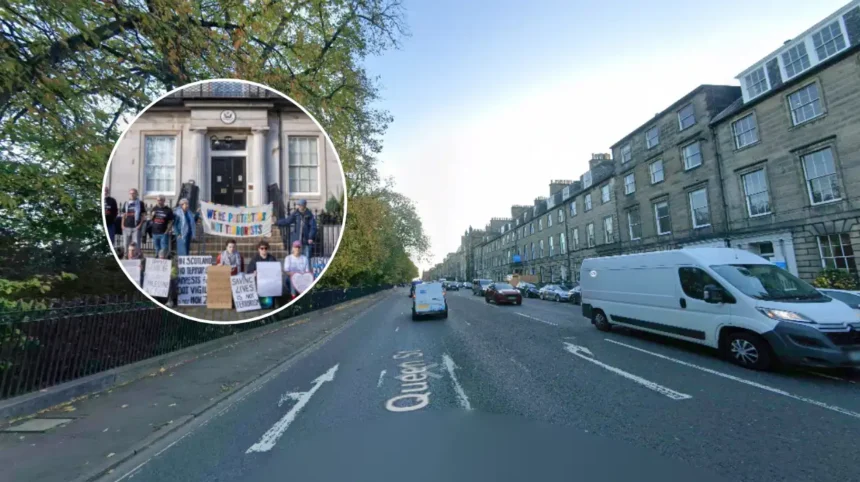
EDINBURGH (Edinburgh Daily) November 11, 2026 – Five further women have been formally charged by Police Scotland on Wednesday following ongoing enquiries into a Palestine Action demonstration held near the United States Consulate in Regent Terrace, Edinburgh.
- Key Points
- How did the Police Scotland investigation into the Regent Terrace protest unfold?
- What specific charges do the accused face under counter-terrorism law?
- How does the Edinburgh demonstration relate to wider UK-wide activist actions?
- Background of the particular development
- Prediction: How this development can affect activist groups and public demonstrators
As reported by STV News Staff of STV News, law enforcement officers confirmed that the five women were charged in connection with terrorism offences relating to alleged support for a proscribed organisation.
The latest action brings the total number of individuals charged over the Regent Terrace gathering to 12. Police Scotland confirmed that a report will be submitted to the Procurator Fiscal in due course as investigative work continues.
As reported by Gabriel McKay of The National, police officers attended the planned demonstration on the afternoon of Saturday, October 31, where activists gathered while carrying banners and wearing garments displaying support for Palestine Action.
As reported by Gabriel McKay of The National, Police Scotland confirmed that “enquiries remain ongoing and further action will be taken as appropriate”.
How did the Police Scotland investigation into the Regent Terrace protest unfold?
The police action stems from a static demonstration that took place outside the US Consulate in the Scottish capital.
Although no arrests were executed on the immediate afternoon of the event, Police Scotland initiated retrospective enquiries to identify individuals displaying symbols or holding signs associated with the banned organisation.
Investigators initially brought charges against seven individuals—four women and three men—earlier in the week.
The latest round of charges on Wednesday added five more women to the prosecution list.
Police Scotland officers have systematically compiled video footage and photographic evidence collected around Regent Terrace to identify participants.
What specific charges do the accused face under counter-terrorism law?
The charges leveled against the individuals fall under the framework of the Terrorism Act 2000.
Expressing explicit support, displaying materials, or wearing apparel linked to a proscribed group constitutes a statutory criminal offence in the United Kingdom.
“Offences relating to supporting a proscribed organisation carry significant statutory penalties, including potential imprisonment upon conviction,” noted legal representatives monitoring counter-terrorism prosecutions in Scotland.
Under current UK counter-terrorism statutes, inviting support or displaying items associated with a banned entity can carry sentences of up to 14 years in prison.
The official documents regarding all 12 individuals are being transmitted to the Crown Office and Procurator Fiscal Service to determine future court diets.
How does the Edinburgh demonstration relate to wider UK-wide activist actions?
The Edinburgh gathering on October 31 coincided with similar static protests staged across the United Kingdom, including a major demonstration outside the United States Embassy in London.
As reported by Dan Haygarth of The Independent, civil liberties group Defend Our Juries stated that activists were deliberately drawing attention to foreign policy and arms export matters during the demonstrations.
The Scottish demonstrations reflect a broader series of public actions that have taken place outside government and diplomatic sites over recent months.
Police forces across both Scotland and England have maintained a uniform stance regarding the enforcement of proscription laws during these events.
“The systematic enforcement of terrorism legislation against public display of proscribed symbols marks a defining shift in protest policing,” observed human rights analysts tracking UK court proceedings.
Background of the particular development
The legal context surrounding Palestine Action changed significantly following its official proscription as a terrorist organisation under the Terrorism Act 2000 by the UK Government. This designation placed the group in the same legal category as outlawed militant organisations, rendering public membership, fundraising, or expression of support an indictable criminal offence.
The decision to proscribe the group followed years of direct-action campaigns targeting military technology manufacturers and defense contractors across Britain. Activists associated with the movement had previously engaged in sit-ins, criminal damage, and blockades at commercial locations.
The executive proscription order subsequently triggered extensive litigation. Activists challenged the lawfulness of the ban, leading to decisions in the High Court and Court of Appeal, culminating in formal proceedings before the UK Supreme Court.
Despite ongoing judicial appeals, the legal status of the proscription remains active, providing law enforcement agencies such as Police Scotland with the statutory mandate to arrest and charge individuals who publicly express support for the movement.
Prediction: How this development can affect activist groups and public demonstrators
The charging of 12 individuals in Edinburgh under counter-terrorism statutes establishes a clear operational precedent for how Police Scotland handles public demonstrations involving proscribed entities. This development is likely to have several distinct impacts on advocacy groups, legal observers, and the wider public:
- Deterrent Effect on Public Demonstrations: The application of anti-terror legislation for displaying placards or wearing branded clothing creates a significant legal risk for casual participants. Demonstrators may grow hesitant to attend gatherings organized around controversial international issues due to the potential for retrospective identification and severe statutory penalties.
- Shift in Activist Tactics: Direct-action and advocacy groups are expected to alter their operational structures. Activists may increasingly move away from open static rallies outside diplomatic institutions toward non-attributable online campaigning or decentralized civil disobedience to mitigate individual legal liability.
- Increased Pressure on the Scottish Judicial System: As reports for all 12 individuals reach the Procurator Fiscal, Scottish courts—specifically Edinburgh Sheriff Court and the High Court of Justiciary—will face complex legal arguments surrounding freedom of expression under the European Convention on Human Rights (ECHR) versus statutory counter-terrorism duties.
- Escalation in Civil Liberties Debates: Human rights monitoring bodies and legal observers will likely step up scrutiny of police forces. The contrast between traditional public order policing and terrorism-based prosecutions will remain a focal point of legislative and public debate across Scotland and the wider United Kingdom.