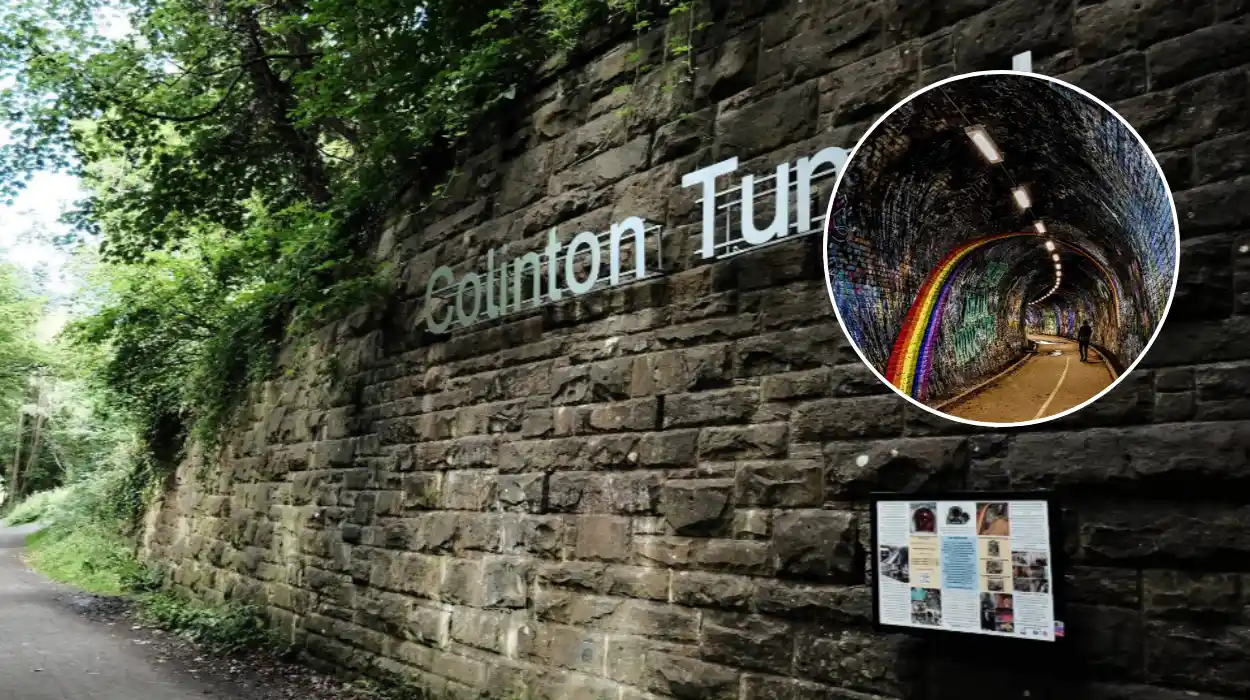
Colinton captivates as a serene suburb in southwest Edinburgh, blending ancient history with natural beauty along the Water of Leith. This evergreen haven offers residents and visitors alike a peaceful escape from the city’s hustle, rich in heritage and outdoor pursuits.
- Ancient Origins of Colinton
- Medieval and Renaissance Flourishing
- Industrial Heritage Along the Water of Leith
- Literary Legacy: Robert Louis Stevenson’s Childhood Haven
- Architectural Marvels and Historic Churches
- Natural Beauty and Outdoor Pursuits
- Modern Colinton: Community and Demographics
- Top Attractions for Visitors
- Living in Colinton: Why It Endures
- Cultural Echoes and Memorials
- Preserving Colinton’s Future
Ancient Origins of Colinton
Colinton’s story traces back to around 1090, when Ethelred, son of Malcolm III and Queen Margaret, founded a church on the site now occupied by Colinton Parish Church. This early establishment marked the village—originally known as Collington—as a key crossing point over the Water of Leith, serving travelers including royalty en route from Dunfermline Palace to Melrose Abbey.
The area’s strategic riverside location fostered early settlement, with the church becoming a focal point under Dunfermline Abbey’s authority by 1234, as confirmed in a Papal Bull from Pope Gregory IX. A rebuilt church dedicated in 1248 by David de Bernham stood until likely destroyed during the English invasion of 1544 led by the Earl of Hertford.
By the 17th century, the present church site emerged in 1636, reflecting Colinton’s resilience amid Scotland’s turbulent history. The village evolved from a modest ford crossing into a milling hub, its waters powering industries that shaped its identity for centuries.
Medieval and Renaissance Flourishing
Colinton Castle, home to the Foulis family from 1531, exemplifies the village’s medieval prominence. James de Foulis, who acquired the estate, served as Lord Clerk Register, Member of Parliament, and Lord of Session, dying in 1549 after a distinguished career.
The castle passed through generations, with Alexander Foulis created a baronet in 1634 and his son James knighted by Charles I in 1641. However, by 1800, Sir William Forbes purchased and abandoned the ruins, opting to build Colinton House nearby, completed with alterations by William Playfair in 1840.
Gravestones in the parish churchyard whisper of this era, including the oldest from 1593 marking Agnes Heriot Foulis, wife of James Foulis. Her early marriage at age eight and death at 37 highlight the social norms of the time, while iron “mortsafes”—heavy cages deterring 19th-century body snatchers like Burke and Hare—still guard select graves.
Industrial Heritage Along the Water of Leith
The Water of Leith, rising in the Pentland Hills and flowing 20 miles through Colinton toward Edinburgh’s Leith docks, powered Colinton’s industrial boom. Mills dotted the riverbanks, producing snuff, textiles, and paper, turning the village into an economic powerhouse by the 19th century.
A railway arrived around 1850, linking Colinton to Edinburgh and making it a favored day-trip spot for urban dwellers seeking fresh air. Colinton station, opened in 1874 as part of the Caledonian Railway’s Balerno Loop, primarily served goods from the mills before passenger closure post-nationalization.
This era also saw philanthropy thrive, with tobacco merchant James Gillespie building Spylaw House. Gillespie founded James Gillespie’s Hospital and School in 1802, prioritizing kin in admissions, and lies buried in the parish churchyard.
Literary Legacy: Robert Louis Stevenson’s Childhood Haven
Colinton profoundly influenced Robert Louis Stevenson, who spent formative years at his grandfather Rev. Lewis Balfour’s manse from 1824 to 1860. The minister’s family plot remains in the churchyard, where Stevenson played under an ancient yew tree—still standing with swing remnants—that inspired his poem “The Swing” from A Child’s Garden of Verses.
Stevenson evoked the manse garden’s beech hedge, church terrace, and graveyard “spunkies” in “Memories and Portraits,” portraying it as a magical realm. Poems like “Looking-Glass River” capture his riverside musings along the Water of Leith, where he penned verses amid silverfishes and smooth streams.
A poetry trail starts at the Long Steps near the Colinton Inn, guiding walkers past Stevenson statues and plaques quoting his idylls of boyhood busyness in writing. This connection elevates Colinton as a literary pilgrimage site, drawing admirers to the very spots that fueled Treasure Island’s creator.
Architectural Marvels and Historic Churches
Colinton Parish Church, or St Cuthbert’s, anchors the village’s spiritual heart. Rebuilt in 1908 by Sydney Mitchell in neo-Byzantine style with pink sandstone columns, it retains David Bryce’s 1837 tower and hosts a 1630 Foulis sundial.
Notable burials include philanthropist James Gillespie, artist Phoebe Anna Traquair—who designed ornate 1924 railings—and Admiral John Inglis. The 19th-century cemetery extension holds the village war memorial by Pilkington Jackson and a rare Norwegian war grave.
St Cuthbert’s Episcopal Church, from a 1883 mission amid railway-driven growth, was consecrated in 1893, complementing the parish’s long tradition. These structures, amid conserved cottages like Henry Mackenzie’s, preserve Colinton’s architectural tapestry.
Natural Beauty and Outdoor Pursuits
The Water of Leith Walkway invites exploration through Colinton Dell’s woodlands, past weirs, grottos, and wildlife. Paths wind from Colinton to Slateford, offering serene strolls under aqueducts and beside mill races, ideal for spotting dippers and otters.
Bonaly Country Park nearby provides rugged Pentland trails, while the village’s green spaces foster biodiversity. Flood monitoring at Colinton gauges levels between 0.12m and 0.44m typically, with historical peaks like 1.86m in 2000 underscoring the river’s power.
Cyclists and families relish the traffic-free routes, merging history with nature—perfect for evergreen adventures in Edinburgh’s green belt.
Modern Colinton: Community and Demographics
Today, Colinton thrives within the Colinton/Fairmilehead ward, home to about 24,468 residents across 19.99 km², with a balanced gender split and ages spanning families to seniors.
Redford Barracks, Scotland’s largest since 1769, opened in 1915 at the village head, hosting military commemorations. Colinton House, once James Abercrombie’s (Speaker of the House of Commons), now integrates with Merchiston Castle School since 1929.
Community efforts like the 2007 railing restorations by the Colinton Community Conservation Trust sustain heritage, blending old-world charm with vibrant local life.
Top Attractions for Visitors
Colinton’s allure lies in intimate gems: the Stevenson poetry trail, churchyard yew, and castle ruins offer history buffs immersive tales. Riverside cafes like the Swing serve amid gardens, echoing literary pastimes.
Walk the dells to the Water of Leith Visitor Centre, exploring mills and ecology, or picnic at Spylaw Park. Covenanters’ memorials recall 1666 Rullion Green battles, adding poignant depth.
Proximity to Edinburgh Castle, Arthur’s Seat, and the zoo makes Colinton a serene base for wider explorations.
Living in Colinton: Why It Endures
Colinton’s appeal for homeowners stems from its conservation status, low-density homes, and top schools like those tied to Gillespie’s legacy. Bustling high street shops, pubs like the Colinton Inn, and annual events foster community spirit.
Evergreen qualities—timeless walks, protected heritage, and natural buffers—ensure resilience against urban sprawl. Property values reflect this desirability, with families drawn to safe, scenic living just minutes from Edinburgh’s core.
Cultural Echoes and Memorials
Beyond Stevenson, figures like Phoebe Traquair’s Arts and Crafts ironwork and Henry Mackenzie’s cottage nod to enlightenment roots. The Covenanters’ column at Rullion Green honors 1666 fallen, linking to Greyfriars Prison fates.
War memorials and graves personalize history, from world wars to Norwegian allies, making Colinton a reflective retreat.
Preserving Colinton’s Future
Conservation trusts and walkways safeguard Colinton’s essence, balancing growth with heritage. As Edinburgh expands, this village remains a bastion of authenticity, inviting generations to its riverside paths.