Edinburgh’s green spaces offer residents and visitors alike a refreshing escape amid the city’s historic stonework and bustling streets. These parks, gardens, and hills form an integral part of the capital’s identity, blending natural beauty with cultural heritage.
Historical Roots of Edinburgh’s Parks
Edinburgh’s commitment to preserving green areas dates back centuries, evolving from royal hunting grounds to public havens. In the 16th century, James V enclosed Holyrood Park in 1541, creating a vast royal deer park that encircled Arthur’s Seat, Salisbury Crags, and Duddingston Lochs with a stone wall, marking one of the earliest formalized green spaces in the city. This 650-acre expanse, managed today by Historic Environment Scotland, served monarchs like Mary, Queen of Scots, who grazed sheep there under the care of John Huntar, blending utility with leisure.
The tradition continued with the founding of the Royal Botanic Garden in 1670 as a physic garden near Holyrood Palace, initiated by Dr. Robert Sibbald and Dr. Andrew Balfour to cultivate medicinal plants on a modest 40-foot plot. Relocations followed due to urban pressures, such as flooding from the drained Nor Loch in 1689, leading to sites along Leith Walk by 1763 under Prof. John Hope, who introduced Turkish rhubarb seeds—the first grown in Britain. By the 1820s, it settled at its current Inverleith Row location, expanding to 70 acres and becoming a hub for botanical research with over 13,300 plant species today.
Urban expansion in the 18th and 19th centuries spurred further protections. Patrick Geddes championed greenspace restoration in the Old Town, widening courtyards and adding light, influencing sites like the Johnston Terrace Garden Wildlife Reserve. Post-war plans by Sir Patrick Abercrombie in the 1950s established the greenbelt in 1957, framing the city’s historic core aesthetically and culturally under the 1932 Scottish Town Planning Act.
Holyrood Park: Wild Heart of the City
Dominating Edinburgh’s southeastern skyline, Holyrood Park stands as the largest green space at 640 acres, featuring an extinct volcano at Arthur’s Seat rising 251 meters for panoramic views. Salisbury Crags, sheer 46-meter dolerite cliffs, frame the west, with the Radical Road path below—paved in 1820 for unemployed weavers post-Radical War—offering dramatic hikes, though parts closed after a 2018 rockfall with reopening planned by mid-2026.
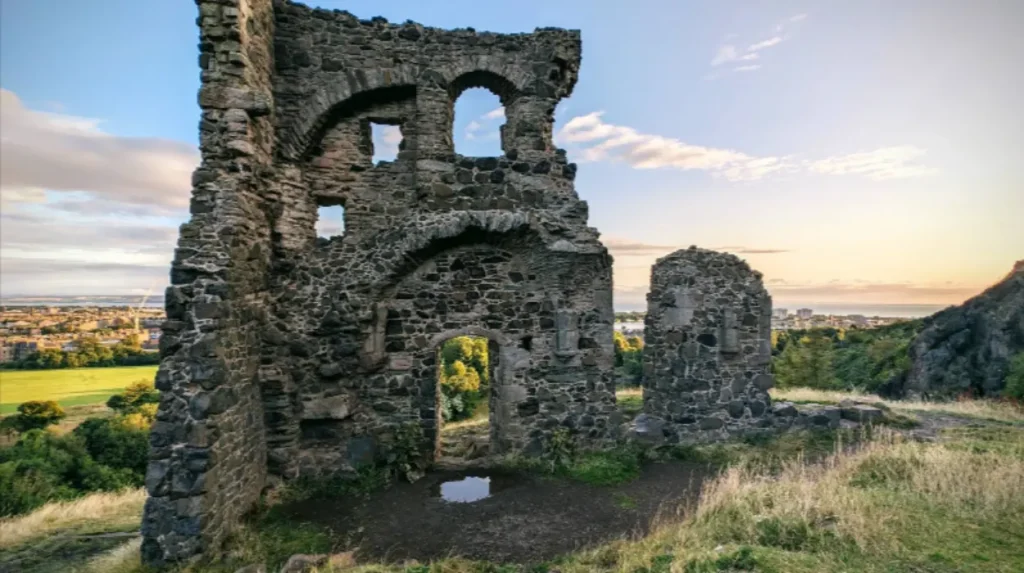
Three lochs punctuate the landscape: St Margaret’s Loch, a man-made boating pond from Prince Albert’s 1856 improvements now teeming with waterfowl; Dunsapie Loch below Arthur’s Seat, supporting birds; and Duddingston Loch to the east. Ruins like St Anthony’s Chapel, a 15th-century structure possibly guarding a holy spring, add mystery, while prehistoric hill forts on Arthur’s Seat and cultivation terraces hint at ancient use. Queen’s Drive circles the park, closed weekends to vehicles, preserving its highland-like wildness amid urban surrounds.
Princes Street Gardens: Urban Oasis
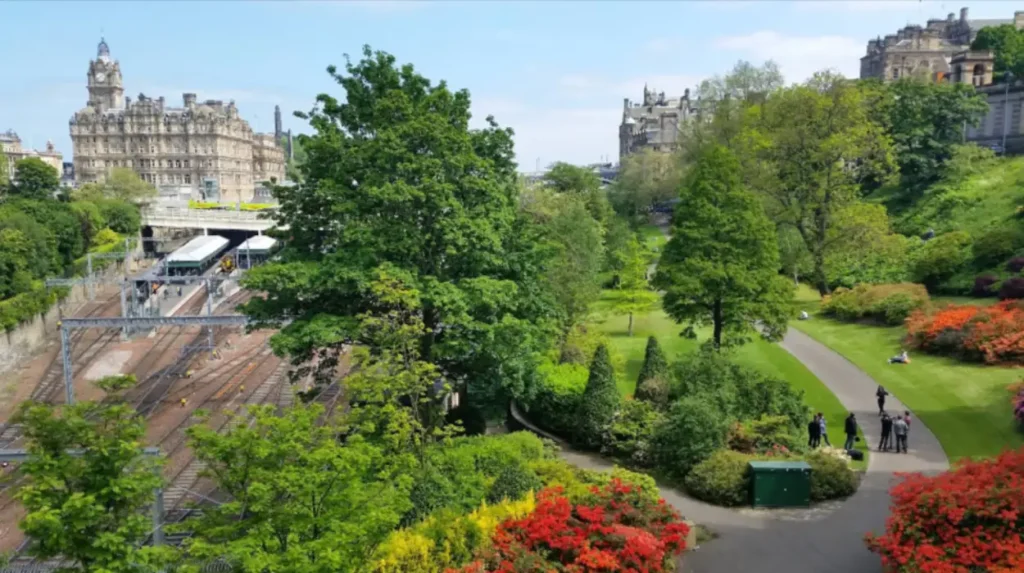
Nestled between the Old and New Towns in Edinburgh’s World Heritage Site, Princes Street Gardens spans the valley beneath Edinburgh Castle, awarded Green Flag status since 2011. Divided into east and west sections, it features the iconic Floral Clock, planted since 1903 with 30,000 dwarf annuals like lobelia and succulents commemorating anniversaries.
Monuments abound: the Scott Monument honors Sir Walter Scott, alongside war memorials like the Royal Scots Regimental and Scots American War Memorials, plus the restored Ross Fountain. Geological significance includes its Inventory of Gardens and Designed Landscapes listing for aesthetic and historical value, with toilets, cafes, and seasonal play areas enhancing accessibility. Gates close seasonally from 6pm winter to 10pm summer, keeping dogs on leads.
Royal Botanic Garden: Living Science Treasury
Spanning 70 acres north of the city center, the Royal Botanic Garden houses 13,302 species across glasshouses like the towering Temperate Palm House (Scotland’s tallest at 1858) and exhibits on orchids, ferns, rainforests, and carnivorous plants. Its herbarium boasts over 3 million specimens, digitizing milestones like the millionth from Ben Nevis lichens.
Inverleith House hosts contemporary art, while rock, woodland, and Scottish heath gardens showcase alpines and Chinese hillsides. Free entry draws families for walks, with events and education programs underscoring its role in biodiversity conservation, plants and climate change research, and Scottish native species.
Other Treasured Parks and Hills
The Meadows, once Borough Loch drained in 1722 by Thomas Hope into a tree-lined walkway, now buzzes with tennis, cricket, the city’s largest play area, and barbecues along Melville Drive. Hosting the 1886 International Exhibition, it safeguards wildlife like starlings and redwings under legal protections from 1827.
Calton Hill, an easy ascent from Regent Road, crowns neoclassical monuments: the unfinished National Monument (1822 Parthenon tribute), Nelson Monument, City Observatory, and Dugald Stewart Monument, offering 360-degree vistas. Braid Hills, acquired 1890 for public recreation, peak at 675 feet with whin, roses, and brambles; unique for horse riding, it overlooks golf courses and features a 1995 viewpoint indicator to distant peaks like Ben Lomond.
Inverleith Park, from 1889 farmland, includes a pond, sports pitches, and the restored Kinloch Anderson Sundial and Dunlop Fountain.
Benefits for Health and Biodiversity
Edinburgh’s greenspaces enhance physical and mental wellbeing, providing recreation, education, and nature connection on doorsteps. Trees mitigate pollution and climate impacts, boosting property values and urban livability. The Thriving Green Spaces project, with the University of Edinburgh, crafts a 30-year strategy for protection.
Biodiversity thrives via the Edinburgh Nature Network, creating wildflower meadows and wetlands under the Biodiversity Action Plan. Urban forests in Braid Hills and Local Biodiversity Sites link habitats, balancing recreation with ecological needs amid crises.
Seasonal Delights and Activities
Spring bursts with botanic blooms and Meadows picnics; summer hosts Hogmanay in Princes Street Gardens and Holyrood cycling races like the 1970 Commonwealth Games. Autumn colors paint the Braid Hills, while winter markets transform Princes Street into festive wonderlands.
Hiking Arthur’s Seat, birdwatching at lochs, or golfing Braids suit all; events like volunteer reviews (1860’s 21,000 troops for Queen Victoria) echo history. Cycle paths and bridleways promote active pursuits, with traffic curbs preserving peace.
Preserving Edinburgh’s Green Legacy
Initiatives like nature restoration tackle biodiversity loss, enhancing low-quality areas. Regulations under Parks Acts limit vehicles in Holyrood, with coach permits and closures for toads or events. Community groups like Friends of the Meadows ensure vitality, safeguarding these evergreen lungs for future generations.
Edinburgh’s green spaces weave nature into urban life, from ancient parks to modern conservation, inviting endless discovery.