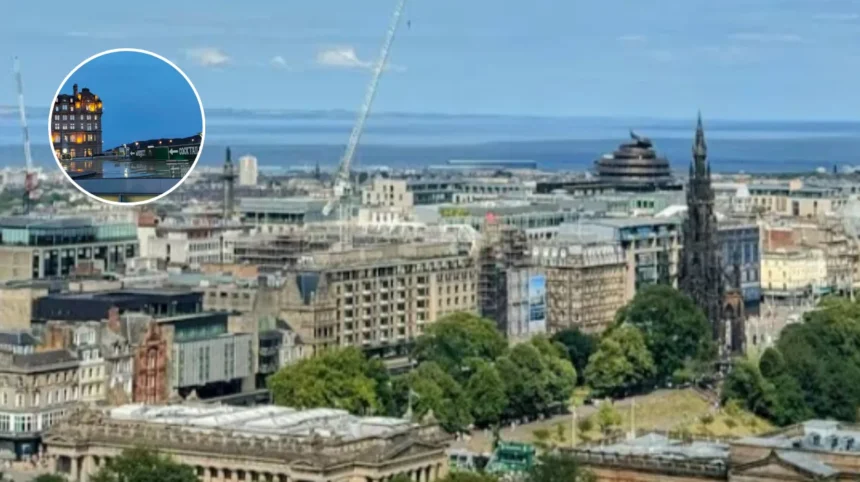
Edinburgh’s New Town stands as a testament to enlightened urban planning, offering a striking contrast to the medieval labyrinth of the Old Town. This meticulously designed district, born from necessity and ambition in the 18th century, continues to captivate residents and visitors with its neoclassical grandeur and enduring vitality.
Origins Amid Overcrowding
The creation of Edinburgh’s New Town emerged from dire urban pressures in the mid-18th century. The Old Town, confined by its volcanic ridge, had become a congested warren of high-rises where up to 10 families shared single rooms, fostering disease and social strain. City officials, inspired by Enlightenment ideals of order and hygiene, sought expansion northward across the drained Nor’ Loch, a former swampy barrier turned Princes Street Gardens.
This ambitious project reflected Scotland’s intellectual awakening, with figures like philosopher David Hume advocating for rational city design. By 1759, draining the loch paved the way for bridging the valley via the North Bridge in 1772, symbolizing a literal and figurative connection to progress. The initiative promised not just space but a new social fabric for the rising professional class, merchants, and nobility fleeing Old Town squalor.
James Craig’s Visionary Blueprint
Young architect James Craig won a 1766 anonymous competition with a grid layout that prioritized symmetry and circulation. His plan featured three principal north-south streets—George Street, Queen Street, and Princes Street—intersected by perpendicular avenues like Hanover Street and Thistle Street, enclosing St. Andrew Square and Charlotte Square as verdant anchors.
Craig’s design drew from London precedents and French formalism, incorporating mews for stables and gardens for privacy, ensuring sunlight and ventilation for every home. Building commenced in 1767, with Princes Street’s commercial frontage facing the castle-framed Old Town panorama. This grid, built in phases until the 1850s, transformed marshland into Europe’s first planned neoclassical extension, blending utility with aesthetic harmony.
Architectural Splendor in Stone
New Town’s architecture exemplifies Georgian restraint and classical revival, predominantly using local Craigleith sandstone for pale, honeyed facades. Uniform three-story terraces with pilasters, pediments, and wrought-iron balconies create rhythmic streetscapes, where subtle variations in doorcases and fanlights denote status.
Influential architects elevated key sites: Robert Adam crafted the domed Register House (1774-1789) in St. Andrew Square, its Ionic columns echoing ancient temples, and later Charlotte Square’s flawless west end (1791), with curved pavilions and sphinx-capped doorways symbolizing civic pride. Robert Reid and William Playfair extended the vision eastward, adding the elegant Circus Lane and Drummond Place’s oval garden, mimicking London’s crescents. These structures, protected since 1960s conservation efforts, preserve an intact 18th-19th century ensemble rare in Europe.
Key Landmarks of Cultural Prestige
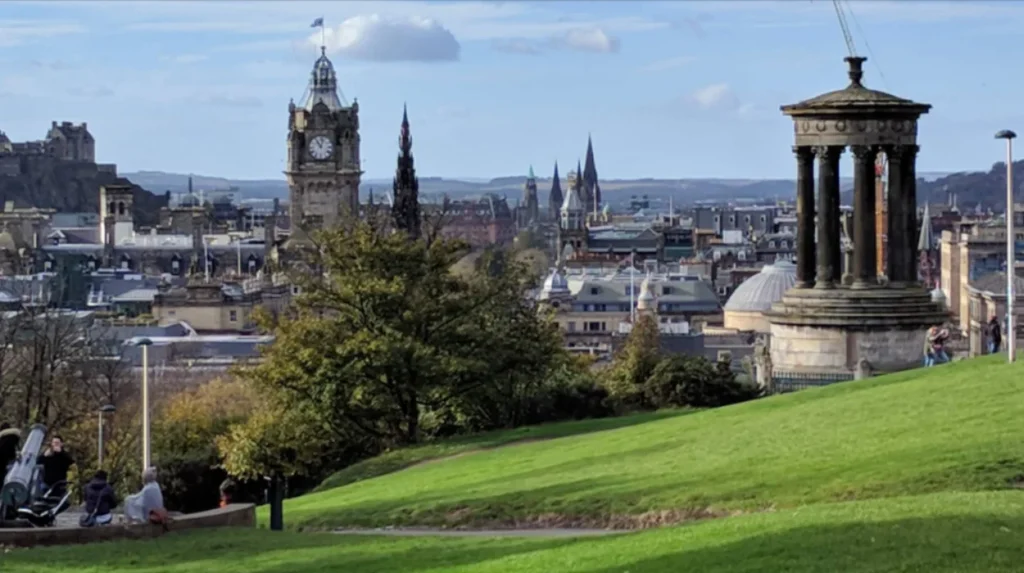
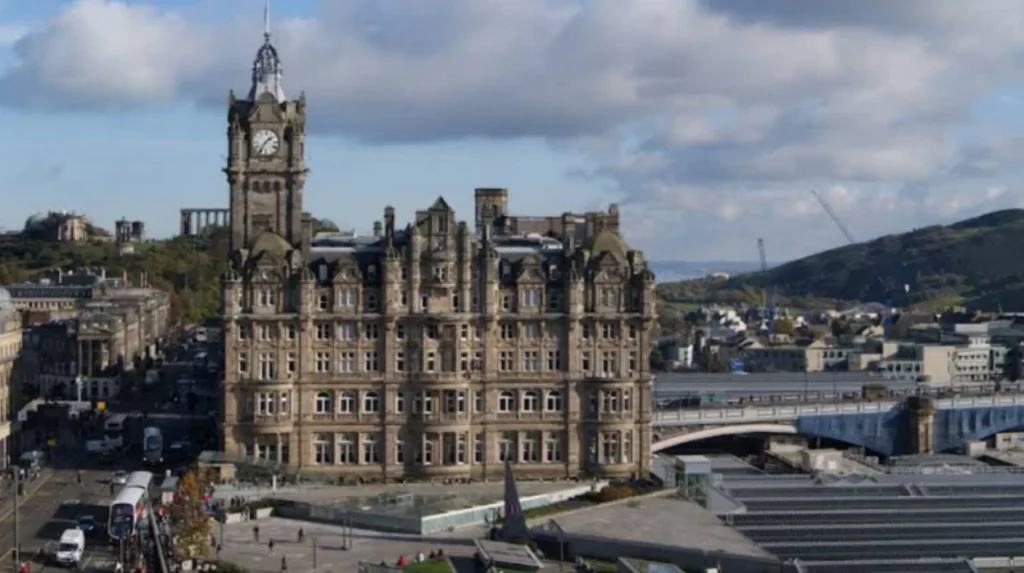
Princes Street, the bustling spine, juxtaposes shops below with hotels atop, its Balmoral clock tower piercing the skyline. George Street hosts luxury boutiques in former banking halls, while Queen Street’s crescents shelter institutions like the Scottish National Portrait Gallery, Playfair’s 1890 Gothic fantasia amid classical peers.
Charlotte Square anchors the west, its grassed garden ringed by Adam’s masterpiece interiors, now housing the National Trust for Scotland’s Georgian House museum, evoking 1796 domesticity with period furnishings and meticulous restoration. St. Andrew Square’s Melville Monument honors lawyer Henry Dundas, whose column rivals Nelson’s in London, framing the square’s cafes and events space. Bute House, the First Minister’s residence, underscores the district’s modern political heartbeat within historic walls.
Social Transformation and Elite Society
New Town’s inception catered to Enlightenment luminaries: economist Adam Smith resided at Panmure Close (demolished), while publisher William Creech built at 61 Princes Street. It housed lawyers, bankers, and lairds, fostering clubs like the New Club (1834) on Princes Street, where intellectuals debated amid mahogany-paneled rooms.
By the 19th century, phases two through seven sprawled northward and eastward, incorporating Bellevue and Gayfield estates, with terraced villas for industrialists. This demographic shift elevated Edinburgh’s status as a northern Athens, its planned order contrasting industrial Manchester’s chaos. Women of leisure promenaded the Mound gardens, reinforcing class divides yet pioneering urban gentility.
UNESCO Recognition and Preservation
In 1995, UNESCO inscribed the Old and New Towns as a World Heritage Site, praising the latter’s “planned urban ensemble” as a pivotal Enlightenment legacy. The designation encompasses 40% of Edinburgh’s area, mandating strict guidelines against demolition or unsympathetic alterations.
The Cockburn Association, founded 1875, spearheaded conservation, thwarting 1960s road schemes that threatened integrity. Today, the New Town Conservation Area enforces facade repairs and limits signage, ensuring over 90% original fabric survives. Gardens like those in Moray Place, private oases with rare trees, gained 2001 protection, blending public access with resident stewardship.