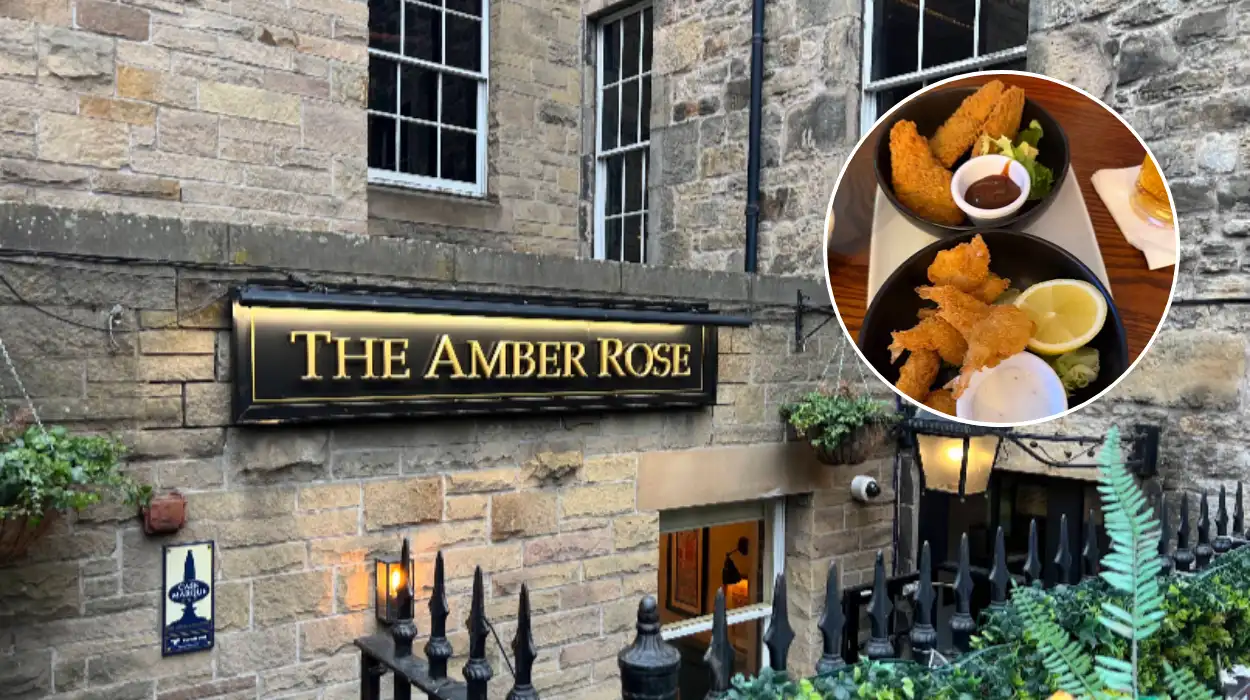
The Grassmarket in Edinburgh stands as a timeless gem in the heart of Scotland’s capital, blending centuries of gritty history with vibrant modern allure. Nestled in a hollow beneath the majestic Edinburgh Castle, this historic square captivates visitors with its cobbled streets, storied past, and lively atmosphere that draws locals and tourists alike year-round.
Origins of the Grassmarket
The Grassmarket’s story begins in the medieval era, emerging as a vital hub in Edinburgh’s Old Town. First documented in 1363 within the Registrum Magni Sigilii Regum Scotorum as the “street called Newbygging under the castle,” it evolved into one of the city’s principal marketplaces by 1477 under King James III’s ordinance. This royal decree established fifteen distinct markets across Edinburgh, with the Grassmarket dedicated primarily to livestock, where horses and cattle were traded openly—earning its name from the grazing pens that extended beyond its western boundary.
Livestock drovers from surrounding regions converged here, transforming the area into a bustling economic center that supported the growing medieval city. The square’s location in a natural dip provided practical space for pens and markets, shielded somewhat from the winds sweeping down from Castle Rock. Archaeological digs in the early 2000s on nearby Candlemaker Row uncovered evidence of 11th- or 12th-century farmsteads at the crossroads of major cattle routes, confirming the site’s pre-urban agricultural roots before full urbanization in the late 15th century with burgage plots and tenements. This foundation laid the groundwork for the Grassmarket’s enduring role as a commercial heartbeat, a legacy that persists in its market traditions today.
As Edinburgh expanded, the Grassmarket became integral to daily trade. Daniel Defoe, visiting in 1706 as an English agent, noted its dual role as both “Grass-market” for produce and “Horse-market,” adjacent to the West Bow’s wholesale warehouses stocked with iron, tar, hemp, and dyes from Leith ports. These early markets not only fueled local commerce but also shaped the area’s social fabric, drawing traders, farmers, and travelers into a lively exchange that defined Old Town life for generations.
A Square of Executions and Dark Legends
Beyond commerce, the Grassmarket earned a somber reputation as Edinburgh’s primary site for public executions from the 17th century onward. Gallows rose ominously at its eastern end, where crowds gathered to witness justice—or spectacle—in an era when capital punishment was both deterrent and entertainment. Over 100 Covenanters, Presbyterian dissenters persecuted during “The Killing Time” from 1661 to 1688, met their end here, their martyrdom commemorated by a 1937 memorial plaque listing known names near the gibbet’s former spot.
Iconic tales amplify this macabre history. In 1724, Maggie Dickson, a young fishwife from Musselburgh, was hanged for allegedly murdering her newborn by drowning it in the River Tweed. Declared dead and en route to burial, noises from her coffin revealed she was alive—a “resurrection” interpreted as divine mercy, sparing her from re-execution under Scots law and earning her the nickname “Half-Hangit Maggie.” She lived another 40 years, remarrying her husband and becoming a local curiosity spotted back in the Grassmarket months later. Pubs like Maggie Dickson’s now nod to her story, turning tragedy into folklore.
The 1736 Porteous Riots further scarred the square, where an enraged mob lynched Captain John Porteous of the City Guard after his troops fired on protesters during a smuggler Andrew Wilson’s execution. A plaque marks the site, immortalized in Walter Scott’s The Heart of Midlothian, which vividly describes the gallows “growing out of the earth like some foul demon” before dawn. Even James Boswell, in 1775, defended sheep-stealer John Reid here, plotting unsuccessfully to revive him post-hanging inspired by Maggie’s tale. These events cemented the Grassmarket’s place in Edinburgh’s collective memory, where history’s shadows linger amid the cobblestones.
A subtle “shadow of the gibbet” in darker paving now outlines the execution site, a poignant reminder integrated into modern landscaping.
Architectural Tapestry of the Grassmarket
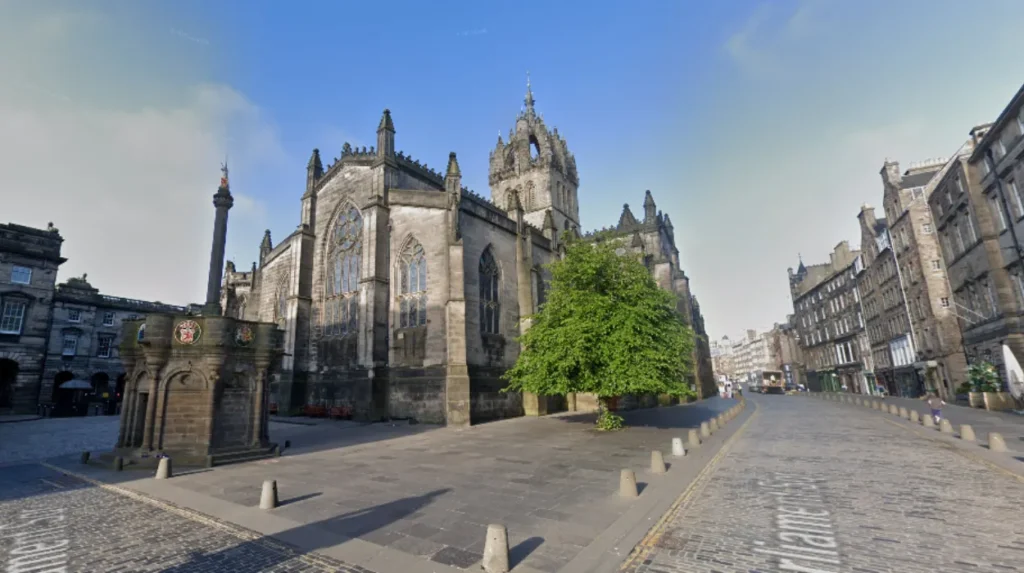
The Grassmarket’s architecture mirrors Edinburgh’s layered past, with buildings spanning from 17th-century survivors to 21st-century innovations. Encircled by tenements in the hollow below Castle Rock, the square boasts medieval roots visible in remnants of the Flodden Wall along the Vennel at its southwest corner—one of the best-preserved sections of the 16th-century defenses built after the 1513 Battle of Flodden.
Standouts include the White Hart Inn, dating to the early 1700s and claiming title as Edinburgh’s oldest pub, frequented by Robert Burns in 1791, the Wordsworth siblings in 1803—who found it “not noisy, and tolerably cheap”—and even body-snatchers Burke and Hare in the 1820s. Victorian-era reforms post-1868 cleared slums, widening West Port and introducing Scots Baronial-style tenements like No. 1 Grassmarket, a Category C listed building rebuilt in 1897 with bartizans, gabled dormers, and stugged sandstone facades.
Twentieth-century additions blend seamlessly: Ebenezer MacRae’s 1920s council housing mimicked Baronial grandeur, while the 1968 Mountbatten Building, once Heriot-Watt University’s hub, transformed into the Apex International Hotel in 1996. Contemporary flair shines in Dance Base (2001) by Malcolm Fraser Architects, the National Centre for Dance, which cascades down Castle Rock slopes behind a traditional frontage, earning Civic Trust and Scottish Design Awards for its innovative multi-level design. Hotels like Apex City dominate the southern side, their modern lines contrasting historic pubs and shops, creating a dynamic skyline framed by the castle’s silhouette—a photographer’s dream view.
This eclectic mix preserves the Grassmarket’s authenticity while adapting to contemporary needs, ensuring its architectural charm endures.
From Slums to Gentrified Haven
The 19th century plunged the Grassmarket into squalor, exacerbated by Irish immigration post-1800 and the 1828 Burke and Hare murders at West Port’s Tanners Close, where the duo sold corpses to anatomists. Lodging houses crammed up to 12 people per room, with 1888 records showing 414 occupants in seven sites, including Crombies Land’s 70 in 27 bedrooms sans toilets—prompting the 1848 Edinburgh Police Act for oversight. Salvation Army hostels lingered until the 1980s, alongside “jakeys” at east-end toilets, marking its down-and-out era.
Revival accelerated in the late 20th century through gentrification, fueled by its prime location. The 2009-10 £5 million streetscape overhaul created pedestrian-friendly “events zones,” extended café pavements, and delineated historic features like the Flodden Wall with lighter paving to Granny’s Green Steps. Public toilets closed around 2000, hostels repurposed into backpacker spots, and property prices soared, shifting from poverty to upscale tourism. Today, it’s a convivial blend of Continental-style al fresco dining and family-oriented venues, its transformation complete yet respectful of roots.
A Zeppelin bomb crater, marked by an inscribed flagstone before the White Hart from the 1916 raid that killed 11 elsewhere, adds a World War I footnote to this phoenix-like rise.
Vibrant Modern Life and Attractions
Contemporary Grassmarket pulses with energy, its cobbled expanse hosting weekly Saturday markets brimming with local produce, crafts, handmade gifts, and organic fare—a nod to its trading heritage. Quirky independents like Armstrong’s Vintage Emporium offer Scottish souvenirs, clothing, and antiques, while pubs spill onto pavements for lively evenings.
Dining thrives amid traditional taverns turned gastro-pubs, serving hearty Scottish fare alongside global cuisines in a setting perfect for castle-gazing. Festivals amplify the buzz: summer streets fill with performances, carnivals, and al fresco meals during the Fringe or Hogmanay. Ghost tours delve into hauntings, history walks uncover Covenanter tales via groups like Mercat Tours from the Grassmarket Community Project.
Proximity to icons enhances appeal: stroll to Greyfriars Kirkyard, climb Victoria Street’s colorful steps, or explore Cowgate’s vaults. Hotels provide easy access, making it ideal for immersive Old Town stays. Whether shopping, sipping whisky, or savoring views, the Grassmarket embodies Edinburgh’s spirited soul.
Enduring Legacy of the Grassmarket
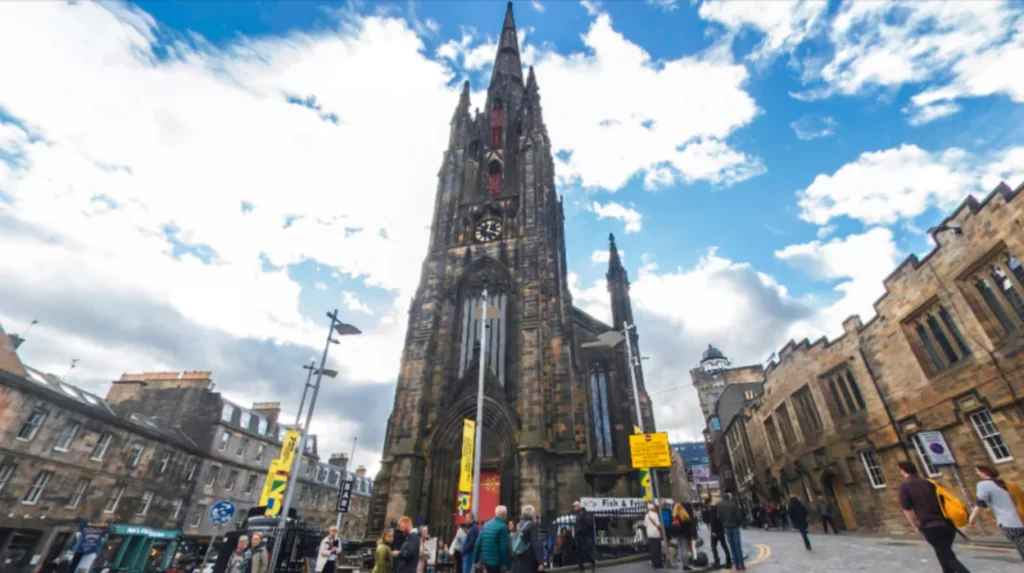
The Grassmarket transcends time, from medieval pens to execution scaffold, slum haven to tourist beacon. Its resilient evolution—from 1477 markets to 21st-century events zone—mirrors Edinburgh’s own story of grit and grandeur. Iconic views, preserved architecture, and whispered legends ensure it remains a must-visit, where history lives in every cobblestone and pint. For locals and visitors, it offers endless discovery, a square where past and present harmonize eternally.