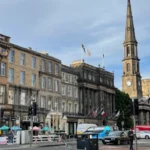
Edinburgh’s New Town, a neoclassical masterpiece spanning over 1,500 buildings, addressed 18th-century Old Town overcrowding through visionary planning and phased construction from 1767 to the 1850s. Architect James Craig’s grid layout, refined with Robert Adam’s elegant squares, created the world’s largest contiguous Georgian ensemble, UNESCO-listed in 1995.
- Overcrowding Crisis in the Old Town
- James Craig’s Winning Competition Design
- Initial Preparations and Nor Loch Drainage
- Phase One: Eastern Core 1767–1780s
- Circus Proposals and Western Expansion
- Robert Adam’s Charlotte Square Masterpiece
- Second New Town and Northern Extensions 1800s
- Eastern and Inland Expansions
- Architectural Uniformity and Builder Guilds
- Socioeconomic Impacts and Class Segregation
- 20th-Century Preservation Efforts
- Legacy as Urban Planning Paradigm
Overcrowding Crisis in the Old Town
By the 1750s, Old Town’s 57,000 residents crammed into wynds with 20% infant mortality, open cesspits draining to Nor Loch, a stagnant “foul canal” breeding fever. Multi-story tenements reached 15 floors, airless closes like Mary King’s fostering plague echoes from 1645. Elite flight southward sought relief.
Proposals dated to 1680s (Sir John Bruce), but Lord Provost George Drummond (1746–1764) championed expansion, securing 1752 boundary extension north over Nor Loch fields. Feuars petitioned ordered layouts versus organic sprawl.
James Craig’s Winning Competition Design
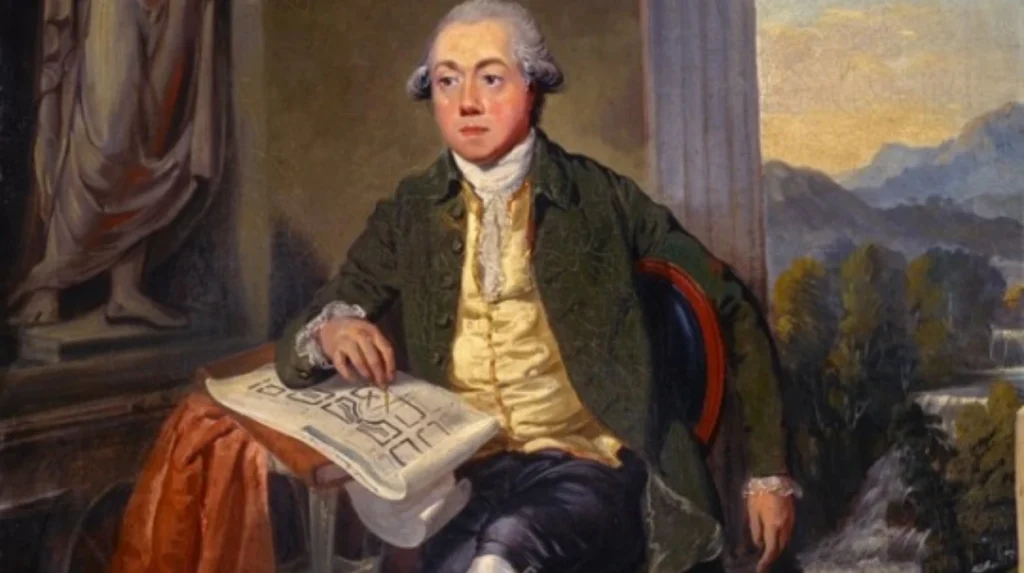
January 1766 competition drew six entries; 23-year-old James Craig’s plan triumphed, earning gold medal, city freedom, and patronage. Symmetrical grid honored Hanoverians: George Street (king), Princes Street (daughters), Queen Street (consort), Hanover Street (dynasty). St. Andrew/Charlotte Squares flanked east-west axis.
Judges suggested refinements: circus at Castle-facing end (unbuilt), widened Thistle Street artisans’ row. July 1767 Town Council adopted feuing plan—prospective plots mapped for uniformity, minimum elevations, ashlar sandstone facades. King George III approved later 1767.
Craig envisioned rational urbanism inspired Palladio, French axes, London squares—air, light, segregation by class.
Initial Preparations and Nor Loch Drainage
Pre-construction cleared Nor Loch (1759–1816 via Calton Hill conduit to Leith). North Bridge foundation stone laid 1765 by Drummond (suicide-plagued build killed five), arching 1,107 feet over valley, opened 1772 with tolls funding feu duties.
Feuars committee regulated: uniform three-story heights, rusticated ground floors, balustrades, doorcases. Plots auctioned from 1768, £8–£15 annual feu-duty per 100-foot frontage.
Phase One: Eastern Core 1767–1780s
Construction ignited 1767 at St. Andrew Square eastern anchor, commodious for merchants. Dundas Close linked to Old Town; assembly rooms (1788, David Bryce later) hosted balls. By 1774, George Street’s west end rose, Royal College of Physicians (Craig’s 1776–81 Doric temple).
Princes Street Gardens infilled loch bed, railings 1770s. Queen Street residences for nobility completed piecemeal, Thistle Street mews stables hidden rear. 100+ buildings by 1780, population shift eased Old Town 10%.
Sandstone from Craigleith, Hailes quarries hauled via temporary tracks, masons guilds enforcing ashlar precision.
Circus Proposals and Western Expansion
Craig iterated circuses: 1770 Register House oval (built Robert Reid 1819), 1774 Castle-view rotunda (abandoned), 1780 refined. Focus shifted west; Heriot Trust feued Charlotte Square 1791.
By 1790s, 500 houses occupied, feu revenue £3,000 yearly funding bridges, sewers. Economic boom: merchants relocated, boosting banks like Royal (1727).
Robert Adam’s Charlotte Square Masterpiece
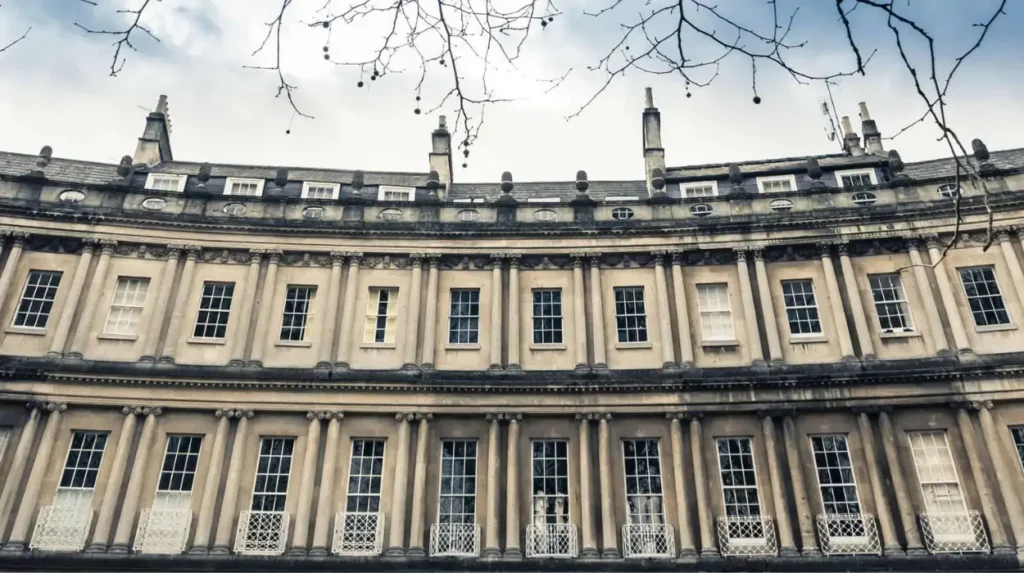
Commissioned 1791, Adam’s swansong (died 1792) oval piazza evoked Bath crescents, Roman forums. North: Bute/Dundee Houses pavilions; south: Register House echo; east/west: uniform screens. Ionic colonnades, pediments, balteus ironwork quarried Craigleith cream stone.
Completed 1800–1820s under Robert Reid supervision, cost £100,000+. National Trust HQ (no. 5, 1791) interiors plasterwork, marble chimneys exemplify Adam style.
Second New Town and Northern Extensions 1800s
Demand spurred “Second New Town”: 1802 Drummond Place circus (Reid), Bellevue Crescent (1815). Circus variants built sparingly; India Street, Danube Street gridded north to Royal Botanic Gardens.
Robert Burns Street, Eglinton Crescent (1820s) bowed facades. By 1820s, 1,000+ buildings, population 20,000 5x Old Town density but salubrious.
Eastern and Inland Expansions
Moray Estate (1820s, Gillespie Graham) villas Dean Valley; Calton Hill jails (1817, neoclassical folly). East New Town: Hillside Crescent, London Street infill 1830s. Total phases seven, spanning 182 hectares.
Infrastructure: 1820s gas lighting, 1830s sewers to Water of Leith. Waverley Station (1854) abutted Princes Street.
Architectural Uniformity and Builder Guilds
Feuars enforced palimpsest: Craig’s elevations copied ad infinitum—piers, cornices, Venetian windows. Adam motifs proliferated: oval fanlights, Coade stone urns. Local sandstone mellowed golden, rain-eroded detailing.
Master masons like Robert Moray coordinated; joiners crafted mahogany doors. Cost: £1,500–£3,000 per house, rentals £100–£200 yearly for gentry.
Socioeconomic Impacts and Class Segregation
Edinburgh’s New Town, conceived in the late 18th century by James Craig’s visionary 1767 plan, finagled profound class isolation that reshaped the megacity’s social fabric, consigning the working riffraff to the confined, unsanitary labyrinths of the Old Town while elevating professionals, merchandisers, and nobility into elegant Georgian splendor. George Street came the save of attorneys and lawyers, its subdued neoclassical armature reflecting Enlightenment rationalism suited to legal minds; Princes Street housed merchandisers and entrepreneurs, its ground bottoms soon settled by retail settlers like Jenners department store innovated in 1838, transubstantiating the turnpike into a marketable boardwalk overlooking Princes Street auditoriums; while Queen Street attracted nobility and gentry, its grand townhouses offering insulation above the marketable bustle.
The 1851 tale starkly quantified this peak New Town boasted 40 professionals and white- collar residers engineers, bankers, surgeons varied against Old Town’s drudge- dominated population of masons, needlewomen, and janitors crammed into medieval diggings comprising 200 residers per stair. This deliberate spatial sorting, driven by Enlightenment ideals of hygiene, order, and scale, settled socioeconomic difference, with New Town’s rich occupants enjoying private premises and assembly apartments inapproachable to the laboring classes left before in complaint- ridden closes.
20th-Century Preservation Efforts
Edinburgh’s 18th- century New Town, a UNESCO World Heritage Site since 1995 alongside the Old Town, owes its pristine condition to robust 20th- century preservation sweats that balanced civic elaboration with architectural integrity. In the 1940s,post-war zoning bills shielded the neoclassical grid against academic development, conserving Georgian sundecks and places like Charlotte Square amid reconstruction pressures. The 1960s pedestrianisation of Princes Street converted the top turnpike into a business-free boardwalk, enhancing its part as a retail and artistic roadway while guarding delicate facades from vehicle pollution and wear measures that set precedents for heritage- led urbanism across Britain.
The binary UNESCO listing in 1995 assessed strict conservation scores, taking periodic conservation plans that integrated tourism growth with fabric preservation. These guidelines impelled regular stonework repairs, slate roof reserves, and adaptive exercise of vacant marketable spaces, icing the ensemble’s Outstanding Universal Value. George Street, the quarter’s premier street, exemplifies ongoing commitment a £35 million upgrade blazoned in 2025 incorporates hostile vehicle mitigation bollards, determinedness setts, and subsurface serviceability, with construction slated for 2027 to minimize dislocation during Edinburgh’s jubilee peak.
Legacy as Urban Planning Paradigm
Craig’s grid influenced global cities; Adam’s interiors inspired Regency London. The 50-year first phase yielded a timeless ensemble, symbolizing Enlightenment rationality amid Romantic Scotland.