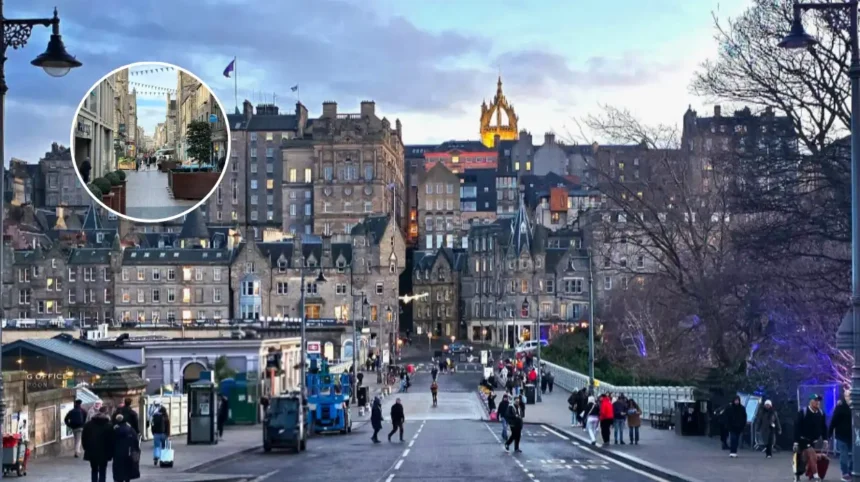
Princes Street in Edinburgh stands as one of the city’s most iconic thoroughfares, blending historic grandeur with vibrant modern life. This mile-long artery serves as a gateway to Scotland’s capital, offering unparalleled views of the majestic castle while hosting a dynamic mix of retail, culture, and leisure.
Origins in the New Town Vision
Edinburgh’s Princes Street emerged from the ambitious urban planning of the 18th century, a deliberate contrast to the cramped, overcrowded Old Town perched atop its volcanic ridge. Following the union with England in 1707, the city’s elite sought expansive living spaces, prompting the development of the New Town. Architect James Craig’s winning design in a 1766 competition laid out a grid of orderly streets, with Princes Street forming the southern boundary—a linear promenade facing the ancient city across a steep valley. Construction began around 1770, transforming what was once a rural lane known as the Lang Dykes into a refined residential avenue named in honor of King George III’s sons, the royal princes.
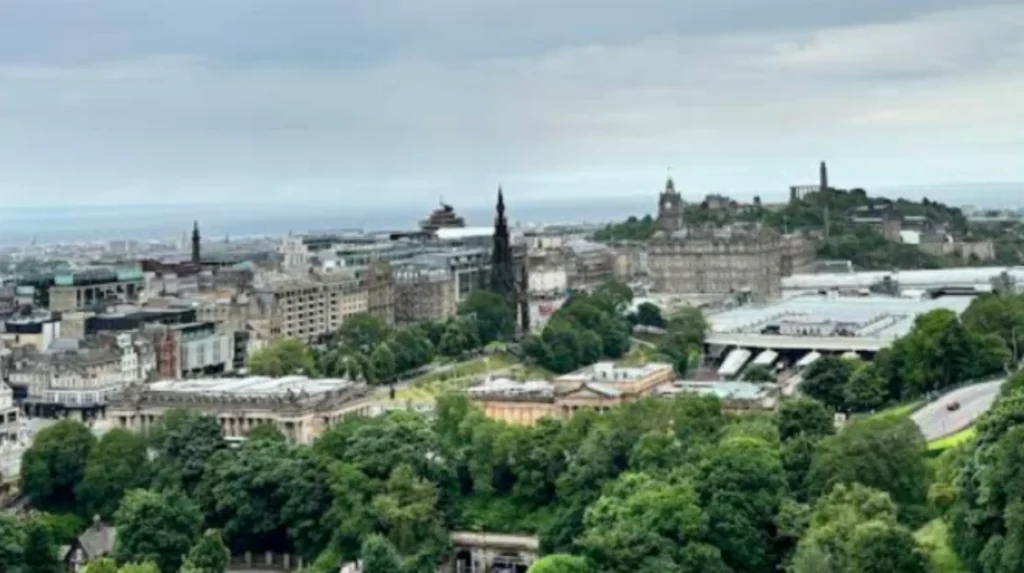
The street’s unique topography shaped its character from the start. To the north lie elegant Georgian townhouses and later commercial buildings, elevated slightly above the road. Southward, a dramatic drop reveals Princes Street Gardens, once the Nor Loch—a polluted body of water drained in the 1820s to create verdant public spaces. This asymmetrical layout, with shops and residences on one side and open gardens on the other, remains a defining feature, drawing visitors for its picturesque panorama of Edinburgh Castle dominating the skyline.
Early residents included merchants and professionals drawn to the New Town’s enlightened ideals of symmetry, light, and air. The first house at No. 10, built in 1769 for silk mercer John Neale, set the tone for uniform three-story structures with basements and attics. By the 1780s, coffee houses like Poole’s occupied these spaces, fostering intellectual gatherings amid the buzz of Scotland’s Age of Enlightenment.
Architectural Marvels and Historic Landmarks
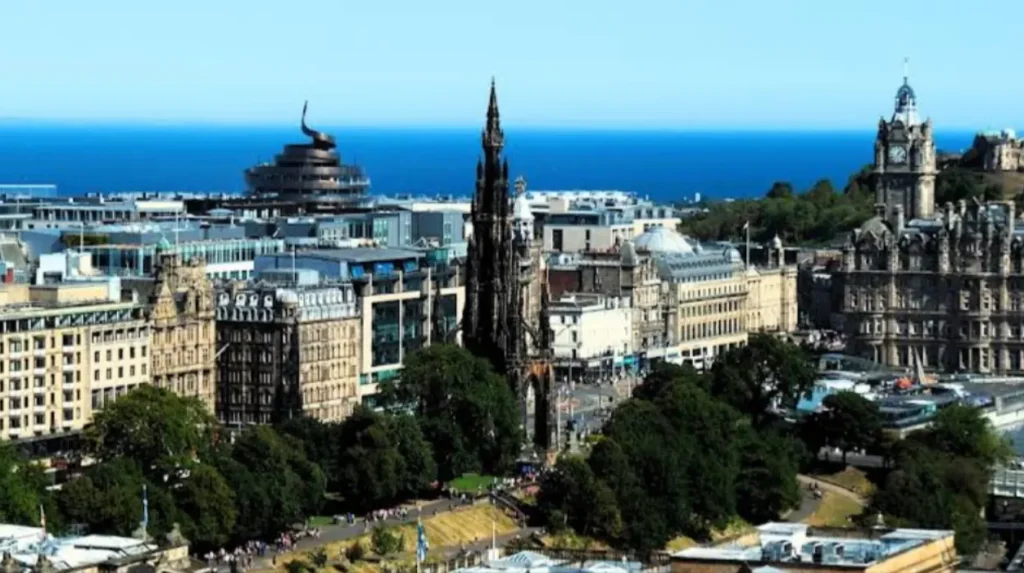
Princes Street’s architecture reflects layers of evolution, from neoclassical purity to Victorian opulence. Of the original Georgian buildings, only No. 95 retains its unaltered form—a rare survivor amid waves of modernization. Many facades earned listed status for their heritage value, preserving elements like the Scottish baronial revival style seen in the Balmoral Hotel, originally the North British Station Hotel opened in 1902.
The Balmoral stands as a pinnacle of Edwardian luxury, its clock tower famously running four minutes fast to ensure punctuality for worshippers heading to St. Giles’ Cathedral—a tradition rooted in railway efficiency. Across the street, the Scott Monument dominates the gardens, a soaring Gothic spire completed in 1844 to honor novelist Sir Walter Scott. At 200 feet tall, this intricate sandstone structure features 68 figures from Scott’s works, ascended via 287 narrow steps for breathtaking vistas.
Jenner’s Department Store, once a retail giant, exemplifies Princes Street’s commercial heritage. Founded in 1838 by Charles Jenner and Lewis Kennington, it expanded dramatically, earning a Royal Warrant in 1911 after serving the monarchy. A devastating fire in 1893 led to its rebuild by architect W.H. Playfair’s successor, mirroring the Balmoral’s design. Though now integrated into larger retail chains, its legacy underscores the street’s shift from elite residences to shopping mecca.
Other treasures include the Royal Scottish Academy and National Gallery of Scotland flanking the gardens’ western end, housing masterpieces from Titian to Turner. These institutions, established in the 19th century, anchor Princes Street’s cultural prominence, drawing art lovers year-round.
Commercial Heart of Edinburgh
Over the 19th and 20th centuries, Princes Street evolved into Scotland’s premier shopping destination, rivaling London’s Regent Street. Trams clattered along its length from 1871 until 1956, ferrying shoppers to grand emporiums. Jenners’ dominance was matched by Jenners, Harvey Nichols (opened 1996), and chain stores like H&M and Primark today, catering to diverse budgets amid high-street vibrancy.
The northern side buzzes with over 40 stores, from luxury flagships like Louis Vuitton to budget-friendly options, generating millions in annual footfall. This retail density positions Princes Street as Edinburgh’s economic pulse, supporting 1,500 jobs and attracting 20 million visitors pre-pandemic. Seasonal sales and festive lights transform it into a spectacle, with hogmanay celebrations spilling from the gardens.
Yet commerce intertwines with public realm enhancements. Recent pedestrianization efforts, including wider pavements and cycle lanes under the City Centre West East Link project, aim to reclaim space from traffic, fostering a more walkable experience amid rising tourism.
Princes Street Gardens: The Green Lung
No exploration of Princes Street is complete without its southern gardens, a 30-acre oasis divided into East and West Princes Street Gardens. Drained from the Nor Loch in 1816-1821 under engineer Thomas Telford, the site became formal gardens by 1824, funded by the Princes Street proprietors. West Gardens host the Ross Bandstand for summer concerts, while East features the Ross Fountain, a restored 1869 cast-iron masterpiece.
The gardens serve as Edinburgh’s communal heartbeat. During the annual Edinburgh Festival Fringe, stages host free performances; winter brings the German Market and Big Wheel, offering panoramic views. Families picnic beneath 19th-century rail bridges now repurposed as walkways, while the Ross Open Air Theatre echoes with music from Sheku Kanneh-Mason to the Royal Edinburgh Military Tattoo previews.
Ecologically, the gardens boast mature trees, flowerbeds, and wildlife corridors, managed by the City of Edinburgh Council. Accessibility improvements, including ramps and audio guides, ensure inclusivity for all visitors.
Cultural and Eventful Legacy
Princes Street has witnessed pivotal moments in Scottish history. In 1822, King George IV’s state visit paraded along its length, the first by a British monarch to Scotland post-Union. Suffragettes rallied here in the early 1900s, while wartime air raid shelters dotted the gardens. Today, it hosts Pride marches, climate protests, and the Christmas Carnival, blending tradition with contemporary activism.
Literary ties abound: Robert Louis Stevenson strolled its paths, inspiring “Kidnapped,” and Robert Burns frequented early coffee houses. The street’s role in the 2014 independence referendum saw crowds gather in the gardens for results, underscoring its status as a public forum.
Festivals amplify its allure. The Hogmanay Street Party closes Princes Street for global revelry, with fireworks over the castle. Fringe performers busk amid shoppers, creating an organic cultural tapestry.
Evolution Through the Centuries
The 20th century brought profound changes. Post-WWII reconstruction favored cars over pedestrians, leading to 1960s concrete overpasses now criticized as eyesores. The 21st century counters this with regeneration: the St. James Quarter, opened 2021, integrates retail, cinema, and hotels atop the former bus station, revitalizing the eastern end.
Challenges persist, including overtourism straining infrastructure and debates over historic preservation versus modernization. The Edinburgh World Heritage Site designation protects core assets, balancing commerce with character. Sustainability initiatives, like electric vehicle charging and green roofs, signal forward-thinking stewardship.
Must-See Attractions Along the Route
Strolling Princes Street from east to west reveals gems in sequence. At the eastern terminus, the St. Andrew Square intersection links to George Street’s luxury boutiques. Mid-street, the Waverley Station entrance buzzes with arrivals, its Victorian trainshed a marvel since 1902.
The Mound precinct offers stairs and funicular access to the Old Town, framing castle views. Western highlights include the Caledonian Railway Hotel’s reincarnation as the Waldorf Astoria, and Charlotte Square’s financial district spillover. Each segment unfolds layers of history amid everyday vibrancy.
Practical Visitor Guide
Reaching Princes Street is effortless. Waverley Station sits central, with trams from the airport halting nearby. Buses crisscross from Haymarket and Leith, while the Lothian Bikes scheme provides rentals. Parking is limited; public transport reigns supreme.
Best times to visit? Weekday mornings evade crowds, allowing unhurried garden wanders. Dress for Scotland’s weather—layers and waterproofs essential. Free Wi-Fi hotspots and council apps aid navigation, with cashless payments standard.
Accessibility shines: Lift-equipped trams, garden paths, and audio-described monuments cater to diverse needs. Dining spans Pret A Manger quick bites to fine fare at The Balmoral’s Number One.
Enduring Appeal in Modern Edinburgh
Princes Street encapsulates Edinburgh’s duality—past and present in harmonious tension. As UNESCO recognizes the New Town’s supremacy, regeneration ensures relevance for future generations. Whether for shoppers eyeing deals, families in the gardens, or history buffs tracing Georgian ghosts, it remains the city’s unmissable spine.
This thoroughfare, born of enlightenment ambition, continues to captivate, proving timeless in a changing world. Its story invites endless rediscovery, from dawn jogs to dusk fireworks, affirming why millions return annually.