The Catholic Church is a global Christian institution led by the Bishop of Rome, known as the Pope. It functions through a hierarchical system of clergy, including bishops and priests, administering spiritual guidance and sacraments to over 1.3 billion baptized members.
- How did the Catholic Church develop throughout human history?
- What are the primary theological beliefs held by the Catholic Church?
- What are the seven sacraments and why are they significant?
- How does the Vatican function as a sovereign entity and religious hub?
- What is the current global demographic and membership status of the church?
- How does the Catholic Church impact global social and ethical issues?
- What is the future outlook for the Catholic Church in the 21st century?
- FAQs About the Catholic Church
The Catholic Church maintains a distinct administrative structure that centers on the Holy See in Vatican City. This independent city state serves as the central governing authority for the entire denomination. The Pope acts as the supreme head of the church and holds universal jurisdiction over all internal ecclesiastical matters. This authority is exercised through the Roman Curia, which is the administrative apparatus that handles diplomatic, judicial, and doctrinal affairs. The church is divided into geographic regions called dioceses, each led by a bishop who oversees local parishes. These bishops are considered the successors of the original apostles.
The hierarchy follows a rigid vertical order starting from the Pope at the top. Cardinals serve as the immediate advisors to the Pope and are responsible for electing his successor during a papal conclave. Below the cardinals are archbishops and bishops who manage larger territorial districts. Priests and deacons represent the local clergy who interact directly with the laity during weekly mass. Religious orders such as the Jesuits, Franciscans, and Dominicans operate within this framework but follow specific rules of life. The laity includes all non-ordained members who participate in the mission of the church.
Governance is strictly regulated by the Code of Canon Law which provides the legal framework for church operations. This legal system covers topics such as marriage, property management, and the administration of sacraments. The church identifies itself as one, holy, catholic, and apostolic, emphasizing its historical continuity and universal mission. Membership is established through the sacrament of baptism, which initiates individuals into the faith. The church operates thousands of educational, medical, and charitable institutions worldwide. These facilities make the Catholic Church one of the largest non-government providers of social services on the planet.
How did the Catholic Church develop throughout human history?
The history of the Catholic Church began in the first century with the teachings of Jesus Christ and the leadership of the apostles. It evolved from a persecuted sect in the Roman Empire to the official state religion by the fourth century.
Early Christianity spread through the missionary efforts of figures like Saint Peter and Saint Paul. Peter is traditionally recognized as the first Bishop of Rome, establishing the foundation for the papacy. The Edict of Milan in 313 AD granted religious tolerance to Christians within the Roman Empire. Emperor Constantine played a central role in the First Council of Nicaea in 325 AD. This council formulated the Nicene Creed, which remains a foundational statement of faith. The church became the dominant cultural and political force in Europe following the collapse of the Western Roman Empire.
The Middle Ages saw the church expand its influence through monasticism and the development of universities. Significant theological advancements occurred during this period through the work of scholars like Saint Thomas Aquinas. The Great Schism of 1054 resulted in a formal split between the Western Catholic Church and the Eastern Orthodox Church. Tensions over papal authority and liturgical practices caused this permanent division. The Crusades were launched during the 11th through 13th centuries to reclaim holy sites in the Levant. These military campaigns had profound impacts on trade and cultural exchange between Europe and the Middle East.
The Protestant Reformation in the 16th century challenged the central authority of the Catholic Church. Leaders like Martin Luther and John Calvin criticized church practices and theology, leading to the establishment of various Protestant denominations. The Catholic Church responded with the Counter-Reformation and the Council of Trent, which clarified doctrines and reformed ecclesiastical discipline. The 19th century brought the First Vatican Council, which defined the dogma of papal infallibility. The Second Vatican Council in the 1960s introduced modernizing reforms to the liturgy and encouraged ecumenical dialogue. These historical milestones shaped the contemporary identity of the global church.
What are the primary theological beliefs held by the Catholic Church?
Catholic theology centers on the belief in the Holy Trinity, consisting of God the Father, God the Son, and God the Holy Spirit. The church teaches that salvation is achieved through faith, good works, and the participation in the sacraments.
The doctrine of the Trinity states that there is one God in three distinct persons. Catholics believe that Jesus Christ is the second person of the Trinity who became human to redeem humanity from sin. The Bible and Sacred Tradition are viewed as the two primary sources of divine revelation. The Magisterium, or the teaching authority of the church, provides the definitive interpretation of these sources. Original sin is a core concept, teaching that all humans are born with a fallen nature inherited from Adam. This condition is removed through the grace of baptism.
The Catholic Church emphasizes the importance of the communion of saints, which includes the living and the deceased. Mary, the mother of Jesus, holds a special place of honor and is recognized as the Mother of God. Dogmas such as the Immaculate Conception and the Assumption define her unique role in the history of salvation. Purgatory is taught as a state of purification for souls who died in a state of grace but require cleansing before entering heaven. Prayer, fasting, and almsgiving are encouraged as spiritual disciplines. The church believes in the literal second coming of Christ and the final judgment.
Central to Catholic worship is the belief in the Real Presence of Christ in the Eucharist. This doctrine, known as transubstantiation, asserts that the bread and wine literally become the body and blood of Christ during mass. The mass is the central liturgical celebration and is considered a re-presentation of the sacrifice on the cross. Moral theology is based on natural law and the Ten Commandments, guiding ethical behavior in personal and social life. The church advocates for the sanctity of human life from conception to natural death. These beliefs are summarized in the Catechism of the Catholic Church.
What are the seven sacraments and why are they significant?
The seven sacraments are visible signs of inward grace instituted by Jesus Christ to sanctify the lives of the faithful. They are categorized into sacraments of initiation, sacraments of healing, and sacraments at the service of communion.
Baptism, Confirmation, and the Eucharist are the three sacraments of initiation. Baptism is the foundational sacrament that cleanses the individual of sin and incorporates them into the body of Christ. Confirmation strengthens the baptized with the gifts of the Holy Spirit to witness for the faith. The Eucharist is the source and summit of Christian life, where believers receive the body and blood of Christ. Regular participation in the Eucharist is required for practicing Catholics. These three rites establish the spiritual foundation for every Christian life.
The sacraments of healing include Penance and the Anointing of the Sick. Penance, also known as Confession, involves the confession of sins to a priest to receive God’s forgiveness and reconciliation. This process requires sincere contrition, confession, and an act of satisfaction or penance. The Anointing of the Sick provides spiritual and physical strength to those suffering from serious illness or old age. It is often administered to those in danger of death to prepare their souls for the afterlife. These sacraments address the human need for spiritual restoration and physical comfort during times of trial.
The sacraments of service are Holy Orders and Matrimony. Holy Orders is the rite through which men are ordained as deacons, priests, or bishops to serve the church community. This sacrament confers a permanent spiritual character and the authority to perform specific liturgical functions. Matrimony is the covenant by which a man and a woman establish a lifelong partnership for their mutual good and the procreation of children. The church views marriage as an indissoluble bond that reflects the relationship between Christ and the church. Each sacrament plays a vital role in the journey of a Catholic believer.
How does the Vatican function as a sovereign entity and religious hub?
Vatican City is the smallest independent state in the world, serving as the temporal and spiritual headquarters of the Catholic Church. It possesses its own government, postal system, and security force known as the Swiss Guard.
The Lateran Treaty of 1929 established Vatican City as a sovereign state under the absolute authority of the Pope. This status allows the Holy See to engage in international diplomacy and maintain permanent observer status at the United Nations. The Vatican has its own judicial system based on Canon Law and Italian civil law. It issues its own passports and coins, though it uses the Euro as its official currency. The territory includes Saint Peter’s Basilica, the Vatican Museums, and the Apostolic Palace. These sites host millions of pilgrims and tourists annually.
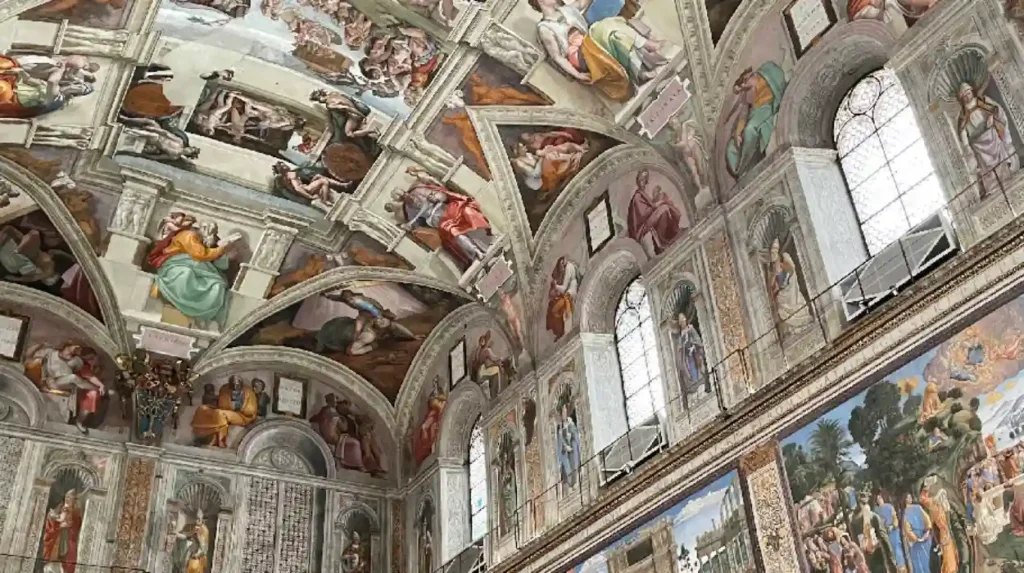
The Roman Curia acts as the administrative cabinet that helps the Pope govern the universal church. It consists of various dicasteries, which are departments responsible for specific areas like doctrine, bishops, or communications. The Secretariat of State is the most important department, handling political and diplomatic functions. The Vatican maintains diplomatic relations with nearly 180 countries through its network of nuncios or papal ambassadors. This global reach allows the church to advocate for peace, human rights, and religious freedom on a global scale. The Holy See operates as a non-hereditary elective monarchy.
Security within the Vatican is provided by the Pontifical Swiss Guard and the Vatican Gendarmerie. The Swiss Guard is one of the oldest active military units in the world and is responsible for the safety of the Pope. The Vatican also oversees several extraterritorial properties in Rome, including major basilicas and administrative offices. The Vatican Library and Secret Archives contain some of the most significant historical documents in human existence. These institutions support global scholarship and preserve the heritage of Western civilization. The Vatican remains a unique entity combining religious leadership with sovereign political status.
What is the current global demographic and membership status of the church?
The Catholic Church currently consists of approximately 1.37 billion members, making up about 17 percent of the total world population. While membership is declining in Europe and North America, it is growing rapidly in Africa and Asia.
Brazil has the largest Catholic population of any single country, followed by Mexico and the Philippines. In Africa, countries like the Democratic Republic of the Congo and Nigeria are seeing significant increases in baptismal rates. This shift toward the global South is changing the cultural and linguistic landscape of the church. Many new clergy and religious vocations are now originating from these developing regions. The church is increasingly diverse, with mass celebrated in hundreds of different languages every Sunday. This demographic shift influences the priorities and perspectives of the global leadership.
In Europe and North America, the church faces challenges from secularization and declining religious participation. Many historic Catholic nations have seen a decrease in the number of people identifying with the faith. However, these regions still hold significant institutional resources and historical influence. The United States remains a prominent center for Catholic education and philanthropy. Growth in these areas is often driven by immigration from Latin America and Southeast Asia. The church continues to be the largest provider of private education and healthcare in many Western nations. These statistics demonstrate a dynamic and evolving global presence.
The church tracks its membership through the Annuario Pontificio, an annual statistical yearbook published by the Vatican. This data helps the leadership allocate resources and plan for future missionary efforts. There are approximately 410,000 priests and over 600,000 religious sisters serving the global community. The number of permanent deacons has also seen a steady increase in recent decades. Despite internal and external challenges, the church remains a dominant force in global religious life. The distribution of its members reflects the ongoing globalization of the Catholic faith.
How does the Catholic Church impact global social and ethical issues?
The Catholic Church exerts significant influence on social and ethical issues through its systematic body of doctrine known as Catholic Social Teaching. This framework emphasizes the dignity of the human person and the common good.
The principle of the Preferential Option for the Poor guides the church’s extensive charitable work. The church operates Caritas Internationalis, a massive network of humanitarian organizations that respond to disasters and poverty. Catholic social doctrine also addresses labor rights, advocating for fair wages and the right to organize. Recent papal encyclicals, such as Laudato si, have focused on environmental stewardship and the climate crisis. The church views the protection of the environment as a moral and religious obligation. These teachings influence public policy and private behavior among the faithful.
In the realm of bioethics, the church maintains firm positions on the sanctity of life. It opposes abortion, euthanasia, and embryonic stem cell research based on the belief that life begins at conception. The church also promotes natural family planning over artificial contraception. These stances often place the church at the center of political debates in many countries. However, the church also advocates for the abolition of the death penalty and for comprehensive prison reform. This consistent ethic of life seeks to protect human dignity at every stage of existence.
Education and healthcare are two of the most visible areas of Catholic social impact. The church manages the world’s largest non-government school system, serving millions of students from primary to university levels. Catholic hospitals and clinics provide a significant portion of healthcare services in many developing nations. The church also plays a role in peacebuilding and conflict resolution through its diplomatic channels. By engaging with international organizations, the church seeks to promote justice and reconciliation. These efforts reflect the church’s commitment to its mission in the modern world.
What is the future outlook for the Catholic Church in the 21st century?
The future of the Catholic Church involves navigating the tensions between tradition and modernization within an increasingly secular global society. Key initiatives like the synodal process aim to increase participation among the laity.
The synodal process, initiated by Pope Francis, encourages listening and dialogue at all levels of the church. This approach seeks to address contemporary concerns while maintaining the core teachings of the faith. Issues such as the role of women in the church and the management of clergy sexual abuse remain critical challenges. The church is implementing stricter safeguarding policies to protect vulnerable populations and restore public trust. Digital evangelization is also becoming a priority as the church seeks to reach younger generations. Social media and online platforms are used to share the gospel.
Economic and demographic shifts will continue to move the center of the church toward Africa and Asia. This will likely lead to a more diverse leadership and a greater focus on the needs of the developing world. The church will need to address the ongoing decline of Christianity in the West through new forms of outreach. Ecumenical and interreligious dialogue will remain essential for promoting social harmony in pluralistic societies. The church’s ability to adapt to technological changes while preserving its spiritual heritage will be crucial. These factors will determine the church’s relevance in the coming decades.
The Catholic Church remains a resilient institution that has survived numerous crises over two millennia. Its future will likely be defined by its ability to provide a sense of meaning and community in a fragmented world. While institutional structures may evolve, the core mission of providing sacraments and teaching the faith remains constant. The church continues to be a major actor on the world stage, influencing morality, politics, and culture. As it moves further into the 21st century, the Catholic Church will continue to be a significant force for billions. The interaction between ancient faith and modern reality will shape its path forward.
FAQs About the Catholic Church
What is the main difference between Catholicism and Protestantism?
The Catholic Church identifies itself as the original Christian institution, emphasizing the equal authority of Sacred Scripture and Apostolic Tradition under the Pope. Protestantism emerged in the 16th century, primarily focusing on the principle of the Bible alone as the ultimate authority. Furthermore, Catholics recognize seven sacraments as essential channels of grace, while most Protestant denominations recognize only two rites.
Why do Catholics pray to Mary and the Saints instead of praying only to God?
Catholics do not worship Mary or the Saints but rather practice intercessory prayer, which is the act of asking those in heaven to pray for them. The Church teaches that the communion of saints allows the faithful on earth to remain connected to those in heaven through Christ. This practice is viewed similarly to asking a living friend for spiritual support, with the understanding that all grace ultimately comes from God.
What is the specific process for an adult to join the Catholic Church?
Adults interested in becoming Catholic usually participate in a structured program known as the Rite of Christian Initiation of Adults. This involves a period of prayer, study, and reflection on the teachings found in the Catechism and the Bible. The process concludes during the Easter Vigil service, where candidates officially enter the faith through the reception of the sacraments of Baptism, Confirmation, and the Eucharist.
What is the official stance of the Catholic Church on science and evolution?
The Catholic Church maintains that faith and reason are complementary and that there is no inherent conflict between religious doctrine and scientific discovery. The Church officially accepts the theory of biological evolution as a valid scientific explanation for the development of physical life on earth. However, it specifically teaches that the human soul is not a product of evolution but is directly created by God in every individual.