Edinburgh’s festivals transform the city into a global hub of creativity every summer, drawing millions to its historic streets. Understanding when these events occur is essential for planning a visit that captures their full magic.
- Origins of Edinburgh’s Festival Season
- Core Festivals and Their Exact Dates
- Historical Evolution of Festival Timing
- Why August? Cultural and Practical Reasons
- Planning Your Visit Around Peak Dates
- Iconic Venues and Daily Rhythm
- Economic and Global Impact
- Beyond August: Year-Round Echoes
- Insider Tips for First-Timers
Origins of Edinburgh’s Festival Season
Edinburgh’s festival tradition began in 1947 with the inaugural Edinburgh International Festival, founded by festival director Rudolf Bing, composer Sir Nicholas Fairbairn, and others to foster post-war cultural unity through the arts. This curated showcase of world-class opera, theatre, music, and dance aimed to heal a divided Europe by celebrating shared humanity. From its modest start with just nine companies, it quickly grew, inspiring spontaneous counter-events that evolved into the anarchic, inclusive Edinburgh Festival Fringe.
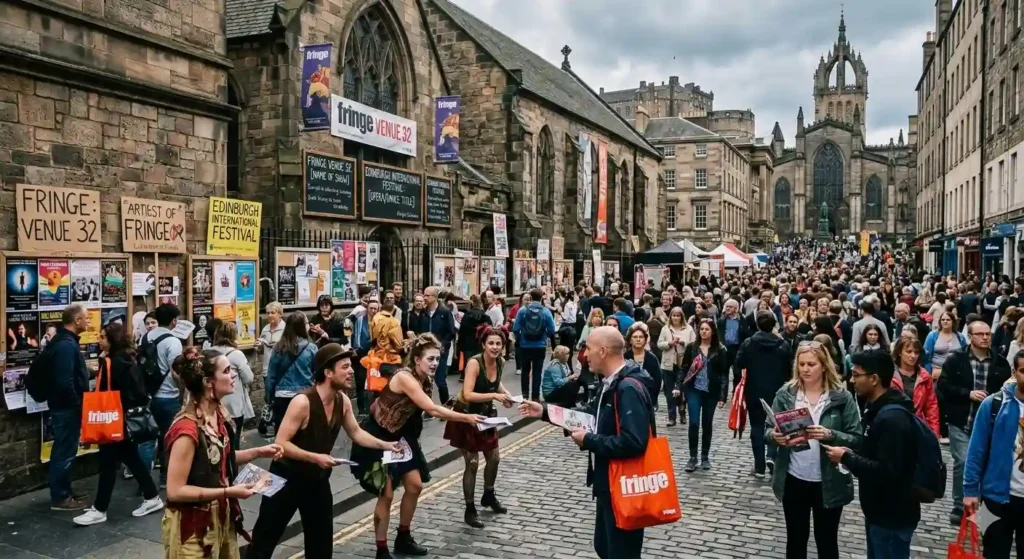
The Fringe emerged organically in 1947 when eight uninvited theatre groups set up shop in small venues around the city, defying the International Festival’s selective programme. This “fringe” of the main event symbolised artistic freedom, allowing anyone—from amateurs to professionals—to perform without gatekeepers. Over decades, this spirit expanded into a constellation of festivals, collectively known as the Edinburgh Festivals or “The Fringe Season,” which now dominate August. These events are not singular but interconnected, with overlapping dates that create a three-week explosion of over 3,000 shows across 300 venues.
Historically, the timing in late summer aligns with Scotland’s milder weather, school holidays, and the end of the tourist season, maximising attendance while leveraging Edinburgh’s compact, stage-ready layout—from medieval closes to grand halls. Official records from the Edinburgh Festival Society confirm this August anchor has remained consistent since the 1950s, barring rare pandemic disruptions.
Core Festivals and Their Exact Dates
The phrase “Edinburgh Festival” often refers collectively to this August cluster, but precision matters for visitors. The flagship Edinburgh Festival Fringe runs from 7 to 31 August 2026, spanning 25 days of unbridled performance art. This makes it the world’s largest arts festival, with tickets going on sale progressively from February onward.
Running parallel is the Edinburgh International Festival, from 7 to 30 August 2026, focusing on high-calibre international acts in prestigious venues like the Festival Theatre. It ends a day earlier than the Fringe to allow performers a graceful exit amid the chaos. The Royal Edinburgh Military Tattoo, a spectacle of pipes, drums, and precision marching on the Castle Esplanade, mirrors this with dates from 7 to 29 August 2026, culminating in fireworks that illuminate the castle silhouette.
Other pillars include the Edinburgh Art Festival (14 to 30 August 2026), showcasing contemporary visual arts in galleries citywide, and the Edinburgh International Book Festival (15 to 30 August 2026), where authors debate in Charlotte Square Gardens. The Edinburgh International Film Festival slots in slightly earlier, from 13 to 19 August 2026, blending premieres with industry panels. These dates, verified across official sites, ensure a seamless tapestry where visitors hop between comedy tents in Pleasance, opera at the Playhouse, and street buskers on the Royal Mile.
Historical Evolution of Festival Timing
Tracing back through archives, the festivals have held to early-to-late August since inception, with minor shifts for logistics. In 1947, the International Festival ran 24 August to 13 September, but by 1950, it standardised to the first three weeks of August to coincide with university term ends and avoid clashing with London’s theatre season. The Fringe adopted this immediately, growing from 8 shows to over 100 by decade’s end.
Government-backed initiatives, like those from the Scottish Events Fund, cemented this slot post-1970s as Edinburgh’s economic boon—generating £313 million annually by recent tallies. Academic studies from the University of Edinburgh note how this timing leverages solstice aftermath for outdoor viability, with rainfall data showing August as optimally dry. Pandemics aside, no major deviations occurred; even in scaled-back years, core dates held firm.
This consistency aids evergreen planning: book flights six months ahead, as hotels fill by May. Historical patterns predict 2027 and beyond will follow suit—7 to 31 August—barring global events.
Why August? Cultural and Practical Reasons
Edinburgh’s August timing is no accident. Climatically, Scotland’s capital enjoys its sunniest, least windy month then, per Met Office records, ideal for al fresco theatre in Grassmarket or parades up the Mound. Culturally, it syncs with the ancient Lammas festival roots—harvest celebrations from Celtic times repurposed for modern revelry.
Practically, it captures international tourists post-European holidays and before US Labor Day, flooding the city with 4.5 million extra visitors. Local businesses thrive: pubs extend hours, buses add routes, and the Low Emission Zone eases access. UNESCO City of Literature status amplifies this, drawing literati when northern hemisphere arts seasons peak.
For locals like those reading Edinburgh Daily, it means navigating crowds but relishing free shows—over 40% of Fringe acts cost nothing. This blend of tradition and tourism ensures August’s indelible mark.
Planning Your Visit Around Peak Dates
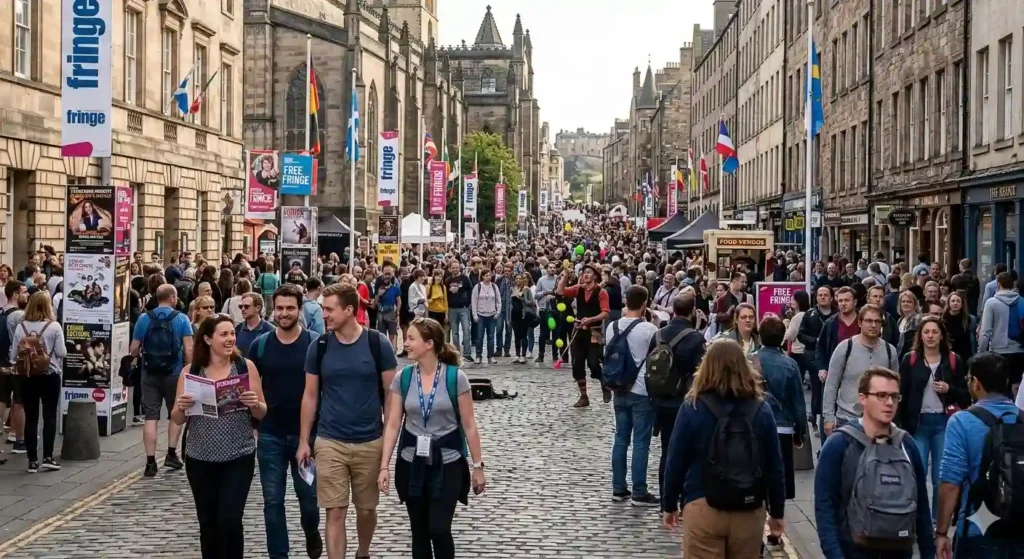
Arriving on 7 August aligns with opening galas: the Tattoo rehearsal echoes from the castle, Fringe performers claim venues, and International Festival curtain-raisers pack Usher Hall. Peak frenzy hits 14-25 August, when all festivals overlap, offering 25,000+ performances. Latecomers from 28 August catch closing highlights, like Fringe’s wild after-parties.
Accommodation surges 400% in price; book via VisitScotland for deals in Leith or Newhaven. Transport-wise, Edinburgh Airport to Waverley takes 30 minutes, with trams running 24/7 during festivals. Passes like the Fringe Explorer (£60) grant access to 50+ venues, saving queues.
Sustainability tips from city council: use reusable cups for free coffee at pop-ups, and cycle via QuietRoutes to dodge gridlock. Families note Children’s Festival precursors in May-June, but August’s all-ages vibe suits everyone.
Iconic Venues and Daily Rhythm
The Royal Mile pulses as festival heart, from Lawnmarket’s street theatre to High Street’s bagpipers. Assembly Rooms host 200+ shows daily; Pleasance Courtyard’s beer garden buzzes post-matinee. Underbelly’s CowGate udders brim with cabaret; Gilded Balloon balloons over Bristo Square.
Days start at 10am with kids’ workshops, peak at noon parades, and rage till 2am in Liquid Rooms clubs. Weekends amplify with Tattoo nights drawing 8,500 nightly. This rhythm, honed over 75 years, lets visitors curate: culture vultures hit International matinees, comedy fans Fringe nights.
Economic and Global Impact
Edinburgh Festivals contribute £1.1 billion to the UK economy over five years, per Festivals Edinburgh data, sustaining 40,000 jobs. Globally, they’ve launched stars like Lily Tomlin (1965) and Flight of the Conchords (2000), with 80% of West End transfers originating here.
For Scotland, it’s soft power: post-devolution, festivals showcase independence-era vibrancy. Tourists from 70 nations spend £100 million yearly, boosting GDP 5% citywide.
Beyond August: Year-Round Echoes
While August reigns, echoes persist: Jazz Festival (17-26 July 2026) warms up, Storytelling Festival chills October (21-31). Hogmanay’s winter fireballs nod to festive spirit. Yet August’s “when” defines the myth—plan now for 2026’s 7-31 window.
Insider Tips for First-Timers
Scour edfringe.com from February for programmes; prioritise freebies via app maps. Eat at Oink for hog roast amid queues; hydrate via fountain trails. Dress layers—Highland weather flips fast. Engage buskers; tipping unlocks encores.
This August alchemy turns stone streets into stages eternal. Mark calendars: 7-31 August 2026 awaits.
When is the Edinburgh Festival in 2026?
The Edinburgh Festival Fringe will take place from 7 August to 31 August 2026 in Edinburgh, Scotland. The festival runs for about three weeks in August, featuring thousands of comedy, theatre, music, and cultural performances across the city.
What are the dates of the Edinburgh Festival 2026?
The 2026 dates for the Edinburgh Festival Fringe are 7 August to 31 August 2026. During this period, hundreds of venues across Edinburgh host thousands of shows from performers around the world.
When does the Edinburgh Festival take place in 2026?
In 2026, the Edinburgh Festival Fringe takes place from Friday 7 August to Monday 31 August 2026, traditionally covering the last three weeks of August and the UK bank holiday weekend.