Key Points
- The High Court in Edinburgh ordered convicted drug dealer Marcin Ozimek, 44, to pay £47,977 under proceeds of crime laws.
- Prosecutors determined that Ozimek made £300,000 from his drug trafficking operations.
- The £47,977 sum comes from Ozimek’s £45,000 half-share in a Lochgelly house and £2,657 in cash seized by police.
- Judge Lord Cubie gave Ozimek six months to pay the full amount.
- Ozimek was jailed for three years and eight months in 2024 at the High Court in Glasgow for supplying class A drugs.
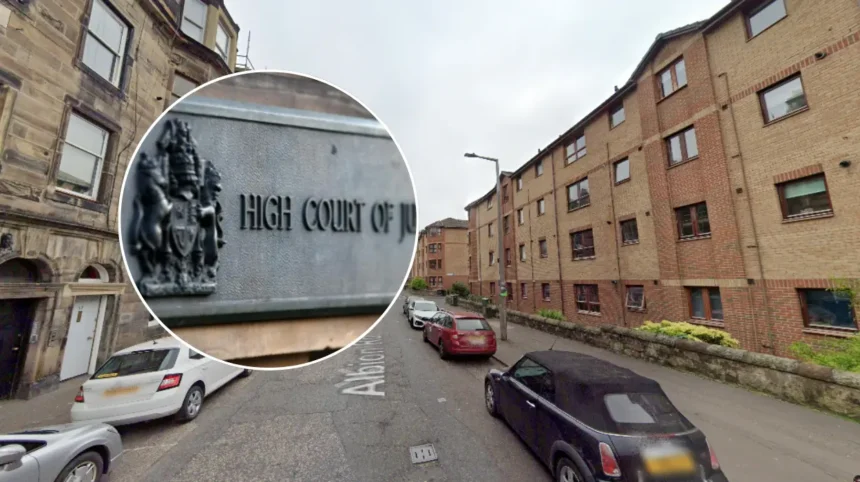
EDINBURGH (Edinburgh Daily) October 5, 2026 — As reported by the Court Reporter of the Central Fife Times, a convicted drug trafficker who generated £300,000 through illegal activity has agreed to face a £47,977 confiscation order following court proceedings.
- What occurred during the High Court hearing in Edinburgh?
- What assets will be confiscated from Marcin Ozimek?
- What led to Marcin Ozimek’s conviction and imprisonment?
- Background of Proceeds of Crime Actions in Scotland
- Prediction: How This Development Affects the Local Community and Criminal Enterprises
What occurred during the High Court hearing in Edinburgh?
The legal action brought by the Crown called at the High Court in Edinburgh, where judges were informed that a formal settlement had been reached regarding the recovery of illicit funds. As reported by the Court Reporter of the Central Fife Times, advocate depute Bryan Heaney represented the Crown during the proceedings before Lord Cubie.
Addressing the court, Advocate Depute Bryan Heaney stated that under the agreed settlement, “Ozimek’s benefit from general criminal conduct was £300,000”. The prosecution team detailed that extensive financial investigations were conducted to assess the total earnings generated by the offender alongside the physical assets currently available for seizure.
What assets will be confiscated from Marcin Ozimek?
The court heard a detailed accounting of how the available confiscation sum was calculated from the defendant’s remaining assets. As reported by the Court Reporter of the Central Fife Times, Advocate Depute Bryan Heaney told the court that “the available amount to be the subject of a confiscation order in the action was £47,977”.
Expanding on the specific asset sources, Advocate Depute Bryan Heaney explained that “about £45,000 of that was made up of his half share in a house in Lochgelly,” while “a further £2,657 was money held by police”. Presiding over the case, Judge Lord Cubie formally issued the confiscation order for the full £47,977 sum and instructed that Marcin Ozimek be given six months to complete the payment.
What led to Marcin Ozimek’s conviction and imprisonment?
The financial recovery action follows the criminal conviction and sentencing of Marcin Ozimek for drug supply offences in Fife. In 2024, the 44-year-old was sentenced at the High Court in Glasgow to serve three years and eight months in prison.
The court previously heard that law enforcement officers apprehended Ozimek while he was actively caught supplying heroin from a residential flat situated in Clair Street, Kirkcaldy, on February 7, 2022. His conviction triggered subsequent financial investigations under proceeds of crime statutory provisions, leading directly to the recovery action against his property interest in Lochgelly.
Background of Proceeds of Crime Actions in Scotland
Proceeds of crime legislation in Scotland operates under the Proceeds of Crime Act 2002 (POCA), empowering the Crown Office and Procurator Fiscal Service (COPFS) to strip convicted criminals of financial gains made through illegal enterprises. Financial investigation units work alongside law enforcement agencies to calculate both the “total benefit” derived from criminal conduct and the “available amount” held in real property, bank accounts, vehicles, or cash holdings.
In cases involving serious organised crime and drug trafficking, Scottish courts routinely enforce confiscation orders after sentencing to ensure offenders do not retain capital assets accrued through illicit trades. Money recovered through POCA orders across Scotland is directed back into communities via the Scottish Government’s Cashback for Communities scheme, which funds youth projects, educational initiatives, and community safety programmes across local council areas such as Fife.
Prediction: How This Development Affects the Local Community and Criminal Enterprises
The enforcement of this £47,977 confiscation order against real estate assets in Lochgelly serves as a structural deterrent against illicit drug distribution networks operating across West Fife and Kirkcaldy. For the local community in Fife, the forfeiture of equity tied up in residential property demonstrates that law enforcement interventions extend beyond custodial sentences to disrupt the financial security of individuals involved in class A drug supply.
For criminal enterprises, the outcome highlights that real estate assets held in joint names or partial shares remain vulnerable to statutory seizure upon conviction. Over the medium term, publicised confiscations are anticipated to reassure residents that physical properties associated with criminal figures can be liquidised under court mandates, while reinforcing police strategies aimed at dismantling the economic infrastructure of regional drug networks.