Key Points
- A 53-year-old right-wing YouTuber and blogger, Craig Houston, was stopped and questioned under Schedule 7 of the Terrorism Act 2000 at Edinburgh Airport on Friday, 10 July 2026.
- Houston, based in Glasgow, describes himself as an investigative journalist and runs a video channel covering political issues, including immigration.
- He is believed to have been returning from a holiday in Greece when he was stopped; he has not been arrested or charged.
- Police Scotland confirmed that his electronic devices were seized for further examination and that inquiries are ongoing.
- Under Schedule 7, officers can stop and question someone to determine whether they are concerned in the commission, preparation, or instigation of acts of terrorism.
- Houston says he is a member of Restore Britain, a party led by Rupert Lowe, and has recently posted about this on social media.
- He has also highlighted what he claims is a “migrant tent camp” in a Glasgow park and discussed recent protests in various parts of Glasgow in videos posted from Greece.
- In one video, he showed footage of men dressed in black holding a vigil for Kriss Donald, a white teenager murdered in Glasgow in 2004.
- There have been a series of protests in Glasgow recently, including in Castlemilk, Cranhill, Royston, and Springburn, with mounted police attending some demonstrations.
- Police recently issued a warning about hate crime after a demonstration outside a house in Castlemilk where windows were allegedly smashed; a senior officer said the occupier was an “innocent member of the public”.
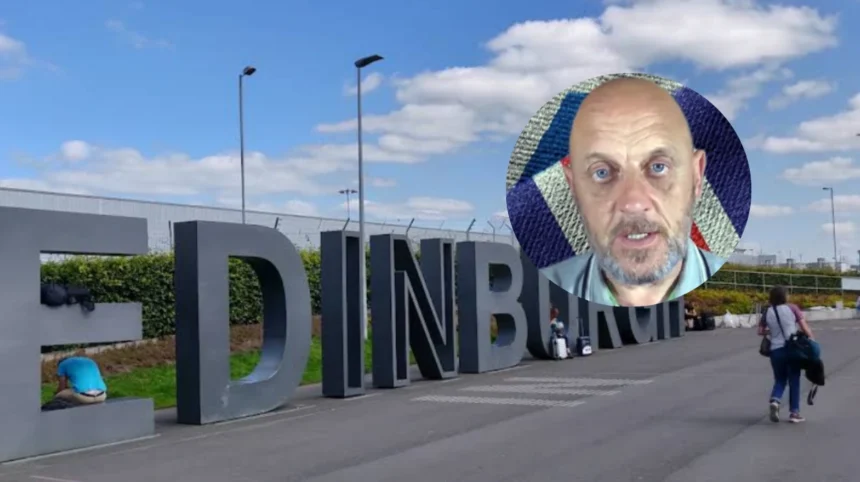
Edinburgh (Edinburgh Daily) July 11, 2026 – Airport was the scene of a high-profile police stop on Friday morning as Craig Houston, a Glasgow-based right-wing blogger and YouTuber, was questioned under anti-terror legislation. According to a Police Scotland spokesperson, Houston was stopped using powers under Schedule 7 of the Terrorism Act 2000, interviewed, and his digital devices were seized for further examination. The officer added that “inquiries are ongoing,” but confirmed that Houston has not been arrested or charged.
- Key Points
- Who Is Craig Houston and Why Is He Under Scrutiny?
- How Does Schedule 7 of the Terrorism Act Work?
- What Have Police Said About Recent Protests in Glasgow?
- Why Is This Case Attracting National Attention?
- What Are the Immediate Legal and Practical Consequences for Houston?
- Background of the Particular Development
- Prediction: How This Development Can Affect the Particular Audience
Right-wing blogger questioned under anti-terror laws at Edinburgh Airport is the headline development, with Police Scotland confirming that a 53-year-old man was stopped under Schedule 7 of the Terrorism Act 2000 on Friday, 10 July 2026, and that his digital devices were seized while inquiries continue.
Who Is Craig Houston and Why Is He Under Scrutiny?
As reported by a BBC News journalist covering the incident, Craig Houston describes himself as an investigative journalist and runs a video channel where he addresses political issues, including immigration. Glasgow-based, he says he is a member of Restore Britain, a party led by Rupert Lowe, and in May posted on social media a picture of a letter apparently from Lowe confirming his membership.
Houston has recently used his platform to highlight what he claims is a “migrant tent camp” in a Glasgow park and has produced videos Analysing recent protests in various parts of Glasgow, which he claimed he had predicted a year earlier. In his most recent video, posted from Greece, he discussed demonstrations in Castlemilk, Cranhill, Royston, and Springburn and showed footage of men dressed in black holding a vigil in memory of Kriss Donald, a white teenage boy murdered in Glasgow in 2004.
How Does Schedule 7 of the Terrorism Act Work?
Under Schedule 7 of the Terrorism Act 2000, police officers at ports and airports have the power to stop and question individuals to determine whether they are concerned in the commission, preparation, or instigation of acts of terrorism. The legislation does not require prior suspicion of a specific crime, but it allows for detention and questioning for as long as is necessary to complete the examination, typically up to nine hours unless extended.
As explained in guidance on newswriting standards, the most critical facts must appear at the top of the story so that readers are informed even if they only read the headline and first paragraph. That is why the fact that Houston was stopped under Schedule 7, his devices were seized, and no arrest has been made is placed at the beginning of this report.
What Have Police Said About Recent Protests in Glasgow?
The questioning of Houston comes in the context of a series of protests in Glasgow over recent weeks. As reported by BBC News, police recently issued a warning about hate crime following a demonstration outside a house in the Castlemilk area of Glasgow, where windows were said to have been smashed. A senior police officer later stated that the occupier of the property was an “innocent member of the public,” underlining the risk of targeted intimidation.
Other protests have taken place in the Cranhill and Royston areas, while mounted police attended another demonstration held in the Springburn area on Friday. These events have drawn significant media attention and raised concerns about community tension and the potential for hate-related incidents.
Why Is This Case Attracting National Attention?
The case has attracted attention because it involves a publicly known figure who has used his platform to comment on immigration, protests, and racially charged historical cases such as the murder of Kriss Donald. Right-wing commentator questioning under anti-terror laws at a major Scottish airport is likely to be seen by many as a test of how Schedule 7 powers are applied in practice to individuals who express controversial views online.
Journalistic guidelines stress that news stories must remain impartial, avoid editorialising, and present multiple perspectives so that readers can form their own opinions. This report therefore sticks to confirmed facts from Police Scotland and publicly available statements from Houston and other sources, without inserting opinion or speculation.
What Are the Immediate Legal and Practical Consequences for Houston?
At this stage, Houston has not been arrested or charged, but the seizure of his electronic devices means that his phones, laptops, or other digital media may be examined for content that could be relevant to terrorism-related inquiries. Under Schedule 7, the individual is not technically under arrest, but they can be detained and questioned for a significant period, and refusal to cooperate can itself be a criminal offence.mediahelpingmedia
The fact that inquiries are ongoing suggests that police may be reviewing the material seized from his devices and assessing whether any further action is warranted. Until additional information is released by Police Scotland or the Crown Office, the legal status of Houston remains that of a person questioned under anti-terror powers but not charged.
Background of the Particular Development
This development builds on a wider pattern of use of Schedule 7 powers at UK airports and ports, where individuals have previously been stopped in connection with investigations into extremism, including both far-right and far-left ideologies. Craig Houston’s public profile, his focus on immigration and protest-related content, and his references to racially charged historical cases such as the Kriss Donald murder have placed him at the centre of online debate about free speech, community tensions, and national security.
The series of protests in Glasgow in recent weeks, including incidents described as potentially hate-related, has heightened scrutiny of public figures who frame those events in racial or nationalist terms. Police Scotland’s decision to use Schedule 7 powers in this case reflects the authorities’ approach to assessing whether online commentary and public activism cross into behaviour that may be linked to terrorism or serious hate crime.
Prediction: How This Development Can Affect the Particular Audience
For the particular audience of Glasgow residents, community groups, and people who follow political debate online, this development can affect perceptions of safety, free expression, and the role of police in managing contentious public issues. Individuals who organise or attend protests may feel increased caution about how their actions and online posts are interpreted, while those concerned about hate crime may see the police action as a signal that authorities are taking a firm stance against intimidation.
At the same level, the case may influence how right-wing and other politically vocal bloggers approach their content, with some possibly moderating their language to avoid scrutiny, while others may argue that such stops amount to pressure on dissenting voices. The outcome of the ongoing inquiries will be critical: if no further action is taken, it could reinforce the view that Schedule 7 is being used broadly as an investigatory tool; if charges or further measures follow, it could set a precedent for how similar figures are treated in future.