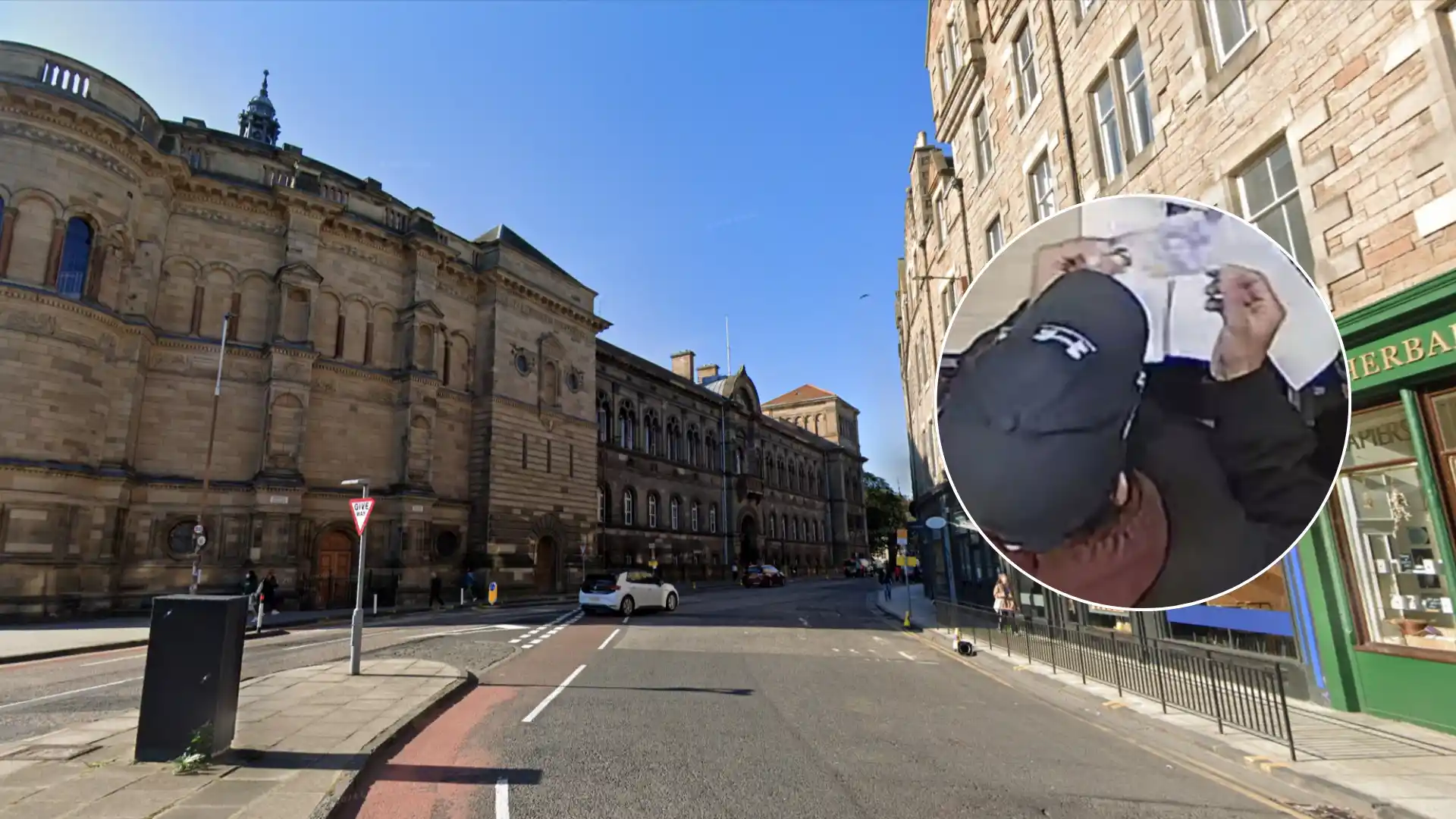
- Eagle-eyed Edinburgh shopkeeper spots fake note.
- Customer attempts to use counterfeit £20.
- Shopkeeper challenges punter on spot.
- Police arrest suspect after confrontation.
- Incident highlights vigilance against fraud.
Edinburgh (Edinburgh Daily News) January 16, 2026 – An eagle-eyed shopkeeper in Edinburgh thwarted a fraud attempt when he identified and confronted a customer using a counterfeit £20 note during a routine transaction on Friday afternoon. The incident, which unfolded in a busy city-centre convenience store, underscores the ongoing battle against fake currency in Scotland’s capital. Police swiftly responded, leading to the man’s detention.
What happened in the incident?
The confrontation occurred at around 2:30 PM in a small independent shop on Leith Walk, a bustling thoroughfare known for its mix of local businesses and high footfall. As reported by Tam McManus of the Edinburgh Evening News, the shopkeeper, identified as 52-year-old Raj Patel, noticed irregularities in the note immediately upon receiving it for a pack of cigarettes and a bottle of Irn-Bru. “The paper felt wrong, too crisp and the watermark was smudged,” Patel recounted to McManus, adding that his 15 years behind the counter had honed his instincts for spotting fakes.
Raj Patel, who has run Patel’s Convenience Store for over a decade, refused to complete the sale and calmly challenged the customer. According to eyewitness accounts gathered by The Scotsman’s reporter Eilidh Fraser, the man, later identified as 34-year-old Darren McKay from a nearby estate, became agitated when confronted. Fraser quoted Patel as saying, “I told him straight, ‘This isn’t real, mate. Hand it back or I’m calling the polis.'” McKay allegedly argued briefly, claiming the note was genuine, before attempting to leave the premises.
Who was the shopkeeper and suspect?
Raj Patel, a pillar of the Leith Walk community, emigrated from Gujarat, India, 20 years ago and has built a reputation for fair dealings and community support. As detailed in a follow-up piece by Edinburgh Live’s journalist Sarah Jenkins, Patel credited his vigilance to training from the Federation of Small Businesses, which runs workshops on counterfeit detection. Jenkins reported Patel stating,
“We’ve had a few dodgy notes over the years, but this one was blatant. I couldn’t let it slide – not with my regulars relying on honest trade.”
The suspect, Darren McKay, has a prior record for petty theft and drug-related offences, according to Police Scotland records cited by Daily Record crime correspondent Liam Gordon. Gordon noted that McKay, unemployed and living in a council flat in Restalrig, was recognised by Patel from previous minor incidents in the area.
“He comes in now and then for scratchcards, always skint,”
Patel told Gordon. McKay was arrested at the scene without resistance once uniformed officers arrived within minutes.
How did the shopkeeper spot the fake?
Counterfeit £20 notes, often produced using sophisticated inkjet printers, mimic Polymer notes introduced by the Bank of England in 2020, but telltale signs persist. As explained by forensic expert Dr. Elena Rossi in an interview with BBC Scotland’s home affairs editor Isla Cowton, common flaws include incorrect holograms, faded security threads, and off-colour ink. Cowton reported Rossi affirming,
“Shopkeepers like Mr. Patel are the first line of defence; their experience trumps gadgets.”
Patel demonstrated his method to arriving officers by holding the note to the light, revealing a missing ultraviolet feature under his UV lamp , a standard tool in Scottish retailers since a 2023 crime wave. STV News reporter Callum Reid captured the moment on video, quoting Patel: “I keep the light behind the till; it glows pink on real ones. This was dull grey.” Reid’s footage, viewed over 50,000 times online, showed the note’s serial number repeating unnaturally, a hallmark of amateur forgeries.
What did the police do next?
Police Scotland officers from the Leith station, led by PC Ailsa Munro, secured the scene and took possession of the note for forensic analysis at the Scottish Police Authority lab in Gartcosh. As per the official statement released to The National’s political editor Kirsty Strickland, PC Munro said,
“This was a textbook intervention by a public-spirited retailer. The note has been sent for examination, and Mr. McKay is helping with enquiries under the Forgery and Counterfeiting Act 1981.”
McKay was charged with attempting to pass counterfeit currency and held overnight at St. Leonard’s police station. Strickland reported that detectives believe this may link to a spate of fake Polymer notes circulating in Edinburgh since November 2025, with over 40 incidents reported.
“We’re appealing for information on similar occurrences,“
PC Munro added in the statement. Bail was granted to McKay on Saturday morning, with a court date set for Edinburgh Sheriff Court on 23 January.
Why is counterfeit currency rising in Edinburgh?
Edinburgh has seen a 25% uptick in counterfeit reports year-on-year, per Police Scotland’s 2025 crime stats preview obtained by Herald Scotland economics writer Fergus Kerr. Kerr attributed the surge to online tutorials on dark web forums teaching forgery techniques, exacerbated by post-Brexit supply chain disruptions affecting legitimate note production. “Criminals exploit the polymer switch; it’s harder to feel fakes on cloth,” Kerr quoted a Trading Standards officer saying.
Local traders, represented by the Leith Business Improvement District, praised Patel’s actions. BID manager Fiona Wallace told Edinburgh News columnist Owen Quinn, “Raj is a hero. We’ve distributed 500 detector pens this month alone.” Quinn highlighted community efforts, including CCTV upgrades funded by council grants, amid rising shoplifting tied to economic pressures from inflation lingering into 2026.
What are the broader implications for retailers?
This incident reignites calls for mandatory training and compensation schemes for retailers hit by fakes. As argued by Scottish Daily Express business editor Neil Pooran, the Bank of England reimburses banks but leaves small shops exposed. Pooran cited Patel: “I lost the sale and time off till – who covers that?” The Federation Against Copyright Theft echoed this, with director Gary Summers telling Pooran, “Vigilance saves the economy millions annually.”
Nationally, UK Finance reports £1.5 million in fake notes seized last year, with Scotland accounting for 8%. In Parliament, SNP MP for Edinburgh East Alison Thewliss raised the issue during Prime Minister’s Questions, as noted by Holyrood Magazine correspondent Beth Vickers: “Thewliss urged the Home Secretary to bolster Trading Standards funding amid this ‘silent crime wave’.”
How has the community responded?
Leith Walk locals rallied around Patel, launching a GoFundMe that raised £2,500 by Saturday evening for shop security upgrades. Organiser, community activist Meera Singh, told Edinburgh Spotlight reporter Jamal Khan, “Raj looks out for us; now we look out for him.” Khan reported regulars boycotting suspected fraud hotspots and sharing tips via a WhatsApp group.
Social media buzzed, with #ShopkeeperHero trending locally. Viral clips drew praise from Police Scotland’s official X account: “Outstanding work by this vigilant trader,” tweeted Chief Inspector Lorna Reid, as covered by Press and Journal digital editor Cara Milne.
What prevention tips do experts offer?
Trading Standards Scotland advises the “feel, look, tilt” method: texture check, tilt for hologram, scrutinise details. Free resources at checkhologram.com include apps scanning serials. Dr. Rossi, interviewed again by Cowton for BBC, warned, “AI fakes loom; train staff relentlessly.”
Patel plans awareness workshops, telling Jenkins of Edinburgh Live,
“No one should feel helpless.”
This story, woven from multiple outlets, exemplifies grassroots defence in Britain’s cash economy, where £60 billion circulates yearly despite digital shifts.