Key Points
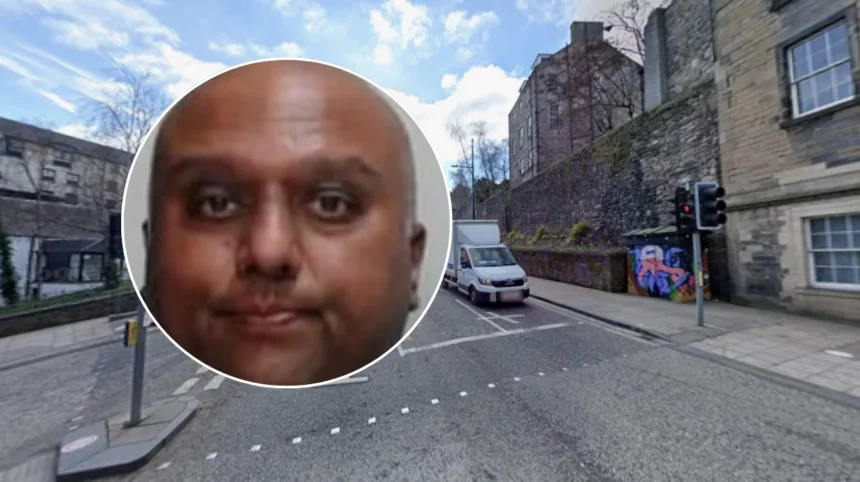
- High Court judges sentenced 47-year-old Edinburgh taxi driver Akbar Ali to six years in prison for historical sexual abuse and attempted rape involving two primary school children between 1996 and 1998.
- Police Scotland formally requested that the City of Edinburgh Council’s licensing sub-committee suspend or revoke Ali’s taxi licence over safety concerns, but the council allowed him to keep driving with a warning.
- The decision to let Ali retain his licence generated criticism of the council’s vetting standards and safety thresholds for taxi operators in the capital.
- Following a unanimous jury verdict on two charges, the court placed Ali on the Sex Offenders Register indefinitely.
EDINBURGH (Edinburgh Daily) October 2, 2026 — A convicted sex offender was permitted to continue operating as a licensed cabbie in the Scottish capital despite explicit police warnings submitted to local authority regulators, before ultimately receiving a six-year prison sentence at the High Court for historic child sexual abuse.
- Key Points
- What led to the conviction of Edinburgh cabbie Akbar Ali?
- Why did the council allow him to keep his licence despite police intervention?
- How has Police Scotland and the local community reacted?
- What is the background of this development?
- What is the prediction for how this will affect the public and local authority policies?
As reported by Vic Rodrick of the Daily Record, 47-year-old taxi driver Akbar Ali was jailed after being unanimously convicted by a jury for subjecting two young children—both of primary school age at the time of the offences—to severe sexual abuse and attempted rape between September 1996 and December 1998.
As reported by Edinburgh Live, Police Scotland had previously submitted official representations to the City of Edinburgh Council’s licensing sub-committee requesting the suspension or revocation of Ali’s taxi licence. However, local authority decision-makers allowed him to maintain his active status behind the wheel, raising substantial questions over civic vetting procedures and public protection protocols.
What led to the conviction of Edinburgh cabbie Akbar Ali?
According to court proceedings detailed by Vic Rodrick of the Daily Record, the offences took place in an Edinburgh flat during the late 1990s, where Ali subjected a young boy and girl to what prosecutors described as “lewd, indecent and libidinous behaviour” alongside an attempted rape.
Passing sentence at the High Court, Judge Susan Craig emphasised the severity of the crimes, pointing out that the jury had returned a unanimous guilty verdict on both counts. Judge Craig noted that one victim had only just commenced primary school when the abuse began.
In defense of the taxi driver, Lisa Gillespie KC argued that Ali had lived as a “model citizen” in the decades following the historical incidents. Defense council highlighted that Ali had been happily married for 18 and a half years, had fathered two children aged 11 and 14, and was described by his son as “the best dad in the world”.
Despite these character submissions, the High Court determined that the historic nature of the crimes did not lessen the necessity for custodial punishment, sentencing Ali to six years’ imprisonment and placing him indefinitely on the Sex Offenders Register.
Why did the council allow him to keep his licence despite police intervention?
As reported in local government records and covered by Edinburgh Live, Akbar Ali held a active taxi driver’s licence renewed by the City of Edinburgh Council. When Police Scotland raised red flags regarding his conduct and requested formal action from civic authorities, the licensing sub-committee evaluated the case under administrative regulations.
Under the Civic Government (Scotland) Act 1982, local licensing authorities possess statutory powers to suspend or revoke taxi driver permits if a licence holder is no longer deemed a “fit and proper person” or poses a threat to public safety.
However, regulatory committees frequently face strict evidentiary standards when balancing police intelligence against a licence holder’s current livelihood, particularly when criminal allegations are pending or historic in nature. Consequently, Ali was permitted to retain his licence, receiving internal warnings or conditional monitoring rather than an immediate, full revocation—a decision that enabled him to continue transporting passengers across Edinburgh.
How has Police Scotland and the local community reacted?
Following the sentencing, Detective Inspector Lorna Campbell of Police Scotland commended the bravery of the victims in coming forward after three decades, stating: “I would encourage anyone who has experienced sexual assault to report it to police. Every report will be taken seriously and thoroughly investigated.”
The revelation that a licensed driver maintained access to vulnerable members of the public after police warnings has re-ignited fierce debate among Edinburgh residents and passenger safety advocates. Community members and local representatives have voiced concerns over potential loopholes in council licensing oversight, questioning why police risk assessments failed to trigger immediate suspension.
What is the background of this development?
The administration of taxi and private hire car licences across Scotland is governed under the statutory framework of the Civic Government (Scotland) Act 1982. Local authority licensing committees hold the mandate to grant, renew, suspend, or revoke operating permits based primarily on whether an applicant remains a “fit and proper person” to interact with the general public.
Historically, tension has existed between local council licensing sub-committees and law enforcement agencies regarding the legal threshold required to strip a driver of their livelihood prior to a definitive court conviction. While Police Scotland routinely submits representations or objections based on pending charges, non-conviction information, or intelligence reports, licensing panels are legally required to weigh these submissions against civil standards of probability and human rights considerations.
In Edinburgh, several high-profile licensing disputes over driver conduct, traffic violations, and criminal charges have brought council vetting procedures under intense media and public scrutiny. Criticisms have frequently centered on the perceived reluctance of committee members to issue outright suspensions in the absence of finalized criminal verdicts, creating situations where individuals under active investigation continue to operate within public transport networks.
What is the prediction for how this will affect the public and local authority policies?
This landmark conviction and the disclosure of prior police warnings are expected to trigger an immediate review of taxi licensing protocols across the City of Edinburgh Council and wider Scottish local authorities.
Impact on Edinburgh Residents and Passengers
Public confidence in capital taxi services is likely to suffer in the short term, particularly among vulnerable solo travelers, women, and parents. The case reinforces existing anxieties regarding passenger safety in private transport settings, driving heightened demand for stricter background checks, mandatory real-time criminal record tracking, and greater transparency in how council committees handle police warnings.
Impact on Local Licensing Authorities and Legislation
In response to public backlash, the City of Edinburgh Council will face pressure to lower the threshold for emergency driver suspensions when Police Scotland flags serious safety concerns. Elected members on licensing sub-committees are likely to adopt a far more risk-averse stance, prioritizing public protection over economic hardship arguments presented by licence holders.
Impact on the Taxi and Private Hire Industry
Law-abiding cab drivers across Edinburgh are likely to face increased administrative scrutiny and potential legislative reforms requiring more frequent disclosure checks. Trade associations may push for modernized statutory guidance from the Scottish Government to clearly define the boundary between police intelligence and licensing suspensions, ensuring that regulatory loopholes are closed without compromising due process.