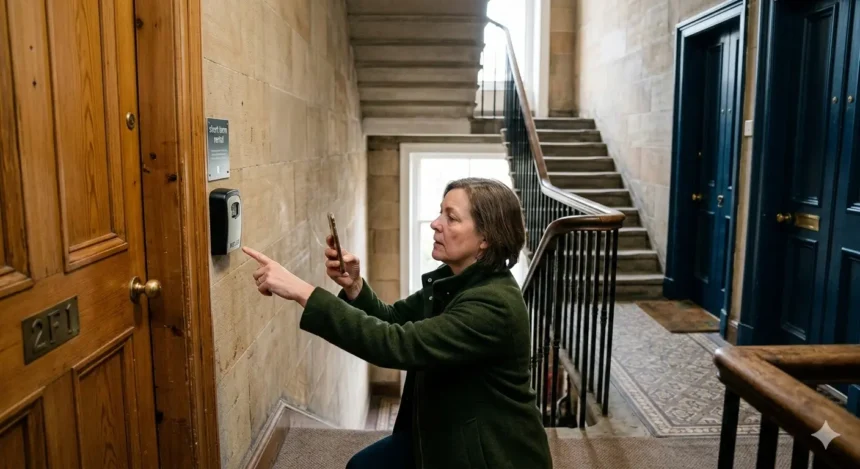
To report an illegal AirBnB in your Edinburgh stair, contact Edinburgh Council via their online short-term let complaint form or planning enforcement service. Provide the address, evidence of use, and details of impacts like noise or security issues for a swift investigation.
Living in a shared stair in areas like Balerno, Bruntsfield, or Dean Village means relying on communal access for safety and peace. An illegal AirBnB disrupts this by turning a residential flat into a transient let without permission.
Edinburgh Council requires all short-term lets to have a licence since 2022, with full enforcement by early 2025. Spotting and reporting one helps restore order for local residents.
Why This Issue Matters to Local Residents
Illegal AirBnBs in shared stairs create ongoing disturbances for those in Bruntsfield tenements or Corstorphine closes. Guests unfamiliar with the building often trigger noise at odd hours, from late arrivals to early departures.
Security risks rise as strangers access the stair, potentially leaving doors propped open or causing wear on communal areas. In places like Calton Hill or Grassmarket, this strains neighbourly relations and devalues properties.
Local residents in Currie or Duddingston report increased anti-social behaviour, from litter to damage. Addressing it promptly protects your home environment and upholds residential standards under UK planning laws.
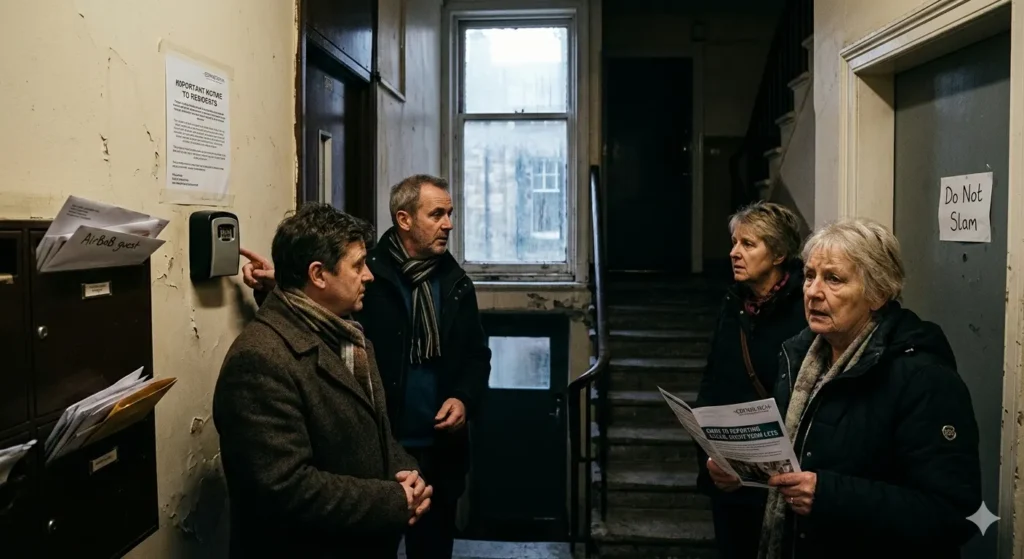
Step-by-Step Actions to Solve the Problem
Follow these clear steps to report an illegal AirBnB effectively.
- Gather evidence first: Note the flat number, frequency of guest turnover, and specific incidents like noise or strangers in the stair. Take photos or videos discreetly, and log dates and times.
- Check for licensing: Search public records or observe if it’s advertised online with a licence number (required since 2023).
- Submit the report: Use the council’s dedicated online form for short-term lets or planning breaches. Include all details for faster action.
- Rally neighbours: Encourage others in your stair to submit similar reports, strengthening the case.
- Follow up politely: Note your reference number and check progress after two weeks.
These actions ensure a structured, legal resolution without confrontation.
Which Council Service Handles It
Edinburgh Council’s Planning and Regulatory Service oversees illegal short-term lets in residential stairs. They enforce licensing under the Civic Government (Scotland) Act 1982, updated for short-term lets.
For shared stairs, report via the Short-Term Lets Licensing team or planning enforcement portal. This team investigates change-of-use violations, as tenement flats require planning permission for commercial letting.
Contact them through the main council website’s reporting tools. They coordinate with environmental health if noise or waste issues arise.
Information or Documents Needed
Prepare these details to make your report actionable.
Your submission should include the property address, your contact info (optional anonymity), and evidence like photos of luggage in the stair or booking screenshots.
Logs of disturbances, neighbour statements, or patterns of high turnover add weight. No formal documents are required upfront, but reference any lease clauses banning sublets.
Keep records of your submission confirmation for reference.
Expected Response Time
Councils aim to acknowledge reports within 10 working days. Initial assessments, including site visits, often occur within four weeks, depending on volume.
Complex cases with planning objections may take 8-12 weeks for a decision. Licensing checks can resolve faster if no permit exists, sometimes within a month.
Urgent nuisances prompt quicker action, like enforcement notices. Patience helps, as backlogs exist, but persistence speeds results.
What to Do if Follow-Up Is Required
If no update after the expected time, email the assigned officer using your reference number. Politely restate key impacts on local residents.
Escalate to your ward councillor or the council’s complaints process if stalled. Multiple neighbour reports can trigger priority reviews.
For ongoing issues, log fresh incidents and resubmit. This builds a stronger enforcement case under council procedures.
Rights and Responsibilities Under UK Rules
UK law, via Scottish regulations, protects residents’ amenity in shared properties. You have the right to quiet enjoyment of your home, free from incompatible commercial uses.
Property owners must secure a short-term let licence and planning approval for stairs. Failure invites fines up to £2,500 and bans.
As a reporter, act in good faith with accurate info; false claims risk dismissal. Respect data protection by avoiding personal host details unless relevant.

Practical Tips to Avoid the Problem in Future
Prevent issues by reviewing your building’s factors’ rules on sublets during tenancy agreements. Join or form a stair committee to monitor changes.
Support council campaigns for licensing compliance. In areas like Colinton or Duddingston, community apps for logging issues help spot patterns early.
Choose buildings with strong no-short-let policies. Stay informed via Edinburgh Daily News updates on local regulations.
What are the Airbnb laws in Edinburgh, and how can you report an illegal Airbnb in your stair?
In Edinburgh, short-term lets such as Airbnb must have a licence from City of Edinburgh Council under Scotland’s short-term let licensing rules. If a property in your stair is being rented to guests without a licence, it may be illegal. Residents can report suspected illegal short-term lets to the council by submitting a complaint through the council’s short-term let enforcement page or by contacting their licensing team with the property address and details of the activity.