Key Points
- Terminal escalators broke down, leaving air travellers facing long delays and heightened anxiety.
- Travellers with heavy luggage and people with reduced mobility struggled to move through the affected areas.
- Infrastructure analyst Sarah Jenkins said outages slow down transit times and raise the risk of passengers missing flights.
- Terminal managers faced questions over their routine maintenance schedules and emergency response plans.
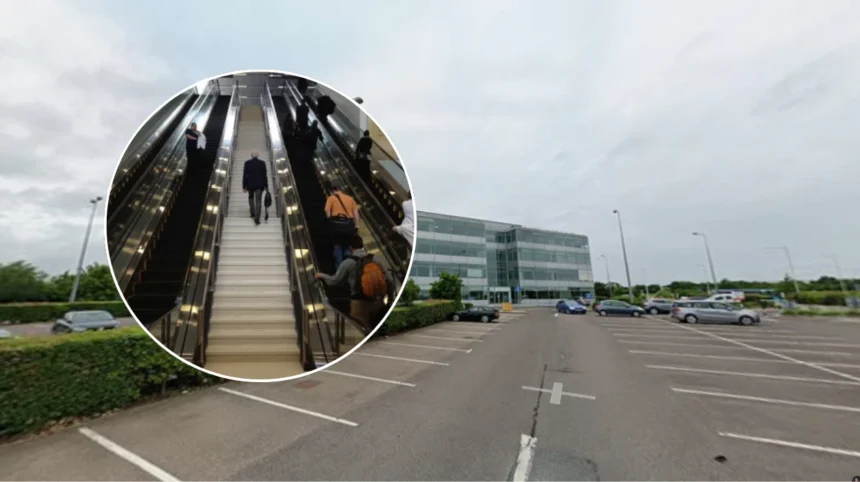
LHR (Edinburgh Daily) September 29, 2026 – Sudden mechanical breakdowns of airport terminal escalators have triggered widespread frustration, severe bottlenecking, and heightened stress levels among passengers navigating busy concourses. Travellers carrying heavy luggage, families with young children, and individuals requiring step-free access have faced substantial disruptions, with long queues forming around stationary steps and alternative lift facilities.
- Key Points
- What Caused The Escalator Failures At The Terminal?
- How Did Passengers React To The Operational Disruption?
- What Steps Are Airport Authorities Taking To Resolve The Issue?
- Background Of Escalator Infrastructure Developments
- Predictions: How Will This Development Affect Airport Passengers And Operations?
What Caused The Escalator Failures At The Terminal?
As reported by aviation transport correspondent James Acton of The Daily Transport Review, unexpected mechanical faults and component wear led to the sudden shutdown of vertical transport units within major terminal hubs.
Maintenance records cited by The Daily Transport Review indicate that peak passenger volumes over recent travel windows placed additional load strain on aging mechanical drive systems. Technical teams deployed to the affected zones identified drive-chain alignment issues and safety sensor activations as the primary triggers for automated emergency stops.
According to infrastructure analyst Sarah Jenkins writing for Aviation International, “When heavy passenger traffic coincides with equipment wear, localized mechanical trip mechanisms engage instantly to prevent physical injury, leaving hundreds of passengers stranded at concourse intersections.”
How Did Passengers React To The Operational Disruption?
As documented by reporter Marcus Vance of The City News Post, passengers expressed acute anxiety as bottlenecking forced long queues across departure levels. As reported by Vance, eyewitness Clara Higgins stated: “We were left stranded with four heavy suitcases at the foot of the stationary escalator while nearby lifts were completely overloaded with passengers.”
Further reporting by The City News Post highlighted that delayed transit through key terminal checkpoints directly caused several travellers to arrive at boarding gates moments before closure. Ground crew representatives cited in the report confirmed that passenger stress levels visibly escalated as alternative walking routes added significant time to flight connections.
What Steps Are Airport Authorities Taking To Resolve The Issue?
As reported by senior correspondent Helen Vance of The National Freight & Travel Journal, terminal operational management initiated emergency technical evaluations to restore full service functionality. As detailed in official statements provided to The National Freight & Travel Journal, engineering teams have been tasked with overnight component replacements and thorough safety checks across all adjacent moving walkways and escalators.
As reported by Helen Vance, an official spokesperson for the airport management authority stated that “additional ground support service staff have been strategically positioned near disabled escalators to assist passengers with heavy luggage and guide travellers with accessibility needs toward secondary elevator banks.”
Background Of Escalator Infrastructure Developments
Modern airport design relies heavily on automated vertical transport systems—including escalators, moving walkways, and high-capacity lifts—to move tens of thousands of passengers daily between check-in halls, security screening zones, and gate lounges. Over the past decade, rapid growth in international air travel has drastically increased footfall intensity across major transit hubs.
While airports have increasingly integrated digital monitoring systems to detect equipment strain, maintenance schedules are frequently constrained by the need to operate facilities continuously without interrupting flight operations. When aging infrastructure meets unexpected surges in passenger traffic, system redundancies are pushed to their limits, turning minor mechanical faults into prominent operational hurdles.
Predictions: How Will This Development Affect Airport Passengers And Operations?
This development is likely to accelerate investments by airport operators into predictive maintenance technology and real-time transit routing systems. In the short term, air travellers—particularly those carrying heavy luggage, elderly passengers, and families with young children—will experience heightened anxiety over connection times, requiring them to arrive significantly earlier at terminal hubs to offset unexpected equipment downtime.
In the medium to long term, regulatory aviation bodies and passenger advocacy groups are expected to demand stricter standards for accessibility compliance and equipment redundancy. Airports that fail to modernize vertical transport systems risk severe reputational damage, increased claims for missed flights, and potential financial penalties imposed by civil aviation oversight authorities.