Key Points
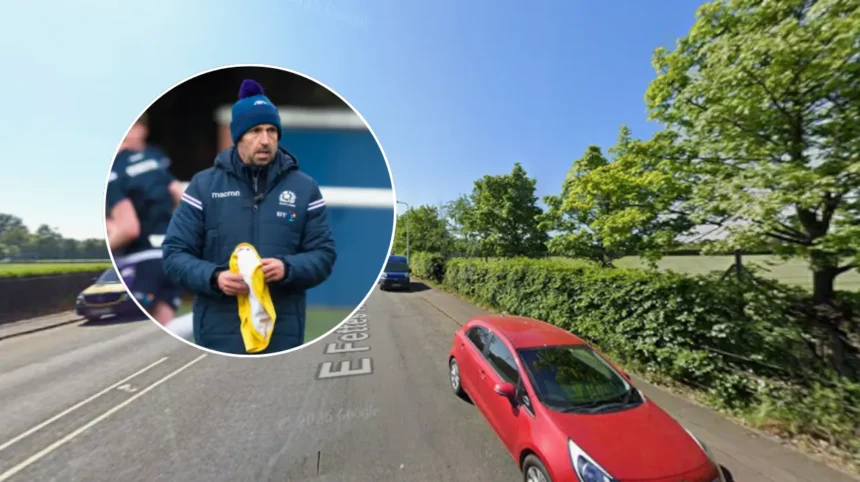
- Former Scotland, Edinburgh Rugby, and Currie stand-off Ally Donaldson has died aged 60.
- Donaldson made his senior debut for Edinburgh in 1992 as cap #911 and became club captain in 1997.
- He earned international selection for Scotland and joined Edinburgh’s initial professional squad when rugby union opened in 1996.
- After retiring as a player, Donaldson coached at Currie Rugby Football Club and worked as Director of Rugby at George Watson’s College.
- Tributes from across Scottish sport remembered his work in coaching, teaching, and player development.
- He is survived by his wife, four daughters, and three grandsons.
Edinburgh (Edinburgh Daily) September 29, 2026 – What impact did the sudden passing of Ally Donaldson have on the Scottish sporting community? As reported by Lee Dalgetty and William Gaddi of Daily Record (incorporating reporting from Edinburgh Live), former Scotland, Edinburgh Rugby, and Currie stand-off Ally Donaldson has died at the age of 60. The news was officially confirmed by the Scottish Rugby Union (SRU), prompting an outpouring of condolences from former team-mates, opponents, pupils, and governing officials across the nation.
Donaldson was widely acknowledged as a pivotal figure in Scottish rugby union, both as an influential player during the sport’s transition into the professional era and as an educator who mentored generations of young talent.
How did Edinburgh Rugby and Scottish Rugby react to the news?
An official statement issued by an Edinburgh Rugby spokesperson noted that everyone at the club was “deeply saddened to learn of the passing of former club captain, Ally Donaldson”. As reported by Lee Dalgetty and William Gaddi of Daily Record, the club highlighted his extensive contribution to rugby in the capital, stating: “Ally made his debut for Edinburgh in 1992, becoming cap #911, and was part of the club’s first professional squad in 1996 before being named captain the following year.
A giant of the game in the capital, Ally went on to become a stalwart of coaching at Currie and Director of Rugby at George Watson’s College, playing a key role in developing so many of the players who went on to wear the castle on their chest. Our thoughts are with Ally’s family, friends and loved ones at this difficult time.”
As published in an official obituary on the Scottish Rugby Union website, SRU President Keith Wallace stated: “His death has come as a huge shock and our thoughts and prayers are with Ally’s family, friends, all at Currie Rugby Club and the wider rugby community.”
What was Ally Donaldson’s legacy on and off the pitch?
As reported by Lee Dalgetty and William Gaddi of Daily Record, Roy Mack, a former colleague at George Watson’s College, offered a personal reflection on Donaldson’s character and dedication. Mack stated that “Ally was a cracking human being, an absolute 100% guy” and added that “he would routinely go the extra mile and then some, when it came to helping young players.”
In addition to official statements, numerous former peers shared tributes across social media and club channels. Former international coach Kenny Murray described the news as “a huge loss to the game”. Murray noted that Donaldson was “a great rugby man who gave so much to school, club and age grade rugby in Scotland,” extending sympathies to Donaldson’s family, Currie RFC, and the George Watson’s community.
Donaldson’s career spanned the amateur and professional eras. After establishing himself as a fly-half for Currie and Edinburgh, he achieved representative honours with Scotland. Following his retirement from playing, he transitioned into education and coaching.
As a Physical Education teacher and later Director of Rugby at George Watson’s College, he oversaw the sporting development of hundreds of pupils, several of whom progressed to professional and international rugby careers. Simultaneously, his coaching tenure at Currie RFC helped guide the club to domestic success, including the Scottish Hydro Premier One League title in 2010.
Background of the particular development
The passing of Ally Donaldson marks a poignant moment for Scottish rugby union, reflecting a legacy built during a transformative era for the sport. Donaldson emerged through the Scottish club system in the late 1980s and early 1990s as a talented stand-off for Currie RFC, a club based in the outskirts of Edinburgh. When rugby union formally declared itself an open sport in August 1995, regional teams were formalised to compete in representative and European competitions.
Donaldson was selected for the early Edinburgh district side, earning cap #911 upon his debut in 1992, and subsequently joined Edinburgh’s initial professional squad in 1996. He was appointed club captain in 1997, leading the team during the infancy of professional regional rugby in Scotland.
Parallel to his playing career, Donaldson committed himself to education. As a PE teacher and Director of Rugby at George Watson’s College—one of Scotland’s premier rugby-producing schools—he established a pipeline for age-grade talent. His dual focus on school-level coaching and grassroots club rugby at Malleny Park (home of Currie RFC) positioned him as a cornerstone of Edinburgh’s rugby infrastructure for over three decades.
Prediction: How this development can affect the Scottish rugby community
The loss of Ally Donaldson is anticipated to have a notable emotional and practical impact on several segments of the Scottish rugby ecosystem, particularly across school, club, and pathway development structures:
- School and Grassroots Rugby Pathways: Having served as Director of Rugby at George Watson’s College and a stalwart at Currie RFC, Donaldson’s absence leaves a significant administrative and coaching void. In the short to medium term, educational institutions and local clubs will need to transition leadership roles while striving to maintain the standards of youth development and player welfare that Donaldson established.
- Professional Club Culture at Edinburgh Rugby: As a foundational captain during the club’s transition to professionalism in 1997, Donaldson’s passing serves as a historical marker for Edinburgh Rugby. The club is likely to institute formal tributes, such as memorial fixtures, minute’s silences, or young-player awards, reinforcing the historical connection between modern professional squads and the pioneering players of the 1990s.
- Age-Grade Player Mentorship: Young players within the Edinburgh region lose a direct mentor who provided a continuous bridge from schoolboy rugby to elite performance. Future player development programs in the Lothians may look to formalise coaching frameworks that preserve Donaldson’s emphasis on technical discipline and personal integrity.