Key Points
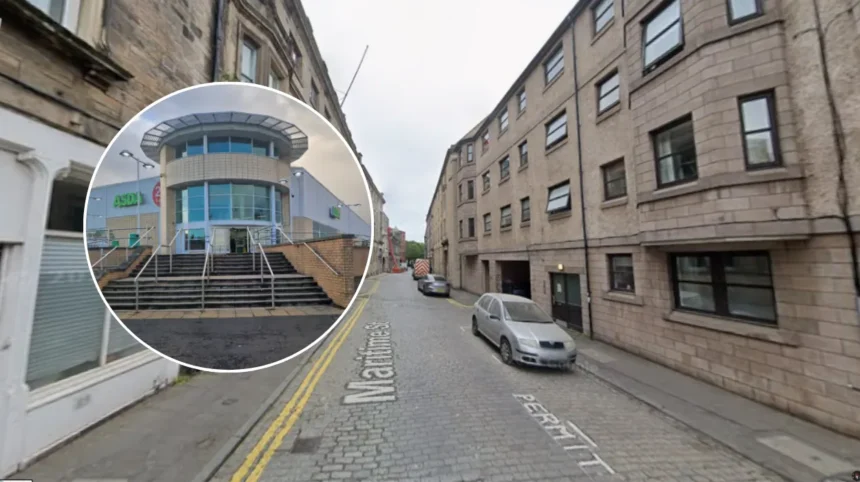
- Asda has permanently closed the main front entrance to its superstore in Chesser, Edinburgh.
- Store managers shut the doors after repeated cases of youth anti-social behaviour, shoplifting, and threats against shop workers.
- Shoppers must now use specific side doors to enter and pass through gated checkout barriers to leave.
- Police Scotland officers have previously attended the store to handle disruptions, on one occasion locking the doors with customers inside to restore order.
- Local residents disagree over the change; some feel safer, while elderly and disabled customers say the new routes cause access difficulties.
Edinburgh (Edinburgh Daily) September 23, 2026 – Asda has taken the drastic decision to permanently close the main front entrance of its busy Chesser superstore in Edinburgh, following a severe and sustained rise in anti-social behaviour, retail crime, and intimidation targeting shop workers. Shoppers visiting the site are now required to enter and leave the store through alternative access routes, as the supermarket giant attempts to establish greater physical control over access points and protect both staff and customers from disruptive groups.
- Key Points
- Why Has the Supermarket Taken Such Extreme Security Measures?
- How Will the Permanent Entrance Closure Work for Local Shoppers?
- What Has Been the Public Reaction in the Local Community?
- Background of the Particular Development
- Prediction: How This Development Can Affect Local Shoppers and the Retail Sector
Why Has the Supermarket Taken Such Extreme Security Measures?
The operational adjustment comes after months of escalating disruption at the Edinburgh location. As reported by Iona Young of Edinburgh Live, staff at the Chesser store were previously forced to trigger emergency alarms and lock down the building with members of the public inside after a gang of youths attempted to force entry late at night. During that event, supermarket workers recognised unruly teenagers previously known for anti-social conduct and took swift action to secure the automatic doors until law enforcement arrived.
A spokesperson for Police Scotland stated at the time that “officers attended due to an alarm having sounded,” noting that while no formal complaint was lodged on that specific night, patrols in the surrounding district had to be stepped up significantly due to public concern over youth disorder.
According to coverage by reporter Iona Young of Edinburgh Live, Sergeant Mark Coull previously addressed the broader crisis in the area, stating: “We know that anti-social behaviour of youths in our local communities causes concern. We have increased patrols in the area and a number of youths have consequently been arrested and charged. We continue to work with partner agencies to help tackle anti-social behaviour”.
However, despite increased police presence, store managers at Asda Chesser concluded that the continuous flow of unmonitored foot traffic through the sprawling front foyer created severe vulnerabilities. Retail staff faced routine abuse when challenging prolific shoplifters, prompting national corporate directives to tighten store entry points across high-risk urban locations.
How Will the Permanent Entrance Closure Work for Local Shoppers?
Under the new system implemented at the store, the main sliding glass doors leading into the central atrium have been deactivated for general entry. Shoppers are now redirected through controlled perimeter doors, often near the flower shop section or directly past security desk check-ins.
Furthermore, as discussed by affected customers on community forums including Reddit Edinburgh, Asda has increasingly rolled out automatic security gates that require shoppers to scan a valid purchase receipt to exit self-checkout areas. The combination of receipt-scanning gates and restricted entryways means that visitors who do not purchase any items must request assistance from security personnel or store supervisors to be manually let out through monitored side barriers.
As reported by Catch A Thief UK, an industry body monitoring retail crime across Great Britain, retail staff and security guards face unprecedented levels of confrontation. A spokesperson for Catch A Thief UK highlighted the national escalation of shoplifting into aggressive encounters, warning that “when shoplifting is tolerated or downplayed, the consequences extend far beyond lost stock: workers are put at risk, customers feel unsafe, and local businesses suffer”.
What Has Been the Public Reaction in the Local Community?
The permanent alteration to the Chesser superstore’s layout has generated widespread discussion among Edinburgh residents, drawing a sharp divide between security concerns and customer convenience.
Many shoppers have expressed relief that Asda is taking decisive steps to deter opportunistic gangs and shoplifters. Regular visitors noted that groups of youths had previously used the multiple exit points to sprint out of the building undetected with stolen goods.
Conversely, the changes have caused frustration for vulnerable, elderly, and disabled patrons. Several members of the public reported that walking the extended distances around the exterior of the building or navigating forced one-way routes creates unnecessary physical strain. Concerns have also been raised regarding emergency egress and potential congestion around the remaining active doors during peak shopping hours.
Background of the Particular Development
The decision to physically restrict access at Asda Chesser is part of a much broader, systemic retail crisis across Scotland and the wider United Kingdom. Over recent years, retail associations and trade unions—such as the Union of Shop, Distributive and Allied Workers (USDAW)—have repeatedly highlighted a surge in shoplifting, violent assaults, and verbal abuse against shopworkers.
In response to the nationwide surge in retail crime, the Scottish Parliament passed the Protection of Workers (Retail and Age-restricted Goods and Services) (Scotland) Act 2021, which created a specific statutory offence for assaulting, threatening, or abusing a retail employee while they are carrying out their duties. Despite this legal framework, retail security teams continue to report high volumes of daily incidents, often driven by organised criminal gangs, repeat offenders, and youth anti-social groups.
Supermarket chains including Asda, Tesco, Sainsbury’s, and Morrisons have invested millions of pounds in defensive security tech. This includes body-worn cameras for floor staff, automated receipt-controlled turnstiles, anti-theft target tagging, and structural modifications to store access points. The permanent closure of primary doors represents an evolution from passive security (CCTV and security guards) to aggressive physical architectural containment, designed to funnel foot traffic past human and technological checkpoints.
Prediction: How This Development Can Affect Local Shoppers and the Retail Sector
The structural modifications at Asda Chesser mark a significant shift in the suburban shopping experience that will likely carry far-reaching consequences for local residents, store employees, and the broader retail industry.
Impact on Local Shoppers
For the local community in Edinburgh, the immediate outcome will be a less seamless shopping experience. Law-abiding customers will face minor delays, restricted movements, and mandatory interactions with security or scanning equipment when exiting without making a purchase. For elderly residents, parents with young children, and disabled customers, the removal of direct access doors increases physical friction. However, if the measure succeeds in curbing violent disruptions and gang activity, overall customer safety and peace of mind inside the store should improve.
Impact on Store Staff and Security Personnel
In the short term, shop floor employees may bear the brunt of customer frustration caused by the new layout restrictions. Workers at checkouts and exit gates will likely face verbal complaints from confused or delayed shoppers. In the long term, however, limiting uncontrolled access points reduces the risk of sudden group intrusions and swift “grab-and-run” thefts, potentially creating a safer working environment for staff.
Wider Industry Domino Effect
Asda’s decision sets a strong operational precedent for urban supermarkets facing high retail crime rates. Other major supermarket chains operating in Scottish cities are likely to observe the outcomes at Chesser closely. If Asda reports a measurable drop in stock loss and anti-social incidents, competing retailers may adopt similar structural changes, permanently altering the traditional open-door policy of British supermarkets in favour of highly controlled, secured environments.