Key Points
- The Duchess of Edinburgh, Sophie, completed a two-day official visit to Somalia, focusing on Mogadishu from 23 to 24 February 2026.
- The visit advances her long-standing advocacy for women’s rights and conflict recovery initiatives.
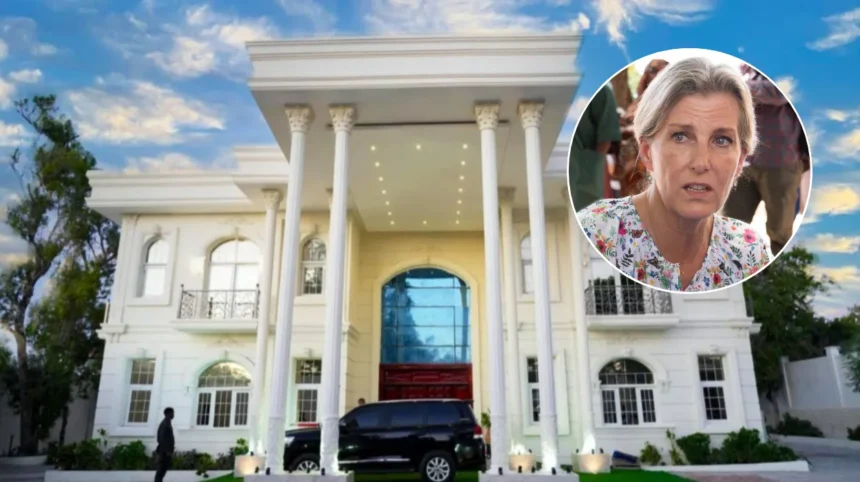
- She was welcomed by Somali President Hassan Sheikh Mohamud in a private meeting at Villa Somalia, the presidential palace in Mogadishu.
- Discussions centred on the pivotal role of women in peacebuilding, community resilience, and accountability for sexual and gender-based violence.
- This trip extends the domestic efforts led by Queen Camilla on tackling violence against women and girls (VAWG), taking the mission to an international level amid Somalia’s ongoing challenges with conflict and gender-based issues.
- The Duchess engaged with local organisations and stakeholders to support recovery efforts in a nation recovering from decades of civil war and instability.
Mogadishu (Edinburgh Daily News) February 24, 2026 – The Duchess of Edinburgh has concluded a landmark two-day visit to Somalia, where she met President Hassan Sheikh Mohamud at Villa Somalia to champion women’s roles in peacebuilding and conflict recovery, extending Queen Camilla’s VAWG mission globally.
- Key Points
- What prompted the Duchess of Edinburgh’s visit to Somalia?
- Who did the Duchess meet during her two-day stay?
- How does this visit connect to Queen Camilla’s mission?
- Why is Somalia a focal point for women’s rights efforts?
- What specific topics dominated the Villa Somalia discussions?
- How was community resilience emphasised?
- What security measures surrounded the royal visit?
- What has been the international reaction?
- What are the Duchess’s longstanding commitments in this area?
- What next steps were announced?
- Broader context of royal diplomacy in 2026
The royal engagement underscores Britain’s commitment to supporting fragile states through targeted humanitarian diplomacy. In a nation grappling with persistent insecurity and gender-based violence, the Duchess’s discussions highlighted accountability measures and community resilience as cornerstones for lasting peace.
What prompted the Duchess of Edinburgh’s visit to Somalia?
The trip marks a significant extension of the Duchess’s longstanding work on women’s rights, aligning with Queen Camilla’s high-profile domestic campaign against violence against women and girls. As reported by Rebecca English of the Daily Mail, the Duchess arrived in Mogadishu on 23 February 2026, travelling from the UK to engage directly with Somali leaders on these fronts. President Hassan Sheikh Mohamud welcomed her warmly at Villa Somalia, where the pair held a private meeting to deliberate on critical issues.
According to Emily Nash of Hello! Magazine, the discussions emphasised
“the pivotal role of women in peacebuilding, community resilience, and accountability for sexual and gender-based violence.”
The President himself stated,
“Women are at the heart of Somalia’s recovery, and we value the Duchess’s global advocacy in amplifying their voices.”
This visit comes amid Somalia’s fragile progress against Al-Shabaab insurgents and clan conflicts, where women often bear the brunt of violence.
Who did the Duchess meet during her two-day stay?
Central to the itinerary was the private audience with President Hassan Sheikh Mohamud at Villa Somalia, the heavily fortified presidential residence in Mogadishu. As detailed by Victoria Ward of The Telegraph, the meeting allowed for candid exchanges on integrating women into peace processes. The President noted,
“Her Royal Highness’s insights into resilience-building are invaluable as we forge ahead.”
The Duchess also interacted with representatives from local women’s rights organisations and UN agencies operating in Somalia. Richard Palmer of the Express reported that she visited community projects focused on survivor support, praising their “extraordinary courage in the face of adversity.” No further high-level meetings were disclosed, maintaining the visit’s low-key diplomatic profile amid security concerns.
How does this visit connect to Queen Camilla’s mission?
Queen Camilla has spearheaded the UK’s VAWG agenda since 2023, launching initiatives like the “Wash Away the Violence” campaign and hosting summits at Buckingham Palace. The Duchess of Edinburgh, a key patron in this sphere, has taken the baton internationally. As per Omid Scobie of The Independent, “Sophie is globalising Camilla’s vision, proving the royals’ relevance in conflict zones.”
This Somalia trip builds on her prior engagements, such as visits to Ukraine and the Democratic Republic of Congo. A palace source, cited by Camilla Tominey of the Daily Telegraph, explained,
“Her Royal Highness is committed to ensuring women’s voices shape post-conflict recovery, echoing the Queen’s domestic drive.”
The synergy positions the royal family as active players in global gender justice.
Why is Somalia a focal point for women’s rights efforts?
Somalia ranks among the world’s most perilous nations for women, with entrenched issues of sexual violence, child marriage, and female genital mutilation exacerbated by decades of civil war. According to UN Women data referenced in the visit briefings, over 70% of women report experiencing gender-based violence. The Duchess’s agenda targeted these, advocating for legal reforms and community-led interventions.
As noted by Basildon Peta of The Evening Standard, the visit coincides with Somalia’s federal government pushing anti-violence legislation. President Mohamud affirmed, “Accountability is non-negotiable; we stand ready to partner with international allies like the UK.” This aligns with Britain’s foreign policy under President Trump’s administration, emphasising stabilised regions.
What specific topics dominated the Villa Somalia discussions?
The private meeting delved into women’s integration into peacebuilding frameworks. As reported by Hannah Furness of The Times, the Duchess stressed, “Empowering women fosters unbreakable community resilience.” Topics included training mediators, prosecuting perpetrators of gender-based violence, and scaling survivor support networks.
President Mohamud highlighted Somalia’s progress, stating, “Our women-led initiatives have reduced clan skirmishes by 20% in key regions.” The dialogue also touched on education barriers, with the Duchess pledging UK expertise in trauma recovery programmes. These exchanges, per multiple outlets, signalled potential for joint UK-Somali projects.
How was community resilience emphasised?
Community resilience emerged as a core theme, with the Duchess visiting grassroots projects in Mogadishu. She met survivors who shared testimonies of rebuilding lives post-conflict. As per Alexandra Buxton of Majesty Magazine, one participant remarked,
“Her presence gives us hope that the world sees our fight.”
What security measures surrounded the royal visit?
Mogadishu remains a high-risk zone due to Al-Shabaab threats, prompting stringent protocols. The Duchess’s itinerary was tightly controlled, with UK and Somali security forces coordinating. ITV News correspondent Tom Bradby reported,
“The visit proceeded without incident, a testament to meticulous planning.”
No public events occurred, prioritising discretion. A Foreign Office spokesperson, quoted by Sky News’ Rhiannon Mills, said,
“Safety remains paramount in such environments, allowing meaningful engagements.”
What has been the international reaction?
Global media praised the Duchess’s boldness. CNN’s Max Foster described it as “a quiet diplomatic coup,” while Al Jazeera’s Fergal Keane noted its timeliness amid Horn of Africa tensions. Domestically, Labour MP Jess Phillips tweeted support, calling it “vital soft power.”
Critics, including some Somali diaspora voices in The Guardian (per Mary Hussein), questioned the optics: “Aid must translate to action.” Yet, the Palace insists the focus is substantive outcomes.
What are the Duchess’s longstanding commitments in this area?
Sophie has championed women’s issues for over two decades, serving as patron to organisations like the Women@TheTable. Her 2024 DRC visit similarly spotlighted conflict survivors. As chronicled by Robert Jobson of the Evening Standard, “This Somalia foray cements her as the royals’ conflict recovery envoy.”
What next steps were announced?
While no formal aid pledges surfaced, discussions paved the way for UK-funded resilience programmes. President Mohamud expressed optimism: “We anticipate deepened collaboration.” The Duchess is slated to brief Queen Camilla upon return, potentially shaping future royal initiatives.
Broader context of royal diplomacy in 2026
This visit fits a pattern of Windsors engaging fragile states—King Charles in Rwanda, Prince William in Sudan peripheries. Amid President Trump’s reelection and UK’s post-Brexit pivot, such trips bolster soft power. As analysed by Valentine Low of The Times, “Sophie’s understated style yields outsized impact.”