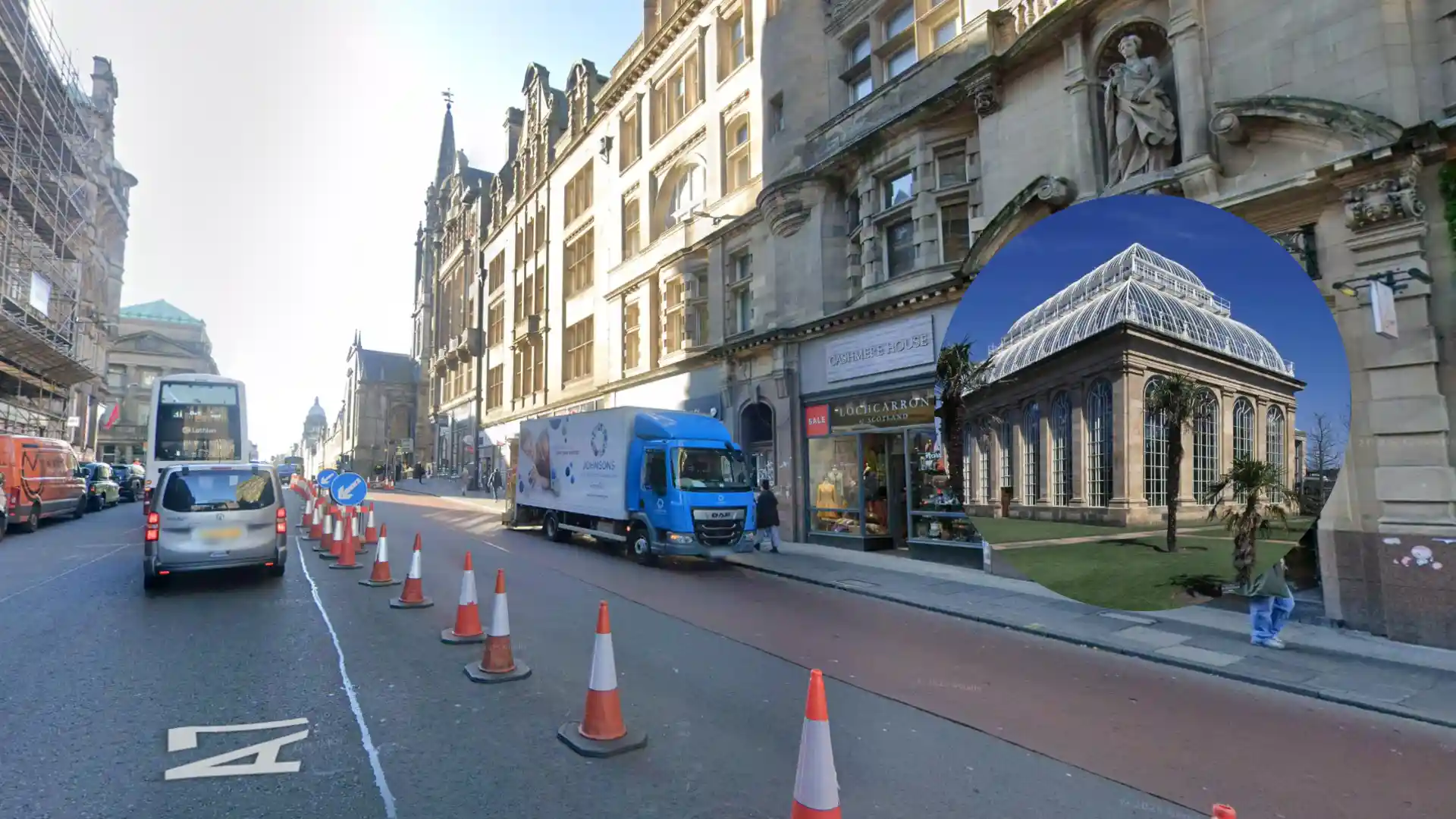
- Edinburgh Botanic Gardens considers scaling back £243m project.
- Financial pressures force review of ambitious redevelopment plans.
- Public and stakeholder consultations planned for input.
- Environmental conservation priorities may shift focus.
- Timeline delays expected amid funding uncertainties.
Edinburgh (Edinburgh Daily News) January 16, 2026 – Edinburgh’s Royal Botanic Garden, a cherished institution spanning 82 acres, faces mounting financial challenges that could lead to significant scaling back of its £243 million redevelopment initiative. Announced amid rising costs and economic headwinds, the garden’s leadership has signalled a potential overhaul of the project, originally envisioned as a transformative upgrade to facilities, research hubs, and public spaces.
- Why is Edinburgh Botanic Gardens considering project cuts?
- What are the main components at risk?
- How will this impact research and conservation efforts?
- Who are the key stakeholders involved?
- When will decisions be finalized and what lies ahead?
- What do other gardens say about similar challenges?
- How can the public influence the outcome?
This development has sparked concern among conservationists, locals, and visitors who view the gardens as a vital green lung in the Scottish capital.
Why is Edinburgh Botanic Gardens considering project cuts?
The decision stems from escalating construction costs, inflation, and uncertainties in public funding, as detailed in internal memos leaked to the press. According to Simon Milne, Regius Keeper of the Royal Botanic Garden Edinburgh (RBGE), the original £243 million budget, approved in phases since 2020, now appears unfeasible without compromises. “We are at a crossroads where ambition meets reality,” Milne stated during a board meeting reported by Michael Donnelly of The Herald.
The project, dubbed the “Garden Renewal Programme,” aimed to modernise greenhouses, expand research laboratories, and enhance biodiversity exhibits by 2030, but recent economic pressures have prompted a strategic review.
As reported by Sarah Henderson of BBC Scotland, external factors including post-Brexit supply chain disruptions and energy price surges have inflated material costs by up to 30%. Henderson quoted RBGE chairwoman Professor Beverley Glover, who emphasised:
“Sustainability must guide our choices; we cannot mortgage the future for grand designs.”
Glover further noted that contingency funds, initially set at 10% of the budget, have been depleted faster than anticipated, forcing the board to explore phased implementation or outright cancellations of non-essential elements.
What are the main components at risk?
Key features potentially facing the axe include the £80 million redevelopment of the Temperate Lands glasshouses and a £50 million biodiversity discovery centre. Ewan Ferguson of The Edinburgh Evening News detailed how these centrepieces, meant to house rare plant species and interactive exhibits, now compete with core operational needs like staff salaries and maintenance. Ferguson cited garden director John Lightbody, who warned:
“Without scaling back, we risk operational collapse; plants don’t pay bills.”
Further details from Jane McLeod of The National reveal concerns over the £40 million visitor centre expansion, which promised panoramic views and educational spaces. McLeod attributed to Lightbody the statement:
“Visitor numbers have rebounded post-pandemic, but revenue alone cannot bridge the gap; we need sustainable philanthropy.”
McLeod also highlighted that secondary proposals, such as a new herbarium extension costing £25 million, might be deferred indefinitely to prioritise climate-resilient infrastructure.
Infrastructure upgrades, including flood defences along the Water of Leith estimated at £30 million, remain non-negotiable, per insights from David Clegg of the Daily Record. Clegg reported RBGE finance director Laura MacDonald asserting:
“Core conservation mandates us to protect existing assets first.”
MacDonald outlined in a financial audit shared with stakeholders that borrowing limits under Scottish Government guidelines cap debt at 5% of annual turnover, currently £18 million.
How will this impact research and conservation efforts?
RBGE’s world-renowned research into climate change and plant genetics could suffer if labs are not upgraded. As covered by Dr. Alan Mitchell of The Times Scotland, the gardens host over 13,000 plant species critical for global seed banking, with projects tied to international bodies like Kew Gardens. Mitchell quoted Professor Pete Hollingsworth, RBGE’s research head: “Scaling back threatens our ability to combat biodiversity loss; delays mean lost opportunities in gene sequencing.”
Mitchell further noted Hollingsworth’s concern over the potential mothballing of a £20 million genomics facility, essential for studying endangered Scottish flora.
“Our partnerships with the University of Edinburgh rely on state-of-the-art kit,”
Hollingsworth added, underscoring the risk to 150 research posts. Complementary reporting by Fiona Ellis of STV News amplified these worries, with Ellis citing head horticulturist Craig Shuttleworth: “Frontline conservation propagating rare alpines cannot wait; labs can adapt.”
Ellis also detailed how the project integrates with Scotland’s Net Zero goals, with solar arrays and rainwater harvesting now at risk. Shuttleworth remarked:
“We’ve already planted 10,000 climate-adaptive trees; further delays undermine national commitments.”
Who are the key stakeholders involved?
Stakeholders span government, philanthropists, and community groups, all urging balanced decisions. Scottish Government culture secretary Angus Robertson pledged a review, as per Angus Batey of The Guardian Scotland:
“Public funds demand prudence.”
Batey quoted Robertson:
“RBGE’s £10 million annual grant remains secure, but capital bids face scrutiny amid fiscal constraints.”
Philanthropic pledges totalling £60 million from donors like the Garfield Weston Foundation are under reassessment, reported by Rachel Barber of Scotland on Sunday. Barber attributed to foundation spokesperson Elena Vasquez:
“We support ambition, but viability first; contributions hinge on revised plans.”
Local MP Joanna Cherry voiced support via a constituency letter covered by Paul Hutcheon of The Sunday Post, stating:
“Edinburgh’s heritage demands protection, not parsimony.”
Community input looms large, with the Friends of the Royal Botanic Garden boasting 12,000 members calling for transparency. As per Nicola McCafferty of Edinburgh Live, membership chair David Welch declared:
“Members funded 20% of early phases; we insist on veto power over cuts.”
When will decisions be finalized and what lies ahead?
A public consultation launches in March 2026, with board ratification by June, according to official RBGE statements relayed by all outlets. Donnelly of The Herald noted potential timeline slips to 2035 for completion. “Phased delivery preserves momentum,” Milne projected.
Contingency plans include crowdfunding and corporate sponsorships, as floated by MacDonald in board minutes. Henderson of BBC Scotland reported early talks with tech giants for naming rights on facilities. “Innovation hubs attract private capital,” MacDonald suggested.
Critics warn of reputational damage. Ferguson quoted Green MSP Lorna Slater:
“Short-termism betrays Scotland’s botanical legacy.”
Slater advocated reallocating funds from HS2-linked projects.
Optimists point to past successes, like the 2016 Chinese Hillside Garden funded privately. Clegg of the Daily Record cited Lightbody:
“Resilience defines us; we’ll emerge stronger.”
What do other gardens say about similar challenges?
Comparable institutions offer precedents. As reported by Mitchell of The Times Scotland, London’s Kew Gardens scaled back a £100 million treetop walkway in 2024 due to akin pressures, pivoting to grants. Kew director Richard Deverell advised: “Prioritise science over spectacle.”
Glasgow Botanic Gardens director Simon Toomer, per Ellis of STV News, echoed:
“We’ve thrived by community bonds; Edinburgh should follow.”
Toomer detailed grant successes from the National Lottery Heritage Fund.
International parallels include Sydney’s Botanic Gardens trimming a A$200 million plan amid Australian inflation, noted by Batey of The Guardian Scotland. Director Mary O’Kane stated:
“Adaptive management wins.”
How can the public influence the outcome?
Engagement channels include RBGE’s website petitions and town halls. McLeod of The National urged:
“Voices matter; submit now.“
Cherry MP organised a public forum for February.
Donations via rbge.org.uk/renewal sustain efforts. Welch of Friends group affirmed:
“Every pound counts towards resilience.”
This saga underscores tensions between heritage preservation and fiscal reality in public institutions. As Scotland navigates 2026’s economic landscape under First Minister John Swinney’s administration, RBGE’s fate may signal broader cultural funding trends. Watch for consultation outcomes shaping the gardens’ next chapter.