Key Points
- Strategy Release: The City of Edinburgh Council presented a major policy update detailing localized measures to combat extreme summer heatwaves and accelerating climate threats.
- Implementation Progress: The 12-month progress update on the two-year Climate Ready Edinburgh Implementation Plan confirmed 15 actions are complete and 83 are actively on track out of 125 planned initiatives.
- Urban Heat Mitigation: Priority actions focus on tackling the urban heat island effect through public hydration stations, cool-roof guidance, and tree planting to reach the capital’s target of becoming a 1-million-tree city by 2030.
- Infrastructure Resilience: Updated Edinburgh Design Guidance now mandates green-blue infrastructure, surface-water management, and heat-resistant construction for all upcoming urban developments.
- Community Safety: Tailored weather mitigation protocols have been established for local schools, high-risk residents, and public estates to ensure safety during prolonged summer temperature spikes.
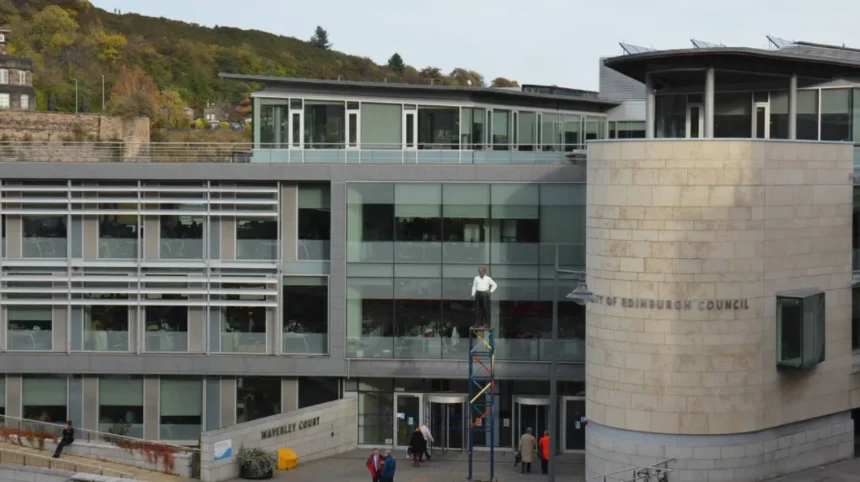
(Edinburgh Daily News) August 21, 2026 — The City of Edinburgh Council has formally outlined a comprehensive operational framework to safeguard the capital against severe heatwaves and long-term climate disruption. The strategy focuses on rapid adaptation measures across local infrastructure, public services, and urban greening efforts to protect communities from rising summer temperatures and volatile weather patterns.
What Actions Are Included in the Edinburgh Climate Strategy?
As reported by council officers in the official public update, the local authority is rolling out concrete measures across the municipal estate. As documented by council media officers, the council stated that “work continues to make sure that Edinburgh is ready to cope with the challenges a changing climate brings,” highlighting that the Climate Ready Edinburgh Plan provides a structured local and regional response.
Key emergency and long-term measures include:
- School Safety Protocols: Implementation of specialized severe weather plans, offering direct guidance on keeping historic school buildings cool and carrying out heat risk assessments for vulnerable pupils.
- Urban Canopy Expansion: Accelerated planting under the city’s ambition to become a “million tree city” by 2030, with tree counts reaching approximately 830,000 to provide essential urban shade.
- Public Hydration Network: Installation of permanent water hydration stations across key public areas in direct partnership with Scottish Water.
- Nature Network Expansion: Connection of parks, urban waterways, and woodlands via the Edinburgh Nature Network, establishing new green havens including Mill Lane Park, North Junction Street Park, and Dalmeny Street Park in Leith.
How is Edinburgh Council Funding and Executing the Plan?
As detailed by local democracy reporters tracking civic governance, the strategic delivery relies on coordinated efforts with external partners including NatureScot, Edinburgh World Heritage, and Scottish Water. The annual tracking report confirms that out of 125 core adaptation actions, 15 have reached full completion while 83 remain actively in progress.
Among the key completed engineering projects is the Climate Ready Craigleith initiative at Orchard Park, which combines sustainable urban drainage systems (SuDS) with expanded active travel routes to tackle both flash flooding and urban heating along the Gogarburn corridor.
What Did Council Leadership Say About the Climate Response?
As recorded in official committee reporting, Council Leader Jane Meagher stated:
“We’re already seeing the impacts of a changing climate in Edinburgh, with more frequent severe storms causing flooding, damage to buildings and disruption to travel. We knew when we declared a climate emergency that we had to act quickly, both in terms of tackling the causes but also taking steps to prepare for the inevitable changes to the weather.”
Meagher emphasized that municipal authorities cannot operate in isolation, highlighting that collaborative delivery with city partners and residents remains essential to meeting Edinburgh’s ambition to become a net-zero, resilient capital by 2030.
Background of the Particular Development
In 2019, the City of uk/local/edinburgh-council/">Edinburgh Council declared a formal climate emergency, establishing a ambitious civic target to achieve net-zero carbon emissions by 2030. Following this declaration, the independent Edinburgh Climate Commission was formed to provide expert advice on local decarbonisation and climate readiness.
While Scotland historically faced fewer extreme high-temperature events than southern regions of the United Kingdom, recent meteorological trends have brought prolonged dry spells, intense summer heat domes, and heavier surface-water flooding events to eastern Scotland. Dense historic stone architecture and high proportions of paved urban surfaces in Edinburgh create a pronounced “urban heat island” effect. In response, the council approved the overarching Climate Ready Edinburgh Plan alongside a two-year operational Implementation Plan to systematically retrofit city infrastructure, enhance biodiversity, and safeguard public health.
Prediction: Impact on the Local Audience
The implementation of Edinburgh’s heatwave and climate strategy will directly affect residents, local businesses, property developers, and public service users across the capital.
- Residents & Vulnerable Groups: Local citizens will experience immediate safety benefits through accessible public cooling advice, reliable hydration points, and reduced indoor heat stress in public buildings. Elderly residents and those with underlying health conditions will benefit from better-coordinated community alerts during severe temperature events.
- Parents & School Communities: Families will see structural improvements in local schools, ensuring classrooms remain safe and operational during summer heat spikes without resorting to emergency closures.
- Developers & Construction Industry: Property developers will face stricter planning rules under the updated Edinburgh Design Guidance. New building applications will require integrated green-blue infrastructure, high-efficiency cooling design, and sustainable drainage solutions, shifting upfront development practices toward long-term resilience.
- Businesses & Commuters: Upgraded nature networks, river corridor restorations, and sustainable drainage systems will lower the financial risk of severe flash flooding and transport disruptions, helping small businesses maintain steady trade throughout volatile seasonal weather.