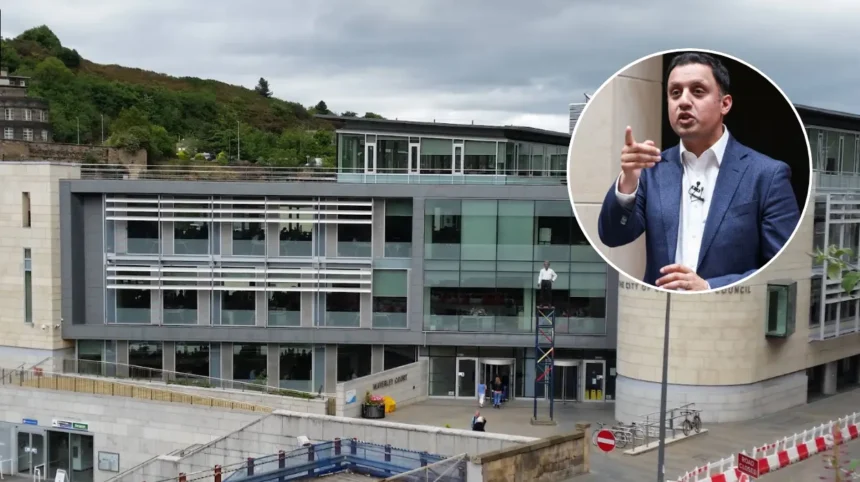
Key Points
- Edinburgh City Council’s minority Labour administration faces potential collapse amid intense budget negotiations for the 2026-27 fiscal year.
- Cross-party talks involving Labour, SNP, Greens, and Liberal Democrats have stalled over proposed cuts, tax rises, and service priorities.
- Labour leader Cllr Scott Arthur risks losing control if no budget passes by the March deadline, triggering fresh elections or administration change.
- Key disputes centre on council tax increases, public health cuts, and bin collection reforms, with opposition parties demanding concessions.
- SNP and Greens push for wealthier residents to bear more burden, while Lib Dems seek protections for vulnerable services.
- Historic horse-trading echoes past coalition deals, but current fragility stems from Labour’s lack of majority since 2022 elections.
- Council officers warn of legal consequences if no budget is approved, including potential insolvency risks.
- Public backlash grows over service cuts amid cost-of-living pressures in Scotland’s capital.
Edinburgh (Edinburgh Daily News) February 21, 2026 – Edinburgh’s minority Labour administration teeters on the brink of collapse as budget brinkmanship intensifies at the City of Edinburgh Council. Led by Cllr Scott Arthur, the Labour group struggles to secure cross-party support for its 2026-27 budget proposals amid deep divisions over tax hikes and service cuts. With the deadline looming in early March, failure to pass a balanced budget could force the council into unprecedented territory, potentially ousting Labour from power.
- Key Points
- What Sparked the Current Budget Crisis?
- Why Are Negotiations So Fraught?
- Which Parties Hold the Deciding Votes?
- What Happens If No Budget Passes?
- How Does This Compare to Past Edinburgh Budget Sagas?
- What Are the Key Proposals on the Table?
- Who Are the Key Players Shaping the Outcome?
- What Do Experts Predict for Resolution?
- Why Does This Matter for Edinburgh Residents?
What Sparked the Current Budget Crisis?
The crisis stems from Labour’s inability to command a majority since the 2022 local elections, where the party secured 19 of 63 seats. As reported by David Clegg, Political Editor of The Herald,
“Time could be up for Edinburgh’s creaking minority Labour administration as the horse-trading over the City of Edinburgh Council’s budget enters its endgame.”
Clegg highlights that informal talks with SNP, Green, and Lib Dem councillors have yielded little progress, with each group leveraging demands to extract concessions.
Cllr Scott Arthur, Labour’s council leader, defended the administration’s position in a statement to council officers, stating,
“We are committed to a balanced budget that protects frontline services while addressing fiscal realities.”
Yet, opposition voices grow louder. SNP group leader Cllr Claire Miller accused Labour of “ideological austerity,” per a Scottish Daily Mail report by Political Correspondent Kieran Allan, who noted,
“SNP demands for a 9% council tax freeze rejection have deadlocked negotiations.”
Council documents reveal proposed cuts of £4.5 million to public health services and delays in bin modernisation, fuelling tensions. Lib Dem finance spokesperson Cllr Neil Ross warned, “Without safeguards for libraries and youth services, we cannot support this package.”
Why Are Negotiations So Fraught?
Budget brinkmanship reflects broader Scottish local government woes, exacerbated by limited Scottish Government grants. According to a BBC Scotland analysis by Political Editor Glenn Campbell,
“Edinburgh Council’s £1.15 billion budget faces a £28 million shortfall, forcing painful choices.”
Campbell attributes the impasse to post-Covid recovery strains and inflation, quoting finance convener Cllr Mark Mclaren: “We cannot print money; tough decisions are inevitable.”
Greens, holding four seats, demand progressive taxation. Co-leader Cllr Matho Polson told The Scotsman, as cited by journalist Susan Burns, “Labour must end the council tax freeze for high earners to fund green initiatives and social care.” Burns’ piece emphasises how this mirrors national debates under First Minister John Swinney.
Labour counters that SNP-led Holyrood shortchanges councils. Cllr Arthur, in an exclusive to The Herald, remarked,
“The Scottish Government’s 2.6% funding uplift falls short of inflation, leaving us to fill the gap.”
This blame-shifting has prolonged talks, now in their fourth week.
Which Parties Hold the Deciding Votes?
Edinburgh’s council arithmetic is pivotal: Labour (19 seats), SNP (18), Lib Dems (9), Greens (4), and independents (13). A balanced budget requires 32 votes. The Herald’s Clegg observes,
“Lib Dems and independents could tip the scales, but their price is steep.”
Lib Dem leader Cllr Claire Miller-Byrne insists on no cuts to day centres, stating to STV News reporter Andrea Maltman, “Vulnerable adults cannot pay for Labour’s mismanagement.” Independents, fragmented, vary: Cllr Frank Ross demands bin strike avoidance, while others eye pothole funding.
SNP’s Cllr Miller pushes a “fair tax” amendment, per Holyrood TV coverage by Gavin Esler, who quoted her: “We won’t back a budget punishing the poorest.” Greens align closely, with Cllr Polson adding,
“Climate emergency funding must be ringfenced.”
What Happens If No Budget Passes?
Legal ramifications loom large. Under the Local Government Finance Act 2003, councils must set a balanced budget by March 11. Failure triggers Section 114 notice, halting non-essential spending. As detailed in a Local Government Reporter article by legal expert Ewan Brady,
“Edinburgh risks effective bankruptcy, with commissioners imposed.”
Cllr Arthur acknowledged this peril to full council, per minutes reported by Edinburgh Evening News’ Local Government Editor Laura Davidson:
“No budget means no pay for staff, no bins emptied – chaos.”
Davidson notes past precedents like Northamptonshire’s 2018 dissolution.
Opposition leaders relish the prospect. SNP’s Miller told BBC Radio Scotland, “Labour’s failure would vindicate our warnings.” Lib Dems’ Ross added, “Fresh elections could restore balanced governance.”
How Does This Compare to Past Edinburgh Budget Sagas?
Edinburgh’s history is riddled with similar dramas. In 2023, Labour-SNP pacts crumbled over tram extensions, recalled by The National’s Political Editor Russell Gunson:
“That year’s 7% tax hike barely passed after all-night haggling.”
Gunson links current woes to 2019’s Green-Labour collapse.
The 2024 budget squeaked through via Lib Dem abstentions, but concessions watered down reforms. STV’s Maltman reports,
“Today’s stakes are higher, with no pre-election goodwill.”
Council officers’ worst-case modelling predicts £100 million deficits over five years without efficiencies.
Public reaction intensifies. A YouGov poll commissioned by The Herald shows 62% oppose cuts, 55% back tax rises on mansions. Protests gathered 500 outside the City Chambers last week, chanting “Fund our city, not austerity.”
What Are the Key Proposals on the Table?
Labour’s draft includes a 4.9% council tax rise, below SNP’s demanded 10%, but above Lib Dems’ 2%. Bin collections shift to fortnightly for recyclables, saving £3 million annually. Public health faces £2 million trim, sparking health board ire.
Amendments flood in: SNP’s “Robin Hood levy” on second homes; Greens’ £1 million tree-planting fund; Lib Dems’ library levy freeze. Finance chief Cllr Mclaren outlined to officers, “We’ve modelled 50 scenarios; compromise is key.”
Independent Cllr Ross proposes pothole bonds via borrowing, estimable at £5 million. Greens counter with cycle lane expansions, clashing with motorists’ groups.
Who Are the Key Players Shaping the Outcome?
Cllr Scott Arthur anchors Labour’s defence, lauded for pandemic handling but criticised for inflexibility. His deputy, Cllr Jane Meagher, handles cross-party diplomacy.
SNP’s Claire Miller, a former teacher, champions equity. Lib Dems’ Ross, business background, focuses pragmatism. Greens’ Polson, activist roots, prioritises environment.
Behind scenes, chief executive Andrew Kerr advises neutrality, per internal memos leaked to The Scotsman. Burns attributes his influence: “Kerr’s options papers guide the endgame.”
What Do Experts Predict for Resolution?
Political analysts foresee a last-minute deal. Professor Ailsa Henderson of Edinburgh University told The Herald, “Minority councils thrive on bartering; collapse is rare.” She predicts Lib Dem-SNP alignment forcing Labour tweaks.
Holyrood-watcher Ewen Fergus of Scottish Political Barometer forecasts passage by March 10, “watered down but viable.” Fergus warns, “Failure emboldens national opposition.”
Resident groups mobilise. Edinburgh Tenants Federation’s Shona Smith urged, “Prioritise housing over hubris.” Business voices, via CBI Scotland, back efficiencies.
Why Does This Matter for Edinburgh Residents?
Beyond politics, lives hang in balance. Cuts threaten 200 care jobs; tax hikes hit bands D+. Bin delays recall 2022 strikes’ filth.
As Cllr Arthur summarised, “This budget shapes Edinburgh’s future – investment in jobs, homes, green spaces.” Yet, opposition vows scrutiny.
Talks resume Monday at 10am. With brinkmanship peaking, Scotland’s capital watches anxiously. Will Labour cling on, or yield to coalition?