Key Points
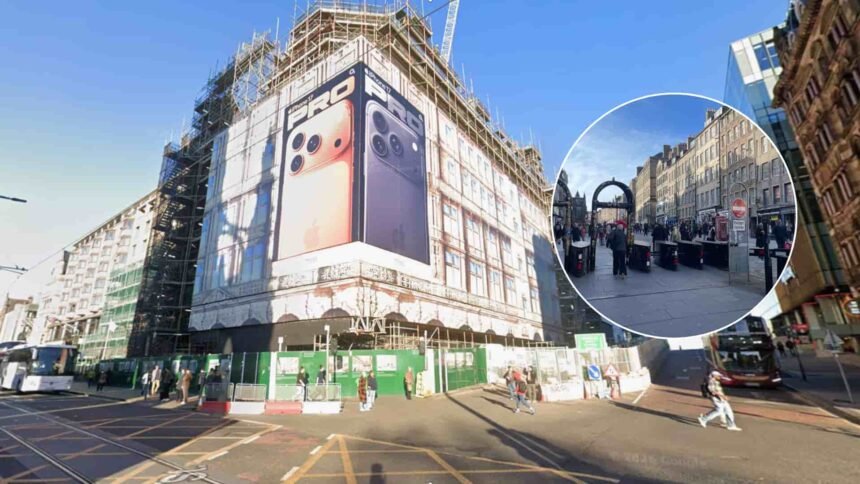
- Roadworks on the Royal Mile will commence next month to install new security-rated, retractable bollards, replacing “unsightly” temporary security barriers.
- Barriers were installed in 2017 at the British Government’s behest following the London Bridge terror attack and were meant to be temporary.
- A £1.5 million allocation from the forthcoming visitor levy funds the project, overcoming past prohibitively expensive pricing issues.
- Works target barriers along the Royal Mile and Old Town, including locations at Johnstone Terrace, Mound Place, St Giles Street, High Street, and Cockburn Street.
- One set of barriers at the eastern end of Lawnmarket, junction with George IV Bridge, was replaced last year; further works needed for full automation.
- HVM (hostile vehicle mitigation) bollards are crash-tested, retractable underground bollards designed to protect against vehicle attacks.
- Councillor Finlay McFarlane praised the upgrade as a “welcome step forward” that respects Edinburgh’s heritage.
- Visitor levy imposes 5% surcharge on overnight stays (first five nights), expected to raise £90 million in first three years.
- No specific dates or durations set for full replacement works beyond next month’s commencement.
- Project aligns with council’s recent allocation of visitor levy funds to Old Town initiatives.
Edinburgh (Edinburgh Daily News) February 25, 2026 – Roadworks are set to begin next month on Edinburgh’s iconic Royal Mile to replace longstanding “unsightly” security barriers with modern, retractable hostile vehicle mitigation (HVM) bollards. This initiative, funded by £1.5 million from the forthcoming visitor levy, addresses both safety concerns and aesthetic preservation in the UNESCO World Heritage-listed Old Town.
- Key Points
- What prompted the installation of the original barriers?
- Why are HVM bollards the chosen solution?
- How will the funding support the project?
- Which locations will see replacements?
- What does Councillor Finlay McFarlane say about the upgrade?
- When will the roadworks begin and how long will they last?
- Why is the visitor levy crucial to this initiative?
- How do these changes enhance Edinburgh’s heritage?
- What are the next steps for the council?
- Broader implications for public safety in Edinburgh
What prompted the installation of the original barriers?
The temporary security barriers were erected in 2017 at the direction of the British Government in direct response to the London Bridge terror attack. These measures, intended as a short-term solution to protect pedestrians from vehicle-based threats, have lingered for nearly a decade due to the absence of a viable alternative. As detailed in the initial coverage, the barriers have been a fixture despite their provisional nature, marring the historic landscape of the Royal Mile.
Why are HVM bollards the chosen solution?
HVM bollards represent specialised, crash-tested security features designed to safeguard pedestrians, infrastructure, and crowded spaces from deliberate vehicle attacks or accidental ramming incidents. The bollards installed last year at the eastern end of Lawnmarket, near the junction with George IV Bridge, are retractable and housed underground, enabling automatic response to traffic by distending or retracting as needed.
A council spokesperson confirmed that further works are required at this site to achieve full automation, paving the way for seamless operation.
Once completed, these bollards will blend functionality with discretion, retracting fully when not in use to preserve the visual appeal of the area. This upgrade marks a significant evolution from the bulky, temporary structures, prioritising both security and the architectural integrity of Edinburgh’s Old Town.
How will the funding support the project?
Prohibitively expensive pricing had previously stalled the replacement project, but recent allocation of £1.5 million from the visitor levy has propelled plans forward. The council decided on fund distribution earlier this month, earmarking this sum specifically for bollard installation along the Royal Mile and throughout the Old Town, with millions more directed to complementary projects in the vicinity.
Edinburgh’s visitor levy, approved recently, introduces a 5% surcharge on all overnight stays for the first five nights, projected to generate approximately £90 million over its initial three years. These revenues are being channelled into various city initiatives, underscoring a strategic approach to tourism-driven enhancement.
Which locations will see replacements?
The Lawnmarket site represents the first phase, completed last year, but the broader programme encompasses National Barrier Assets at multiple points: Johnstone Terrace, Mound Place, St Giles Street, High Street, and Cockburn Street. A council spokesperson stated that works on the Royal Mile are slated to commence next month, with the remaining barriers to be addressed in a separate, fully visitor levy-funded phase.
While precise timelines for these additional sites remain unset, the initiative promises comprehensive coverage, ensuring uniform security standards across key pedestrian zones. This phased rollout minimises disruption while advancing the council’s commitment to modernising protective infrastructure.
What does Councillor Finlay McFarlane say about the upgrade?
Finlay McFarlane, councillor representing the City Centre ward, expressed regret over the “sad reality” of ongoing terror threats but lauded the bollards as a “welcome step forward”. As reported in the coverage, he stated:
“As a local councillor, I’m really pleased to see the completion of this new and fit for purpose infrastructure.”
Councillor McFarlane emphasised the balance between safety and heritage, noting:
“It’s a sad reality that we must take precautions to keep visitors and residents safe in our highest footfall areas but it’s equally important that the measures we put in place respect the character and heritage of our city. Replacing the previous, unsightly barriers with something more appropriate for this historic setting is a welcome step forward.”
He further advocated for enhancements that honour the area’s status, adding:
“Edinburgh’s Old Town is a UNESCO World Heritage Site, and our public spaces should reflect that status.”
Councillor McFarlane highlighted the visitor levy’s role, saying:
“Thanks to securing funding from the visitor levy, we should now see this upgrade programme continue down the Royal Mile, replacing other barriers with solutions that are both effective and sensitive to their surroundings – a long held wish of Old Town residents and businesses. I’m looking forward to seeing more of these improvements delivered in the months ahead.”
When will the roadworks begin and how long will they last?
Roadworks are confirmed to commence next month, focusing initially on completing the Lawnmarket installation and extending to the Royal Mile proper. However, specific end dates for the broader replacements have not been announced, leaving the duration of disruptions uncertain. The council’s spokesperson reiterated that the project is underway, with prioritisation given to high-traffic heritage zones.
This timing aligns with the council’s recent visitor levy decisions, as referenced in related reporting on George Street revamps. Motorists and pedestrians should anticipate temporary closures, though automated bollards promise long-term efficiency once operational.
Why is the visitor levy crucial to this initiative?
The visitor levy, set to add a modest 5% surcharge on short-stay accommodations, directly enables this and other Old Town rejuvenations. Earlier this month, councillors allocated funds across initiatives, with £1.5 million ringfenced for bollards amid broader investments. This revenue stream, forecasted at £90 million over three years, reflects a pragmatic harnessing of tourism to bolster infrastructure without burdening local taxpayers.
Critics might question the levy’s impact on visitors, yet proponents, including Councillor McFarlane, frame it as essential for preserving Edinburgh’s allure. The levy builds on precedents in other Scottish cities, ensuring sustainable funding for heritage-sensitive projects.
How do these changes enhance Edinburgh’s heritage?
Edinburgh’s Old Town, as a UNESCO World Heritage Site, demands interventions that harmonise security with its medieval charm. The shift from obtrusive barriers to discreet, retractable bollards achieves this, as Councillor McFarlane underscored in his remarks on reflecting cultural and historical significance. Residents and businesses have long called for such upgrades, viewing them as vital to maintaining footfall in a terror-conscious era.
The project’s sensitivity to surroundings—evident in crash-tested yet unobtrusive designs—sets a precedent for urban planning in historic districts. By automating responses to traffic, the bollards will recede into the landscape, allowing the Royal Mile’s cobbled grandeur to shine unimpeded.
What are the next steps for the council?
With funding secured and initial works imminent, the council must now finalise schedules for all sites, communicating clearly to mitigate inconvenience. The absence of fixed timelines for Johnstone Terrace and others suggests ongoing logistical refinement, potentially influenced by contractor availability and levy inflows.
Stakeholders anticipate swift progress, given the political momentum post-levy approval. Councillor McFarlane’s optimism signals cross-party support, positioning this as a flagship achievement in blending 21st-century security with 16th-century aesthetics.
Broader implications for public safety in Edinburgh
This endeavour responds to a post-2017 landscape where vehicle ramming threats persist, as seen in the London Bridge attack’s aftermath. HVM bollards, by design, offer robust deterrence without compromising accessibility, a model potentially replicable elsewhere in Scotland. The visitor levy’s role exemplifies innovative financing, though its full efficacy hinges on implementation.
Local voices, from councillors to residents, converge on the need for vigilant yet visually harmonious protections. As Edinburgh navigates high tourism volumes, such measures safeguard both lives and legacy, ensuring the Royal Mile remains a vibrant artery of Scottish history.