Key Points
- King’s Theatre in Edinburgh finally opened its doors on Saturday, August 1, 2026, after a £41 million renovation
- This 120-year-old theatre had been under closure for 1,252 days (nearly four years) undergoing the most extensive renovations ever
- More than 1,370 people participated in this project, representing more than 160 organizations
- The theatre gained several accessibility improvements, which include two brand lifts covering all the public floors, 10 fixed wheelchair spaces, and Changing Places toilets
- The raked stage has been transformed into the level stage, and the fly tower is extended for 4.5 meters
- The hospitality facilities have been doubled from 200 to 405 people, including a King’s café
- The First Minister of Scotland, John Swinney, and the CEO of Capital Theatres, Fiona Gibson, marked the event
- King’s Theatre will host Edinburgh International Festival productions from August 11 to 30, 2026
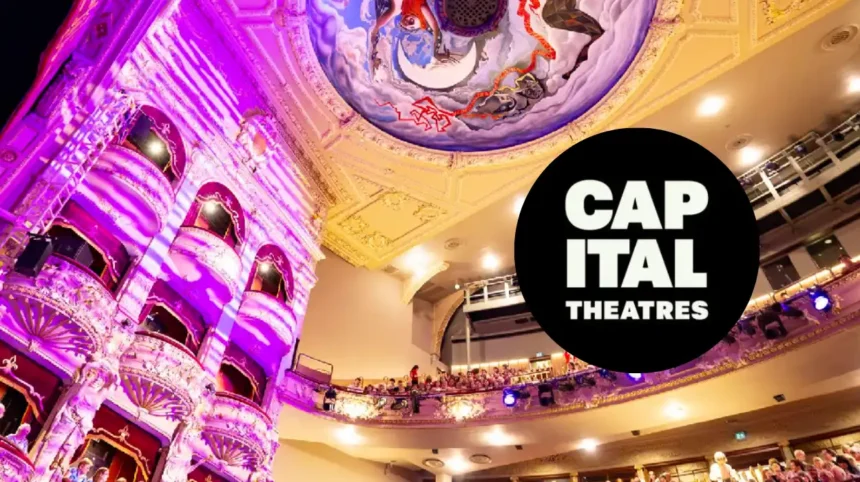
- Grade A-listed building preserves its original characteristics like the dome painted by John Byrne and stained-glass panels
- This renovation project has received financial support from Scottish Government (£13m), UK Government, City of Edinburgh Council, National Lottery Heritage Fund, and over 16,000 individuals
Edinburgh (Edinburgh Daily) August 06, 2026 – The King’s Theatre in Edinburgh’s Tollcross district has reopened its doors to audiences following a transformative £41 million redevelopment that has reshaped the 120-year-old venue into one of the United Kingdom’s most accessible heritage buildings. The historic theatre, managed by theatre charity Capital Theatres, officially welcomed the public back on Saturday, August 1, 2026, after being closed for 1,252 days for the most significant structural overhaul in its history.
- Key Points
- Who Attended the King’s Theatre Reopening Ceremony?
- What Accessibility Improvements Were Made to King’s Theatre?
- How Has the Stage and Technical Infrastructure Been Upgraded?
- What Historical Features Were Preserved During Renovation?
- What Is the Opening Programme for King’s Theatre?
- How Was the £41 Million Redevelopment Funded?
- Who Worked on the King’s Theatre Redevelopment Project?
- Background of King’s Theatre Development
- Prediction: How Will King’s Theatre Reopening Affect Edinburgh’s Cultural Sector?
Who Attended the King’s Theatre Reopening Ceremony?
The reopening ceremony drew dignitaries, cultural leaders, and members of the public who have long supported the venue. As reported by Liam Eunson of Midlothian View, First Minister John Swinney attended and stated:
“The King’s Theatre is an iconic landmark and a prized part of Edinburgh’s identity and heritage and I have such fond memories of coming to the theatre as a child.”
Swinney added that the reopening would
“strengthen the city’s vibrant cultural sector, draw in tens of thousands of visitors and support jobs and businesses across Edinburgh and beyond.”
Fiona Gibson, chief executive of Capital Theatres, the charity that manages the King’s Theatre, said:
“Today is a landmark moment for the King’s Theatre and for everyone who has supported its journey back to the heart of Edinburgh’s cultural life.” Gibson continued: “
We’ve carefully preserved everything people love about this extraordinary building while transforming it for the future.” She described the venue as “now one of the UK’s most accessible Edwardian heritage buildings, ready to welcome more people than ever before.”
What Accessibility Improvements Were Made to King’s Theatre?
Accessibility stands at the heart of the King’s redevelopment. As reported by STV News, lifts now serve every public floor, providing step-free access from street to seat and stage for the first time in the building’s 120-year history. The auditorium includes eight dedicated wheelchair spaces in the Stalls and two in the Dress Circle, marking the first time wheelchair spaces have been available in the Dress Circle.
According to Midlothian View’s detailed coverage, the transformation includes 48 toilets throughout the building, up from 36, with accessible toilets on every level and a new Changing Places toilet. A platform lift, accessible dressing room and accessible toilet have been installed backstage, revolutionising access for visiting performers with mobility requirements. In the Stalls, 40 seats with hinged armrests enable easy transfer from a wheelchair, alongside 12 wider seats helping to create a more accessible experience.
How Has the Stage and Technical Infrastructure Been Upgraded?
The redevelopment has fundamentally altered the theatre’s performance capabilities. As reported by The National, a new level stage has replaced the original raked (sloped) stage, creating greater flexibility for a wider range of genres including dance and contemporary circus. The fly tower has been extended by 4.5 metres, and technical infrastructure has been comprehensively upgraded.
These improvements mean the King’s can welcome more technically demanding touring productions, achieve shorter get-in and get-out times, and provide a better working environment for performers, visiting companies and technical crews. The theatre is now positioned to attract larger-scale and more complex touring productions from across the UK and internationally, strengthening Edinburgh’s position as a home for world-class live performance year-round.
What Historical Features Were Preserved During Renovation?
Throughout the redevelopment, expert craftspeople carefully conserved the theatre’s distinctive character. As reported by STV News, original features including stained-glass panels in the doors, decorative plasterwork, and the iconic John Byrne dome painting have been preserved. The Grade A listed King’s Theatre remains the only surviving working theatre designed by architects Swanston and Davidson, first opened in 1906.
The People’s Archive, a digital exhibition supported by the National Lottery Heritage Fund and Historic Environment Scotland, brings together more than 3,000 photographs, programmes, press cuttings and personal memories, celebrating the stories of the people who have shaped the King’s throughout its history. Caroline Clark, The National Lottery Heritage Fund Director for Scotland, said:
“The King’s Theatre – Edinburgh’s Grand Old Lady – is the star of the show, but it is a cast of thousands that make this such a treasured venue.”
What Is the Opening Programme for King’s Theatre?
The reopening marks the beginning of a new chapter with an ambitious programme. As reported by Midlothian View, following Graham Norton and Maria McErlane’s podcast Wanging On as part of the Gilded Balloon programme for the Festival Fringe on August 7, the Edinburgh International Festival returns to the King’s stage from August 11-30. Productions include Angels in America (August 15-20), EXXY (August 23), and Clown Show (August 27-30).
The new Capital Theatres’ season begins with contemporary dance show Lullaby from internationally acclaimed choreographer Jasmin Vardimon on September 24. The programme continues with the new Scottish musical Wallace, Tony Roper’s The Steamie, Marc Brew and Sidi Larbi Cherkaoui’s an accident / a life, the award-winning West End hit Operation Mincemeat, Rollers Forever, and the return of the King’s famous pantomime with The Adventures of Pinocchio.
How Was the £41 Million Redevelopment Funded?
The transformation was designed by architects Bennetts Associates and delivered by Robertson Construction Central East. The redevelopment was made possible through Capital Theatres’ development fund, supported by investment from the City of Edinburgh Council, the Scottish Government, the UK Government, the National Lottery Heritage Fund, trusts and foundations, corporate supporters and donations from more than 16,000 individuals.
As reported by Broadway World, the King’s Theatre was awarded £2.5 million (£1.25 million from this year and £1.25 million from 2026-27) from the Scottish Government, closing the funding gap for the main construction works. First Minister John Swinney confirmed the Scottish Government provided nearly £13 million to secure the building’s future.
Cllr Margaret Graham, Culture and Communities Convener, said:
“The re-opening of the King’s Theatre is fantastic news for Edinburgh. This much-loved venue has been part of the city’s cultural life for generations, and it’s great to see it ready to welcome audiences back through its doors.” Ian Murray, Department for Culture, Media and Sport Minister, said:
“The reopening of the King’s Theatre is fantastic news for Edinburgh and for everyone who loves this iconic venue.”
Who Worked on the King’s Theatre Redevelopment Project?
More than 1,370 people worked on the redevelopment across over 160 organisations during the 1,252 days from construction starting to reopening. Actors including Brian Cox and Alan Cumming had supported fundraising efforts throughout the closure period. The City of Edinburgh Council played a key role in creating the theatre’s level journey from street to seat by installing the levelled pavement, handrails and bollards on the public walkway outside the venue.
Background of King’s Theatre Development
The King’s Theatre first opened in 1906 as the Palace Theatre, designed by architects Swanston and Davidson. It was renamed the King’s Theatre in 1959. The venue twice survived potential closure before Capital Theatres announced the major redevelopment project. The theatre closed in August 2022 for refurbishment and modernisation works, initially scheduled to reopen in spring 2026, but the date was later confirmed as August 1, 2026.
Prediction: How Will King’s Theatre Reopening Affect Edinburgh’s Cultural Sector?
The reopening of King’s Theatre is expected to significantly strengthen Edinburgh’s year-round cultural infrastructure beyond the festival season. With enhanced technical capabilities and accessibility, the venue can now attract larger touring productions that previously bypassed Edinburgh, potentially increasing visitor numbers and extending average stay durations. The doubled hospitality capacity and new café create additional revenue streams that improve financial sustainability. For local audiences, particularly those with mobility requirements, the theatre’s transformation removes longstanding barriers to participation in cultural life. The venue’s improved capabilities may also encourage more co-productions and commissions, creating opportunities for Scottish artists and technicians. However, the success of these ambitions will depend on sustained programming investment and audience development in a challenging economic environment for the arts sector.