Key Points
- MEININGER Hotels will officially open MEININGER Hotel Edinburgh Haymarket on 5 August 2026, marking the brand’s debut in Scotland and the wider UK market.
- The new property, located in Edinburgh’s West End near Haymarket Station, becomes the 38th hotel in MEININGER’s European portfolio.
- The project has transformed a long-vacant 1970s office block, Osborne House, into a modern hospitality destination with a new structural extension.
- Developed by S Harrison and built by Ogilvie Construction, the hotel will offer 157 rooms and 549 beds in one of Europe’s most popular tourist cities.
- MEININGER’s “hybrid hospitality” model blends hotel-level quality and privacy with hostel-style flexibility and communal spaces.
- Accommodation options will range from private single, double and multi-bed rooms to individually bookable beds in shared dormitories.
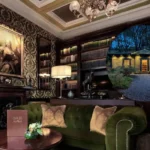
- Shared facilities will include a guest kitchen, bar, lounge areas, breakfast area and outdoor terrace designed to encourage social interaction.
- The Haymarket location gives guests easy access to major attractions such as Edinburgh Castle, the Royal Mile, Princes Street and Murrayfield Stadium.
- The site is positioned as a central base for key events including the Edinburgh Festival Fringe, concerts, sporting fixtures and conferences at the Edinburgh International Conference Centre.
- MEININGER currently operates 37 hotels across 27 European cities and will reach 38 properties with the Edinburgh opening.
- Recent and upcoming developments for the group include projects in Barcelona, Strasbourg, Madrid, Porto and Tel Aviv.
- The UK and Ireland are set to play a growing role in MEININGER’s expansion strategy, with a Dublin property scheduled to join the portfolio in 2028.
- MEININGER CEO Ajit Menon has framed the Edinburgh opening as a “natural next step” for the brand, citing strong year‑round tourism and transport links.
- Menon has stressed that the group’s growth strategy focuses on sustainable, long-term expansion rather than rapid roll‑out of sites.
- The conversion of Osborne House is positioned as a regeneration project that revives a long‑dormant building and supports Edinburgh’s tourism economy.
Edinburgh (Edinburgh Daily) July 16, 2026 – The upcoming opening of MEININGER Hotel Edinburgh Haymarket on 5 August 2026 will represent the company’s first property in both Scotland and the wider UK, extending a portfolio that has, until now, been concentrated across continental Europe. The hotel in Edinburgh’s West End will become the 38th MEININGER location, underlining the brand’s strategy of selecting high‑demand urban destinations with strong tourism fundamentals.
- Key Points
- How has Osborne House been transformed into a modern hospitality destination?
- How will the Haymarket location function as a central base for exploring Edinburgh?
- How does MEININGER’s hybrid hospitality concept work at the new Edinburgh hotel?
- How is the Edinburgh opening connected to MEININGER’s wider European expansion strategy?
- How has MEININGER’s leadership framed the significance of entering Edinburgh’s market?
- How might the new hotel influence tourism capacity and local hospitality in Edinburgh?
- Background to the redevelopment of Osborne House and MEININGER’s European growth
- Prediction: How could this development affect travellers, local businesses and the Edinburgh tourism market?
According to the company’s announcement, the new hotel reinforces MEININGER’s ambition to expand steadily across key European city markets, rather than pursuing rapid, volume‑driven growth. Ajit Menon, CEO of MEININGER Hotels, has described the move into Edinburgh as a “natural next step” for the brand, explicitly linking the decision to the city’s year‑round visitor flows, robust transport connections and diverse mix of leisure, business and event‑driven travel.
How has Osborne House been transformed into a modern hospitality destination?
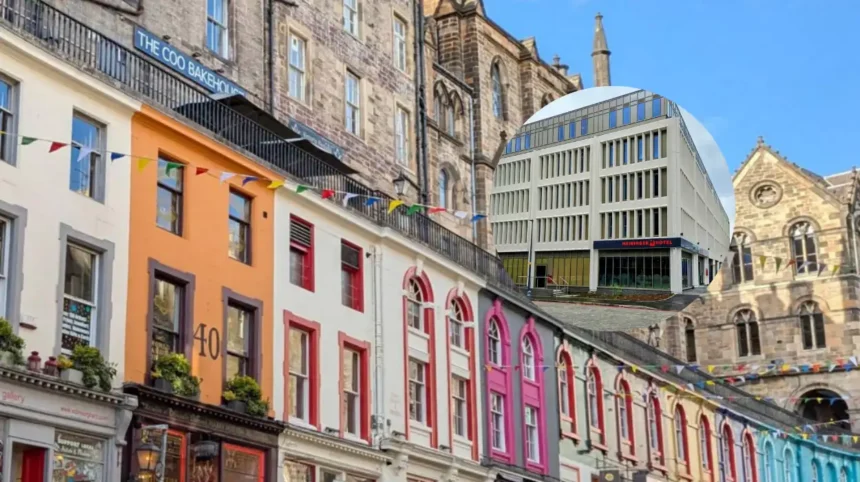
The development centres on a 1970s office building, Osborne House, which had stood empty for several years before being earmarked for conversion. The scheme, brought forward by developer S Harrison and delivered on site by Ogilvie Construction, has turned this long‑vacant commercial block into a modern hospitality hub, complete with a fresh structural extension to increase capacity and adapt the layout to hotel use.
Project details released by MEININGER explain that 157 rooms and a total of 549 beds have been created within the reconfigured building, aligning with the high‑density, multi‑bedroom format that underpins the group’s hybrid model. Beyond the guestrooms, the design has also been tailored to accommodate generous communal zones and operational back‑of‑house spaces needed for group and long‑stay segments, which are central to the brand’s positioning.
How will the Haymarket location function as a central base for exploring Edinburgh?
The hotel is located in Edinburgh’s Haymarket district, in the West End, positioning it close to one of the city’s principal transport interchanges. Haymarket Station, within walking distance of the property, provides rail services across Scotland and to other parts of the UK, as well as tram connections linking the area to Edinburgh Airport and the city centre. This connected setting is intended to align with MEININGER’s “Step Out and Explore” motto by making onward travel straightforward for guests.
From this base, visitors will be able to access many of Edinburgh’s most recognised landmarks and districts, including Edinburgh Castle, the Royal Mile and Princes Street, along with Murrayfield Stadium and the Edinburgh International Conference Centre. The operator also expects the hotel to appeal strongly to visitors attending major events such as the Edinburgh Festival Fringe, large‑scale concerts and sporting fixtures, for whom proximity to both venues and public transport is often a priority.
How does MEININGER’s hybrid hospitality concept work at the new Edinburgh hotel?
MEININGER’s concept is described by the company as “hybrid hospitality”, combining elements of a traditional hotel with those more commonly associated with hostels. At MEININGER Hotel Edinburgh Haymarket, guests will be able to choose between private single and double rooms, larger multi‑bed rooms and individual beds within shared dormitories, allowing price‑sensitive travellers and groups to book configurations that match their budgets and preferences.
These room options are supported by a set of shared amenities designed to foster social interaction and practicality for longer or more independent stays. Facilities will include a guest kitchen, where travellers can prepare their own meals; a bar and lounge areas, intended as informal social spaces; a breakfast area; and an outdoor terrace. This mix is geared towards families, student groups, backpackers, festival‑goers, conference delegates and business travellers who are seeking a blend of affordability, community and comfort.
How is the Edinburgh opening connected to MEININGER’s wider European expansion strategy?
The launch of MEININGER Hotel Edinburgh Haymarket forms part of a broader expansion strategy that has seen the group build out a network of properties across Europe’s major cities. The company currently operates 37 hotels in 27 European cities, and the addition of the Edinburgh site will take the total to 38. Recent and upcoming projects for the brand include developments in Barcelona, Strasbourg, Madrid, Porto and Tel Aviv, underlining a continued focus on established and emerging urban tourism markets.
In comments provided by the company, Ajit Menon has emphasised that this growth is intended to be sustainable and long‑term. Rather than prioritising rapid numerical expansion, MEININGER says it aims to invest in destinations where its hybrid concept can offer what Menon calls “genuine value” to guests and where there is strong long‑term demand. Within this framework, the UK and Ireland are expected to become increasingly important, with a Dublin property already scheduled to join the portfolio in 2028.
How has MEININGER’s leadership framed the significance of entering Edinburgh’s market?
Ajit Menon, CEO of MEININGER Hotels, has provided several key statements framing the strategic rationale for the Edinburgh Haymarket project. In the company’s announcement, Menon said:
“Expanding into Edinburgh is a natural next step for our brand. The city boasts steady year‑round tourism, excellent transport connections and a diverse mix of visitors. We are thrilled to revive a long‑dormant building, enhance the local hospitality offering and support the growth of Edinburgh’s tourism economy.”
In a further comment on MEININGER’s overall direction, Menon added that
“our strategy is based on sustainable, long‑term growth rather than rapid expansion. We continue to invest in destinations where we see long‑term potential and where our hybrid concept can offer genuine value to guests. Edinburgh represents an exciting new chapter for MEININGER and an important step in our future growth plans.”
These statements position the Haymarket hotel as both a commercial opportunity and a contribution to urban regeneration and tourism infrastructure.
How might the new hotel influence tourism capacity and local hospitality in Edinburgh?
By introducing 157 rooms and 549 beds, MEININGER Hotel Edinburgh Haymarket will add a notable volume of additional capacity in a city where accommodation demand can be particularly intense during peak periods. The hybrid configuration, with its mix of private rooms and shared dormitory beds, is likely to appeal to segments that are especially price‑sensitive, such as student groups, festival audiences and backpackers, which could help ease pressure on other budget and mid‑scale providers at times of high demand.
At the same time, the inclusion of communal spaces like a guest kitchen and lounge could attract longer‑staying visitors and group bookings, including school or college trips and conference delegates seeking a balance between cost and comfort. For the local hospitality landscape, the arrival of MEININGER’s first UK property may increase competition in the budget‑to‑midscale bracket while potentially stimulating further investment in the regeneration of older commercial buildings for hotel use, as seen in the transformation of Osborne House.
Background to the redevelopment of Osborne House and MEININGER’s European growth
The building now known as MEININGER Hotel Edinburgh Haymarket began life as a 1970s office block, Osborne House, in Edinburgh’s West End, close to key transport links and business districts. Over time, as office requirements and markets changed, the property fell vacant and remained empty for several years, becoming a long‑dormant site in an otherwise active urban area. The decision to repurpose the building for hospitality use reflects a wider trend of adapting obsolete office stock to meet growing demand for accommodation in popular city destinations.
Developer S Harrison and contractor Ogilvie Construction have overseen the conversion, which has involved both refurbishment of existing structures and the addition of a fresh extension to deliver the capacity and layout needed for a modern hybrid hotel. For MEININGER, the project slots into a European portfolio that has grown steadily across 27 cities, with locations in markets such as Germany, the Netherlands, France, Spain and beyond. The group’s expansions in Barcelona, Strasbourg, Madrid, Porto and Tel Aviv illustrate its focus on diverse, internationally visited cities, while plans for Dublin indicate that the British Isles are being targeted as a strategic region for future growth.
Prediction: How could this development affect travellers, local businesses and the Edinburgh tourism market?
The opening of MEININGER Hotel Edinburgh Haymarket is likely to have several practical impacts on travellers, local businesses and the broader tourism market in Edinburgh, particularly during peak festival and event seasons. For visitors, especially those in groups or on tighter budgets, the added capacity and flexible room configurations should provide more options at competitive price points close to transport hubs and major venues. This may help some travellers secure accommodation within the city who might otherwise have been priced out or forced to stay further afield during busy periods.
For local businesses in the West End and Haymarket areas, including cafés, bars, restaurants and retail outlets, the arrival of a 549‑bed property could translate into increased footfall throughout the year, as a steady flow of guests use nearby services and amenities. Over the medium term, the successful operation of the hotel could encourage further redevelopment of underused commercial buildings around Haymarket for hospitality or mixed‑use schemes, contributing to the ongoing regeneration of the district. At a city‑wide level, the presence of an international hybrid hospitality brand may also broaden Edinburgh’s appeal among younger and more budget‑conscious international travellers, potentially diversifying the visitor profile while supporting the city’s ambition to sustain year‑round tourism.