Key Points
- City of Edinburgh Council may scrap, pause, or alter the northern half of its planned £2 billion to £2.9 billion north-south tram line, which was set to connect Granton with the city centre.
- A public consultation with more than 11,400 responses found 68% opposed using the Roseburn Path walking and cycling route for the line.
- The alternative on-street option through Orchard Brae, Queensferry Road, and Dean Bridge also lacked public support, drawing 44% opposition and 32% support.
- Council officers and political groups now favor building the southern section first to link Princes Street with the Edinburgh BioQuarter and the Royal Infirmary of Edinburgh.
- Transport planners will submit a Strategic Business Case detailing recommendations for the tram network to the Transport and Environment Committee on 10 September 2026.
NORTH EDINBURGH (Edinburgh Daily News) September 1, 2026 – Plans to extend Edinburgh’s light rail network to the north of the capital face potential abandonment or prolonged deferral as local authority leaders consider prioritising the southern leg of the ambitious mass transit project. Following extensive public engagement and financial analysis, the City of Edinburgh Council has been presented with evidence indicating that the proposed northern extension connecting Granton with Princes Street lacks sufficient public backing for its intended geographical alignments, placing the future of the northern corridor in jeopardy.
- Key Points
- Why Is the Northern Tram Extension to Granton Under Threat?
- How Did the Public Consultation Shape the Council’s Options?
- Will the Southern Tram Extension to the BioQuarter Still Proceed?
- When Will City Leaders Make the Final Decision?
- Background of the Development
- Prediction: How Will Shelving the Northern Route Affect Key Stakeholders?
Why Is the Northern Tram Extension to Granton Under Threat?
The proposed expansion of Edinburgh’s tram system was conceived as a multi-billion-pound infrastructure project designed to deliver a continuous north-south arterial line across the city. As initially envisioned, the northern route was planned to link the regeneration zone at Granton Waterfront with the existing network at Haymarket or Princes Street. However, technical difficulties, escalating cost estimates, and significant community pushback regarding route options have forced transport planners to re-evaluate the viability of the northern section.
As detailed in coverage by Alastair Dalton of The Scotsman, the overall cost for the combined north-south scheme has been estimated between £2 billion and £2.9 billion, dependent on final alignment choices. The northern section alone carried substantial financial variables: utilizing the disused railway line along the Roseburn Path was projected to cost between £350 million and £480 million, whereas constructing an on-street alternative via Orchard Brae, Queensferry Road, and the Dean Bridge carried an estimated price tag of £650 million to £850 million.
The divergence in financial scope, combined with community opposition to both primary route alignments, has led council officers to consider severing the project into distinct phases or dropping the northern connection entirely in favour of delivering the southern extension.
How Did the Public Consultation Shape the Council’s Options?
Between August and November 2025, the City of Edinburgh Council conducted a major public consultation gathering feedback on the expansion plans. More than 11,400 members of the public submitted formal responses to the proposals.
The feedback exposed deep community division over the proposed infrastructure corridors:
- The Roseburn Path Option: The proposal to lay tram tracks along the Roseburn Path—a converted former railway line widely used by pedestrians, dog walkers, and cyclists—encountered resistance from active travel groups and local communities. In the public consultation, 68% of respondents opposed using the Roseburn Path corridor, compared to 32% who supported it.
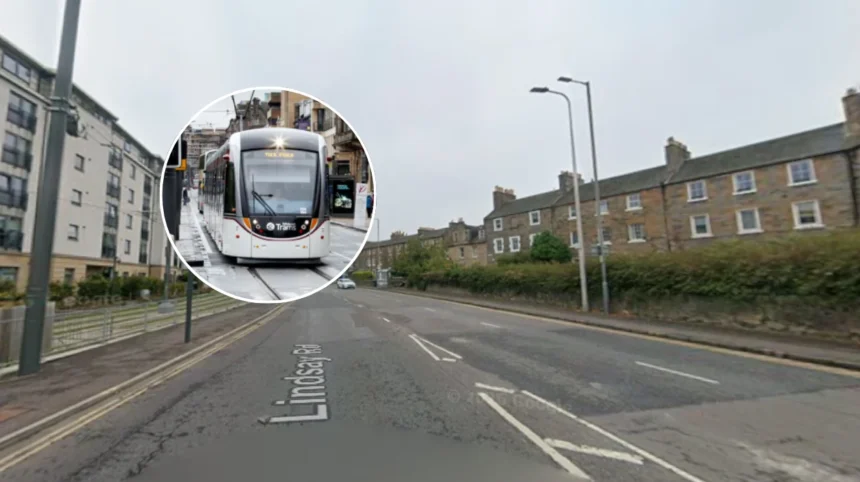
- The Orchard Brae Option: The alternative on-street alignment over Dean Bridge and through Orchard Brae also failed to secure public endorsement. Consultation metrics recorded 44% opposition against 32% support, with many residents raising concerns regarding traffic disruption and historical structural constraints.
As reported by David Bol of The Herald, the council’s Labour administration and opposition councillors, including the SNP group, have increasingly acknowledged the difficulty of proceeding with a route that faces such explicit local resistance. Reporting on the survey outcomes, Councillor Stephen Jenkinson, Convener of the Transport and Environment Committee, described the overall public consultation responses regarding the northern alignment options as “fairly inconclusive” during early committee scrutiny, noting the stark contrast between public feedback and separate representative market research.
Will the Southern Tram Extension to the BioQuarter Still Proceed?
While the northern section faces potential shelving, momentum has consolidated behind the southern arm of the line. Transport planners and elected members have been urged to focus immediate resources on establishing a mass transit link between the city centre and major health and science facilities in the south-east.
Under current proposals, the southern line would branch off from the existing network at Princes Street, traversing North Bridge and South Bridge, passing through Nicolson Street and Newington, before continuing past Cameron Toll to reach the Edinburgh BioQuarter and the Royal Infirmary of Edinburgh. Longer-term regional strategies also envision potential future connections extending into Midlothian and East Lothian.
According to local authority reports, constructing the southern spur first represents a pragmatic approach to expanding public transit capacity. Delivering a direct rail connection to one of Scotland’s primary acute hospitals and a growing research campus addresses existing transport bottlenecks without incurring the alignment conflicts present along the northern corridor.
When Will City Leaders Make the Final Decision?
The formal decision regarding the future of the Granton tram extension rests with the City of Edinburgh Council’s Transport and Environment Committee. A definitive report containing the Strategic Business Case (SBC), prepared in alignment with Transport Scotland guidance, is scheduled to be presented to councillors on 10 September 2026.
The committee will be asked to select one of several strategic pathways:
- Proceeding with the full north-south route as originally planned.
- Formally splitting the project to prioritize and construct the southern line to the Royal Infirmary first while pausing the northern line.
- Substantially altering the proposed alignments for North Edinburgh to identify a new corridor.
- Pausing or terminating the northern scheme indefinitely.
Background of the Development
The origin of Edinburgh’s modern light rail system dates back to the early 2000s when Parliament passed legislation authorizing a multi-line network. The original concept included Line 1 (a circular route serving the northern suburbs and waterfront), Line 2 (connecting the city centre to Edinburgh Airport), and Line 3 (serving the south-eastern corridor).
However, following acute contractual disputes, severe construction delays, and massive budget overruns during the late 2000s, the initial scope was severely truncated. When the original network opened in May 2014, it operated solely as a single line running from Edinburgh Airport to York Place in the city centre.
In June 2023, the council successfully completed Phase 1a’s extension to Newhaven, bringing trams down Leith Walk and along the waterfront. The completion of the Newhaven line delivered operational stability and increased passenger numbers, prompting municipal leaders to reactivate plans for the long-delayed north-south connectivity corridors.
The current proposals to link Granton with the Edinburgh BioQuarter represent an effort to fulfil the original strategic vision of a comprehensive municipal network. Nevertheless, the historical sensitivities surrounding civil engineering works in central Edinburgh, paired with modern environmental preservation debates over green corridors such as the Roseburn Path, continue to influence the progression of major transport infrastructure projects in the capital.
Prediction: How Will Shelving the Northern Route Affect Key Stakeholders?
If the City of Edinburgh Council formally votes to shelve or indefinitely defer the northern tram line to Granton, the impacts will resonate across several distinct demographic and economic sectors:
1. Granton Residents and Housing Developers
The shelving of the northern route directly impacts urban regeneration initiatives in North Edinburgh. Granton Waterfront is currently undergoing a £1.3 billion coastal regeneration project, intended to deliver thousands of new energy-efficient homes, commercial spaces, and cultural facilities. The absence of a high-capacity tram link leaves the district reliant on existing bus services. Residents moving into new housing developments may experience longer commute times to the city centre, while developers who factored direct light-rail accessibility into land valuations and marketing strategies could see reduced commercial interest.
2. Active Travel Advocates and Environmental Groups
For community groups, cyclists, and conservationists who campaigned against the conversion of the Roseburn Path, dropping the northern tram line represents a significant victory. The preservation of the tree-lined green corridor ensures that a key off-road walking and cycling trunk route remains intact. However, environmental campaigners seeking a modal shift from private motor vehicles to zero-emission public transport may view the lack of a rapid transit rail link to North Edinburgh as a missed opportunity to cut overall city car emissions.
3. South Edinburgh Commuters and Healthcare Workers
Conversely, shifting immediate capital investment exclusively to the southern spur provides clear benefits to patients, healthcare staff, and visitors traveling to the Royal Infirmary of Edinburgh and the BioQuarter. Establishing a dedicated transit corridor along the Bridges and Newington corridor will alleviate bus congestion, offering predictable journey times to one of the region’s main medical hubs.
4. Municipal Taxpayers and Local Businesses
From a municipal finance perspective, focusing capital expenditure on a single, less contentious southern phase reduces financial exposure during a period of constrained public budgets. Businesses along Queensferry Road and Orchard Brae will avoid the prolonged construction disruption associated with building complex light-rail infrastructure on narrow historical roadways, although the long-term economic capacity of the city’s transport grid will remain constrained to the north.