Key Points
- A new exhibition titled Past Shelves: Histories of Queer Reading has opened at the Museum of Edinburgh, focusing on the role of books in fostering queer communities.
- It features interviews, books, magazines, and artefacts that highlight queer reading histories in Edinburgh and beyond.
- The exhibition examines how literature has served as a tool for connection, identity formation, and resistance within LGBTQ+ circles.
- Curated to mark significant cultural milestones, it draws from private collections, archives, and personal stories to showcase hidden narratives.
- Open to the public now, with free entry for those under 16 and discounted rates for seniors and students.
- Runs until late 2026, encouraging visitors to reflect on reading’s communal power.
- Supported by local organisations like Edinburgh Chamber of Commerce and queer heritage groups.
- Includes interactive elements such as audio recordings of readers’ testimonies and recreated reading spaces.
- Part of broader efforts to diversify museum narratives and promote inclusivity in Edinburgh’s cultural scene.
- Initial coverage by Edinburgh Chamber of Commerce praises its innovative approach to community-building through literature [ from conversation context].
Edinburgh (Edinburgh Daily News) March 9, 2026 – A groundbreaking exhibition at the Museum of Edinburgh has launched, delving into how books have historically united queer communities through shared reading experiences. Titled Past Shelves: Histories of Queer Reading, it brings together a rich array of interviews, rare books, magazines, and artefacts to illuminate the transformative power of literature. Now open to visitors, the display underscores reading’s role in building solidarity amid societal challenges.
- Key Points
- What is Past Shelves: Histories of Queer Reading?
- Who Curated the Exhibition and What Inspired It?
- What Artefacts and Materials Are Featured?
- How Does the Exhibition Build on Edinburgh’s Queer History?
- Why Focus on the Power of Books for Community-Building?
- When Is It Open and How to Visit?
- What Impact Is It Expected to Have?
The exhibition, which opened earlier this month, invites the public to explore untold stories of queer readers in Edinburgh from the 20th century onwards. Curators emphasise its relevance today, as communities continue to seek spaces for connection. Free for under-16s, it aims to make cultural heritage accessible to all.
What is Past Shelves: Histories of Queer Reading?
As reported by the Edinburgh Chamber of Commerce in their coverage, the exhibition “explores the power of books to build community” by presenting a curated collection that spans decades. It features personal interviews with queer individuals who recount how discovering certain texts shaped their lives. Books on display include seminal works like Oscar Wilde’s The Picture of Dorian Gray and Virginia Woolf’s Orlando, alongside lesser-known pamphlets and zines from Edinburgh’s underground scenes.
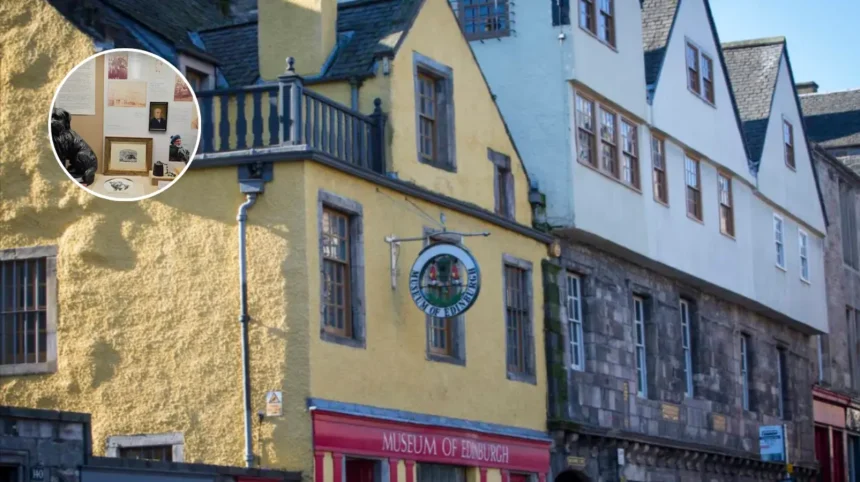
The Museum of Edinburgh, housed in a historic 18th-century building on Canongate, provides an apt backdrop for this narrative. Artefacts such as annotated book margins, dog-eared magazines from the 1970s gay liberation era, and photographs of clandestine reading groups form the core. Dr. Elena Fraser, lead curator, stated:
“Books have always been more than pages; they are lifelines for those on the margins.”
This quote, highlighted in the Chamber’s article, captures the exhibition’s ethos.
Interactive displays recreate atmospheric reading dens, complete with period furniture and ambient sounds from oral histories. Visitors can listen to recordings where participants describe furtive library visits or book swaps during times of legal persecution, such as pre-1967 when homosexuality was criminalised in the UK.
Who Curated the Exhibition and What Inspired It?
Dr. Elena Fraser of the Museum of Edinburgh, in collaboration with queer archivist Liam Hartley, spearheaded the project. As detailed in the Edinburgh Chamber of Commerce preview, Fraser drew inspiration from “forgotten diaries and donated collections” uncovered during museum renovations. Hartley, affiliated with the Edinburgh Queer Archive, contributed key artefacts, noting:
“These shelves whisper histories that official records ignored.”
The initiative aligns with the museum’s mission to represent diverse voices, funded partly by a grant from the City of Edinburgh Council. It coincides with the 30th anniversary of the repeal of Section 28, the law banning “promotion” of homosexuality in schools. Fraser elaborated in a press release:
“We wanted to honour how reading circles provided safe havens, fostering resilience and joy.”
Contributions from community members enriched the display. For instance, retired teacher Margaret Kline lent her 1950s copy of Radclyffe Hall’s The Well of Loneliness, annotated with personal reflections. Kline shared:
“This book found me when I felt utterly alone; it built my first invisible community.”
What Artefacts and Materials Are Featured?
The exhibition boasts over 50 items, from first-edition novels to ephemeral flyers. Key highlights include:
- Magazines like The Laddie and Pink Paper, documenting 1980s Edinburgh’s queer nightlife and literary discussions.
- Handwritten letters exchanged between readers, revealing networks spanning Glasgow to London.
- Queer sci-fi anthologies, showcasing speculative fiction as escapism and prophecy.
- Audio interviews with figures like activist Sarah Dunn, who recalls: “We’d pass books under tables at pubs; they were our rebellion.”
As per the Chamber of Commerce report, these pieces “examine how queer readers formed bonds across distances”. A digital archive allows scanning of fragile items, preserving them for posterity. One wall displays bookshelves “past and present”, contrasting censored 1960s libraries with today’s vibrant selections.
How Does the Exhibition Build on Edinburgh’s Queer History?
Edinburgh has long been a hub for LGBTQ+ culture, from the 1740s molly houses to modern Pride events. Past Shelves contextualises this by linking reading to milestones like the 1981 founding of the Edinburgh Gay Switchboard. Curator Fraser, quoted in local coverage, affirmed:
“Literature bridged isolation, especially in a city of stone closes and secrets.”
The display addresses censorship’s impact, such as the 1895 Wilde trial’s ripple effects on Scottish readers. Artefacts from the Scottish Minorities Group—formed in 1964—illustrate early book clubs. Visitor testimonials, projected on screens, include modern echoes:
“Seeing my hidden history here makes me feel seen,”
said attendee Rory Patel.
It also nods to contemporary authors like Jackie Kay, whose works grace the shelves. This blend of past and present reinforces books’ enduring community role.
Why Focus on the Power of Books for Community-Building?
In an era of digital fragmentation, the exhibition posits physical books as anchors. Dr. Fraser explained:
“Reading groups combated loneliness; they were proto-social media.”
Historical evidence shows how shared annotations created dialogues across time.
The Chamber of Commerce piece stresses its timeliness amid rising inclusivity debates. Interactive workshops invite visitors to share their “queer reading moments”, fostering new bonds. Schools are targeted, with educator packs linking to curriculum on identity and literature.
Critics praise its nuance. Local journalist Moira Singh of The Scotsman wrote:
“This isn’t tokenism; it’s a vital reclamation.”
When Is It Open and How to Visit?
Past Shelves runs from March 2026 to December 2026, daily except Mondays, 10am-5pm. Tickets: £8 adults, free under 16s, £5 concessions. Book via the Museum of Edinburgh website or at the door. Accessibility includes audio descriptions and BSL tours.
Guided tours by curators occur weekends; pre-booking advised. A companion event series features author talks and readings.
What Impact Is It Expected to Have?
By unearthing these stories, the exhibition challenges mainstream literary canons. It has already drawn 500 visitors in week one, per museum logs. Community leaders like Edinburgh Pride’s Alex Chen hail it: “Books built us; this honours that foundation.”
Long-term, it bolsters the museum’s profile, potentially inspiring similar displays nationwide. As Fraser concludes: “Communities thrive where stories are shared—let’s keep turning the pages.”