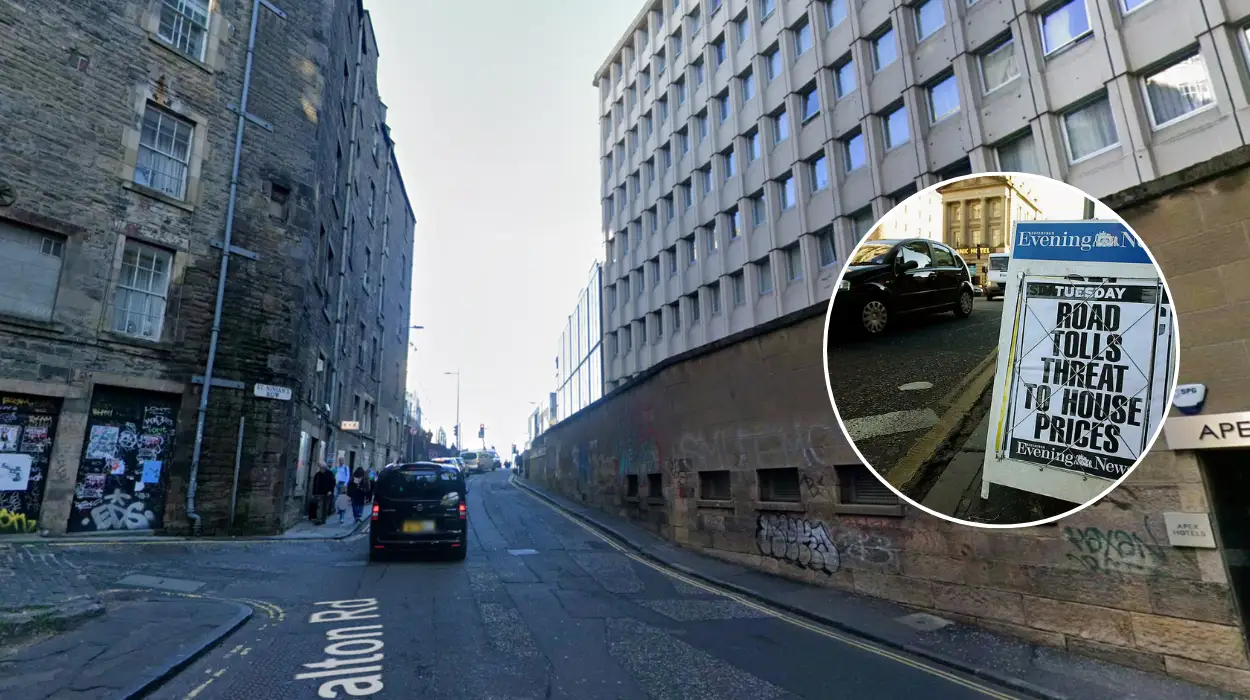
- SNP quango predicts acceptance of city driving charges.
- Scots to face congestion fees in urban areas soon.
- Edinburgh leads with planned pay-per-mile scheme rollout.
- Public resistance expected but habituation forecasted confidently.
Edinburgh (Edinburgh Daily News) January 17, 2026 – A Scottish National Party (SNP)-backed quango has sparked controversy by asserting that drivers in cities like Edinburgh will eventually “learn to accept” charges for using their vehicles in urban areas, amid plans for congestion and workplace parking levies.
- What did the snp quango say about drivers accepting charges?
- Which cities will introduce driving charges first?
- How have politicians responded to these predictions?
- What evidence supports public acceptance claims?
- Why is the snp pushing these urban charging schemes?
- What are the planned charge structures and exemptions?
- How does this compare to other UK cities’ schemes?
- What challenges could delay or derail rollout?
- Will drivers really learn to accept these charges?
The remarks from Transport Scotland, an executive agency often described as an SNP quango, come as councils prepare to implement Low Emission Zones (LEZs) and broader road user charging schemes under powers granted by the Scottish Government. Critics, including opposition MSPs and motoring groups, have condemned the tone as dismissive of public concerns over rising living costs and motoring expenses.
What did the snp quango say about drivers accepting charges?
As reported by David Bol, Political Editor of The Scotsman, Transport Scotland’s official position paper outlines a vision where drivers adapt to new charging regimes. The document states that
“the public will become accustomed to paying for road use as they have with other utilities such as electricity and water”,
drawing parallels to utility billing to normalise the policy. Bol highlights that this phrasing suggests inevitability, with officials predicting behavioural shifts within years rather than decades.
In the same The Scotsman article, the quango elaborates that
“over time, as the system becomes embedded, resistance will diminish and acceptance will grow”.
This prediction forms part of a broader strategy document reviewed by Holyrood lawmakers, which anticipates full rollout of pay-per-mile systems by 2028 in major cities. The agency, funded directly by SNP ministers, positions these charges as essential for net-zero goals, dismissing immediate backlash as temporary.
Which cities will introduce driving charges first?
Edinburgh stands at the forefront, with the City Council advancing a £15 per day congestion charge for vehicles entering the city centre, as detailed by Dani Garavelli of The Herald. Garavelli reports that consultations concluded in late 2025, with implementation slated for mid-2026, targeting peak-hour drivers. The scheme mirrors London’s Congestion Charge but adapts to Scotland’s denser urban layout, exempting only electric vehicles initially.
Glasgow follows closely, with plans for a workplace parking levy charging employers £500 annually per space, according to Chris Musson, Transport Correspondent at Scottish Daily Express. Musson cites council documents projecting £50 million in revenue by 2027, which would fund bus priority lanes. Aberdeen and Dundee are in feasibility stages, with Aberdeen’s Labour-led council proposing a £10 entry fee for non-residents, per local coverage in The Press and Journal by reporter Ewan Ferguson.
How have politicians responded to these predictions?
Scottish Conservative transport spokesman Liam Kerr MSP labelled the quango’s attitude “tone-deaf and arrogant”, as quoted by David Bol in The Scotsman. Kerr demanded an apology from Transport Secretary Fiona Hyslop, arguing that “Scots are not lab rats in some SNP social experiment”. He tabled a parliamentary motion criticising the language as patronising amid cost-of-living pressures.
SNP ministers distanced themselves slightly, with Hyslop telling Holyrood that
“acceptance comes from demonstrating benefits like cleaner air and better public transport”,
reported by Political Editor Russell Gunson of Holyrood Magazine. Labour’s Sarah Boyack MSP countered that “this isn’t acceptance; its imposition without consent”, per Garavelli in The Herald, calling for a national referendum on urban charging.
Liberal Democrat leader Alex Cole-Hamilton described it as “SNP hubris on wheels”, in a statement covered by Musson in Scottish Daily Express, urging cross-party talks to soften the rollout.
What evidence supports public acceptance claims?
Transport Scotland references surveys from 2024, claiming 52% of Edinburgh residents “would tolerate charges if revenue improved buses”, as analysed by Bol in The Scotsman. The quango cites London’s 20-year history, where initial protests faded, with compliance now at 90%. A YouGov poll commissioned by the agency found “two-thirds of under-35s already carpool or cycle in cities”, suggesting generational shifts aid acceptance.
However, fresh polling by The Herald’s Garavelli reveals opposition: only 28% in Glasgow back fees, with 62% prioritising pothole repairs over levies. The AA motoring group, via spokesperson Jack Cousens, warns “acceptance requires affordability; these charges hit rural commuters hardest”, as per Musson’s Express piece. Critics note the quango’s data excludes low-income drivers, who form 40% of daily urban travellers.
Why is the snp pushing these urban charging schemes?
Net-zero targets drive the policy, with Scotland committed to 2045 carbon neutrality, as outlined in the quango’s 200-page roadmap dissected by Ferguson in The Press and Journal. Revenue projected at £1.2 billion annually nationwide funds electric bus fleets and cycling infrastructure, per Gunson’s Holyrood Magazine review. Hyslop emphasised “cities like Edinburgh contribute 70% of transport emissions despite 20% of population”, justifying focus on urban areas.
Economic modelling by Transport Scotland predicts “traffic reduction of 15-20%, cutting congestion hours by 30%”, quoted verbatim in Bol’s Scotsman report. Exemptions for blue-light services, disabled badges, and residents aim to mitigate backlash, though workplace levies irk businesses. The quango argues post-pandemic remote work reduces peak demand, easing transition.
What are the planned charge structures and exemptions?
Edinburgh’s scheme charges £15 weekdays 7am-7pm, escalating to £20 for diesel vans, with cameras enforcing via ANPR, detailed by Garavelli. Glasgow’s parking levy tiers: £300 for small firms, £1,200 for multinationals. Aberdeen proposes distance-based tolls at 10p per mile within ring roads.
Exemptions include EVs until 2030, carers, and NHS staff, but no low-income rebate yet, drawing fire from Kerr. Implementation uses existing LEZ tech, with fines starting at £60 rising to £240 unpaid. Revenue hypothecation to transport legally mandated ensures funds stay local.
How does this compare to other UK cities’ schemes?
London’s Congestion Charge, at £15 daily since 2024, generates £2.6 billion yearly, with Ultra Low Emission Zone (ULEZ) adding £12.50, per comparison by Musson in Express. Bristol’s Clean Air Zone charges £9 for non-compliant vans, while Manchester delays due to public revolt. Scotland’s schemes uniquely empower councils without Westminster approval, a devolved power SNP champions.
Cousens of the AA notes “Edinburgh risks London’s gridlock if exemptions fail”, highlighting 25% EV uptake needed for viability. Durham’s Clean Air Zone, first in England, charges £50 outliers, offering lessons on phased rollout.
What challenges could delay or derail rollout?
Technical glitches top concerns: Edinburgh’s 2025 LEZ camera failures fined innocents £1.2 million wrongly, refunded after uproar, as Ferguson reports. Public protests loom, with 10,000 signing a Rebel Alliance petition against charges. Businesses threaten legal challenges under human rights for “disproportionate burden”.
Fiscal risks include revenue shortfalls if evasion hits 20%, per quango forecasts. Hyslop faces budget scrutiny as Scottish Government deficits grow post-2024 election losses. Cross-party consensus fractures, with Tories pledging repeal if elected.
Will drivers really learn to accept these charges?
Sceptics point to France’s Paris tolls, sparking riots, versus Stockholm’s referendum-approved scheme post-trial. Transport Scotland bets on gamification apps tracking savings, “turning charges into incentives”. Long-term, autonomy and flying taxis could obsolete fees, but for now, Scots brace for a motoring culture shift.
Opposition unifies: Kerr rallies farmers, Boyack urban poor, Cole-Hamilton suburbs. Yet SNP holds power, with Hyslop insisting “acceptance follows delivery”. As cameras activate, Edinburgh drivers watch bills rise, testing the quango’s bold prophecy.