Key Points
- Thousands of pro-Palestinian marchers gathered in Edinburgh to demand an immediate ceasefire, peace, and a stop to arms transfers.
- The Scottish Palestine Solidarity Campaign organized the demonstration with support from allied civil society groups.
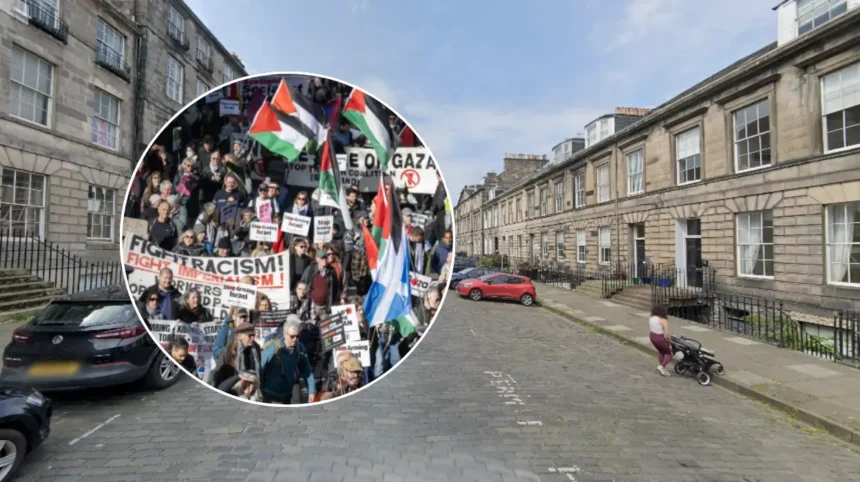
- Demonstrators assembled in the city centre, carrying banners and chanting as they marched through major streets toward civic landmarks.
- Speakers called on the Scottish and UK governments to secure humanitarian aid corridors and enforce international court rulings.
- Police Scotland officers monitored the march, which proceeded peacefully without major incident.
Edinburgh (Edinburgh Daily) October 10, 2026 — Thousands of pro-Palestinian demonstrators have gathered in the centre of Edinburgh for a major national rally to demand an immediate ceasefire and voice solidarity with the people of Gaza.
The event saw crowds assembling from across Scotland to march along key thoroughfares, carrying placards, Palestinian flags, and banners advocating for international intervention and an immediate end to foreign military exports.
Organised primarily by the Scottish Palestine Solidarity Campaign (SPSC), the demonstration drew participants of all ages, including civic activists, trade union delegates, and community representatives.
As reported by Alasdair Ferguson of The National, demonstrators lined the streets in central Edinburgh before marching along designated avenues, calling on both the UK Government and international authorities to enforce compliance with humanitarian standards and international court rulings.
Why Did Thousands Gather to Demonstrate Across Edinburgh?
The central motivation for the assembly was to call for a permanent end to hostilities and to demand that political leaders take concrete legislative and diplomatic action. Organisers highlighted ongoing concerns regarding access to essential medical aid, food, and clean water across affected territories.
As reported by Lauren Gilmour of The Independent, one speaker at a similar solidarity rally remarked that “We want justice, we want peace and we want freedom. I thank Scotland for standing in solidarity, unconditional solidarity with my people.”
Police officers on motorbikes and foot patrols facilitated traffic management as the procession navigated through central Edinburgh streets. Participants displayed placards bearing messages that urged political representatives in Holyrood and Westminster to cut military trade ties and increase diplomatic pressure on international powers.
“We want justice, we want peace and we want freedom. I thank Scotland for standing in solidarity, unconditional solidarity with my people.”
What Demands Were Issued by Organisers to Political Leaders?
During the formal speeches following the procession, representatives from civil society bodies and human rights organisations addressed the gathered crowd. Representatives focused on calling for an immediate halt to British military support and weapons transfers, maintaining that global compliance with international human rights standards is required.
As reported by The Guardian, SPSC spokesperson Mick Napier stated that “Israel needs to act on last week’s Order of the World Court, which requires that it take measures to prevent further genocide, and stop preventing aid getting to the 2 million people of Gaza. The only way that is possible is with an immediate ceasefire, which is what we are calling for.”
“Israel needs to act on last week’s Order of the World Court, which requires that it take measures to prevent further genocide, and stop preventing aid getting to the 2 million people of Gaza. The only way that is possible is with an immediate ceasefire, which is what we are calling for.”
The organisers further urged the Scottish Government to continue using its distinct political voice to champion humanitarian aid access and advocate for refugees seeking protection.
Background to the Protests in Scotland
Large-scale demonstrations organised by the Scottish Palestine Solidarity Campaign and coalition partners have taken place regularly across major Scottish cities, including Edinburgh and Glasgow, over recent years. SPSC was initially formed in September 2000 during the early stages of the Second Intifada to coordinate solidarity movements within Scotland.
The organization has repeatedly campaigned for Scottish local government pension funds and institutions to divest from companies involved in weapons manufacturing or military supply chains linked to conflict zones.
At Holyrood, members of the Scottish Parliament have previously debated motion proposals regarding international ceasefires and humanitarian access, creating a focal point for activist groups seeking to influence UK-wide foreign policy positions from Edinburgh.
What Is the Future Impact for Political Bodies and Local Communities?
This development directly affects several key groups, including Scottish political representatives, local law enforcement agencies, civic campaigners, and local residents within central Edinburgh:
- Impact on Elected Representatives: Members of Parliament in Westminster and Members of the Scottish Parliament in Holyrood face continued constituent pressure to debate motion proposals, review trade frameworks, and address arms procurement policies.
- Impact on Local Residents and Businesses: Ongoing city-centre demonstrations require continued coordination with local transport networks and Edinburgh City Council to minimise transit disruptions while maintaining public rights of assembly.
- Impact on Civil Society Groups: Pro-Palestinian advocacy networks and human rights campaigns in Scotland are likely to maintain high levels of public engagement, scheduling further actions, petition drives, and educational seminars aimed at divestment campaigns.