Key Points
- A teenager was sentenced to a Community Payback Order after throwing a brick at a police officer and injuring them.
- Emergency services were responding to a disturbance in the area when the attack occurred.
- The judge opted against a custodial sentence, ordering unpaid community work, social work supervision, and attendance at rehabilitation programs instead.
- Police federation representatives said physical violence against frontline officers carries serious risks and requires accountable judicial consequences.
- Legal officials stated the order forces the offender to make direct restitution locally while remaining under regulatory oversight.
Glasgow (Edinburgh Daily) October 27, 2026 — A teenager who injured a police officer after throwing a brick during a violent public confrontation has avoided immediate imprisonment and has been handed a Community Payback Order by the court.
- Key Points
- What Happened During the Incident Leading to the Arrest?
- What Were the Specific Terms of the Community Payback Order?
- How Have Police and Legal Authorities Reacted to the Ruling?
- Background of the Particular Development
- Prediction: How Will This Development Affect Local Communities and Emergency Services?
What Happened During the Incident Leading to the Arrest?
As reported by court reporters covering the regional sheriff court proceedings, emergency services were called to the scene following reports of a disturbance in the local area. Upon arrival, officers attempted to clear the site and ensure public safety.
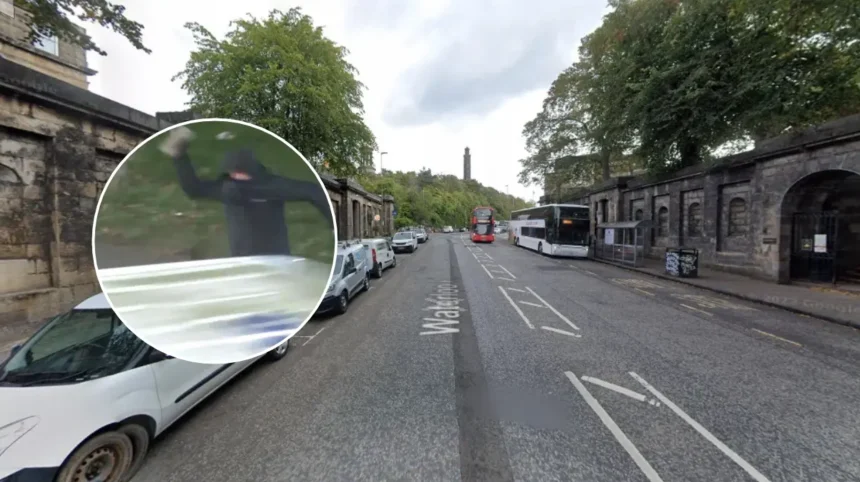
During the ensuing confrontation, the teenage defendant picked up a heavy masonry brick and hurled it towards law enforcement personnel. The missile struck an officer directly, resulting in immediate physical injury that required prompt medical assistance from paramedics on site.
The teenager was subsequently detained by responding units, formally arrested, and charged with assault to injury involving an emergency worker executing their lawful duties.
What Were the Specific Terms of the Community Payback Order?
During the sentencing hearing, the presiding judge evaluated the pre-sentencing background reports alongside the defense council’s arguments regarding the perpetrator’s age and lack of extensive criminal history.
As detailed by legal correspondents attending the hearing, the court determined that a non-custodial alternative would provide an opportunity for rehabilitation while still penalising the offender for the severity of the offense.
Under the conditions of the Community Payback Order, the teenager must complete a designated number of unpaid work hours in the local community. Additionally, the individual has been placed under active supervision by social service officers for a specified duration and must comply with attendance requirements for educational and behavioural rehabilitation programs.
How Have Police and Legal Authorities Reacted to the Ruling?
As reported by senior crime correspondents, police federation representatives have reiterated that physical attacks directed at emergency personnel remain entirely unacceptable regardless of the perpetrator’s age.
“Police officers face unpredictable risks daily, and any physical violence directed toward emergency responders must carry serious, accountable judicial consequences,” stated police federation spokespersons during media briefings following the hearing.
Representatives from the judicial services countered that Community Payback Orders are designed to balance punitive measures with strict oversight, ensuring young offenders face constructive consequences that discourage future reoffending.
“The framework of a Community Payback Order ensures strict accountability, requiring the offender to make direct restitution to the local community while under close regulatory supervision,” noted court officials after the sentencing was formally delivered.
Background of the Particular Development
In recent years, judicial frameworks across Scotland and the wider United Kingdom have placed heightened focus on how non-custodial sentences are administered for young offenders involved in public order offenses.
The implementation of Community Payback Orders was established as a statutory alternative to short-term prison sentences, aiming to reduce recidivism by integrating supervised community work, rehabilitation, and strict behavioral monitoring.
At the same time, legislation governing offenses against emergency workers emphasizes protecting frontline personnel. Courts frequently weigh public protection against youth rehabilitation policies when determining whether custodial sentences or community-based disposals are appropriate.
Prediction: How Will This Development Affect Local Communities and Emergency Services?
This judicial decision is expected to influence how future public order cases involving young offenders are managed by prosecutors and legal teams.
For frontline police officers, community-based sentences for direct physical assaults may reinforce ongoing debates regarding deterrence and workplace protection standards. Police unions may continue advocating for stricter sentencing guidelines when officers sustain injuries on duty.
For local communities, the implementation of the Community Payback Order will direct supervised labor toward neighborhood improvement projects. Furthermore, social service teams will monitor the youth’s compliance, with any failure to meet order requirements risking immediate re-referral to court for custodial consideration.