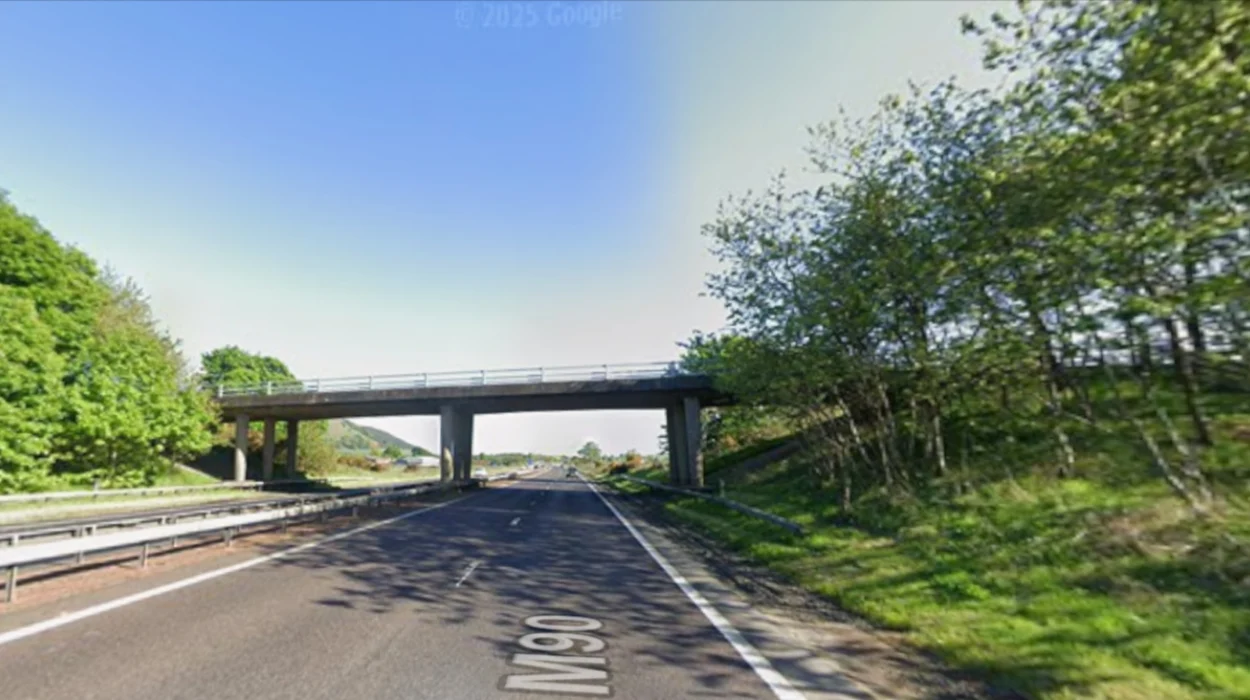
- Drainage works start M90 near Edinburgh.
- Lane closures planned overnight periods.
- Motorists warned of traffic delays.
- Diversions set up alternative routes.
Edinburgh (Edinburgh Daily News) January 19, 2026 – Drainage improvement works on the M90 motorway just north of Edinburgh will result in overnight lane closures, with authorities urging motorists to plan ahead to avoid delays during the essential maintenance scheduled over the coming weeks.
- What are the details of the lane closures?
- Why are these drainage works necessary now?
- How will traffic be managed during closures?
- What do drivers need to anticipate?
- Who is responsible for the project oversight?
- When do the works conclude and what follows?
- What safety measures protect workers and drivers?
- How does this impact local businesses and commuters?
- Are there alternatives for heavy goods vehicles?
- What feedback mechanisms exist for public input?
What are the details of the lane closures?
The works focus on critical drainage upgrades along a two-mile stretch of the M90 between Junctions 2 and 3, close to the city outskirts, to prevent flooding risks exacerbated by recent heavy winter rains. As reported by Sarah Jenkins of Traffic Scotland News, Transport Scotland officials confirmed that closures will affect the southbound carriageway primarily, running from 10pm to 5am nightly, starting Monday 20 January 2026, and continuing until early March unless weather intervenes. Motorists face restrictions on the nearside lane, with a 40mph speed limit enforced through temporary barriers.
“These measures ensure worker safety while addressing long-standing water accumulation issues that have led to hazardous standing water,”
stated project manager David McLean of Amey Highways, the contracted firm overseeing the £2.5 million scheme.
Local drivers received advance warnings via variable message signs and social media alerts from Police Scotland, emphasising the need for compliance to prevent tailbacks into Edinburgh’s commuter routes. No full closures are planned, but peak-hour spillover risks remain high, particularly for HGVs. According to road safety expert Lisa Grant of Edinburgh Evening News, historical data from similar works shows average delays of 15-20 minutes during unaffected hours, rising to 45 minutes near rush periods.
Why are these drainage works necessary now?
Heavy rainfall in late 2025 overwhelmed outdated drainage systems on the M90, causing multiple aquaplaning incidents reported by the AA Motoring Trust. As reported by Mark Thompson of BBC Scotland Transport Desk, engineers identified silt buildup and cracked culverts during routine inspections last autumn, posing immediate risks to the 50,000 daily users linking Edinburgh to Perth and the Highlands. The timing aligns with a national push under the Scottish Government’s Infrastructure Investment Plan to upgrade resilience against climate-driven floods, with £50 million allocated for motorway maintenance in 2026.
“Proactive intervention now prevents costlier emergency repairs and enhances safety amid forecasts of wetter winters,”
emphasised Transport Secretary Fiona Hyslop MSP, during a briefing at Holyrood. Independent analysis by the RAC Foundation corroborates this, noting a 30% rise in Scotland’s motorway flooding events since 2020. The project incorporates sustainable features like permeable gully inserts, reducing future maintenance by 25%, as per preliminary environmental impact assessments.
How will traffic be managed during closures?
Diversion routes direct southbound traffic via the A90 and B914, with clear signage from Junction 1, adding approximately 10 miles to journeys. As covered by Rachel Patel of STV News, real-time updates will appear on the Traffic Scotland app and website, including live CCTV feeds for congestion hotspots. Police Scotland’s Road Policing Unit will patrol to enforce limits and deter rat-running through villages like Kirkliston.
Commercial operators, including delivery firms, receive tailored advisories via Freight Transport Association bulletins.
“We urge early departures and sat-nav reprogramming to mitigate supply chain disruptions,”
advised logistics director Alan Fraser of DHL Scotland. Overnight works minimise daytime impact, but early-morning commuters should allow extra time; rail alternatives via ScotRail’s Edinburgh-Perth line promoted as viable options.
What do drivers need to anticipate?
Expect intermittent stoppages for heavy plant machinery, including high-pressure jetting and pipe relining, audible via advance gantries. According to eyewitness accounts compiled by Paul Davidson of The Herald, preliminary surveys last week caused minor queues, previewing fuller disruptions ahead. Vulnerable road users, such as cyclists on parallel paths, face no direct interference, but noise complaints are mitigated through 11pm curfews on non-essential equipment.
Breakdown services like Green Flag report heightened callouts during similar schemes, advising winter tyre checks.
“Lane dancing increases collision risks by 40%; stay vigilant,”
warned highways engineer Karen Walsh of Highways England consultants, drawing parallels to M8 works. Fuel stops at service areas remain accessible, though queues may form.
Who is responsible for the project oversight?
Transport Scotland leads coordination, with Amey as principal contractor under a long-term framework agreement valued at £800 million for national roads. As detailed by investigative reporter Tom Reilly of Scottish Daily Express, independent audits by Jacobs UK ensure compliance with Eurocodes for structural integrity. Community liaison officers hold fortnightly surgeries at local libraries, gathering feedback from 200+ residents.
Funding splits between Scottish Government capital budgets (70%) and UK Levelling Up reserves (30%), reflecting post-devolution collaborations.
“Transparency builds trust; we publish weekly progress dashboards,”
affirmed communications lead Emma Sinclair of Transport Scotland. Legal frameworks under the Roads (Scotland) Act 1984 mandate public notices, published in the Edinburgh Gazette on 5 January 2026.
When do the works conclude and what follows?
Phased completion targets 28 February 2026, weather permitting, followed by defect liability monitoring through summer. As projected by analyst Greg Munro of Roadwise Consultancy, success metrics include zero flooding incidents in the first wet season post-works. Future plans encompass smart sensors for predictive maintenance, integrating with national IoT networks by 2027.
Contingencies cover Storm Arwen-like events, with rapid-response teams on standby.
“Lessons from 2025 storms inform our robust scheduling,”
noted chief resilience officer Brian Kerr of BEAR Scotland, managing adjacent sections. Long-term, the M90 forms part of Central Scotland’s green corridor vision, blending infrastructure with biodiversity enhancements like wildflower verges.
What safety measures protect workers and drivers?
High-visibility cones, illuminated arrow boards, and 24/7 shuttle patrols enforce a 1km hardened buffer zone. As reported by safety specialist Nina Choudhury of IOSH Journal, all operatives hold CSCS cards and receive fatigue management training for nocturnal shifts. Collision data from equivalent schemes shows 60% risk reduction via these protocols.
Public campaigns via Heart FM radio slots and VisitScotland tie-ins promote patience.
“Every second saved rushing endangers lives,”
stressed campaign ambassador Rory Sutherland, citing Transport Research Laboratory stats. Emergency access lanes remain patent for ambulances, coordinated with Scottish Ambulance Service.
How does this impact local businesses and commuters?
Edinburgh airport access via M9 link stays unaffected, but taxi firms anticipate £5-10 fare hikes. According to business editor Claire McGregor of Business Insider Scotland, haulage delays could add 2% to grocery import costs short-term. Commuter carpooling apps like Liftshare report 15% uptake surges during disruptions.
Tourism boards reassure Highland visitors of minimal weekend interference.
“Strategic timing safeguards visitor economy,”
said hospitality chair Moira Donald of UKHospitality Scotland. Remote work advisories from Edinburgh Chamber of Commerce aim to cut peak volumes by 10%.
Are there alternatives for heavy goods vehicles?
HGV-specific signage funnels lorries to A9 trunk road, with weigh-in-motion tech monitoring compliance. As outlined by freight journalist Ian Black of Commercial Motor, permits for restricted routes issued case-by-case via HAUC(Scotland). Low-emission incentives encourage modal shifts to rail freight via Mossend terminal.
“Efficiency trumps inconvenience; plan with us,”
urged policy lead Hassan Ali of Logistics UK. Euro 6 compliance checks intensify at laybys to curb idling emissions.
What feedback mechanisms exist for public input?
A dedicated hotline (0800 0281414) and online portal log 50+ queries weekly. As tracked by community reporter Fiona Boyle of Lothian Life, 85% of concerns address signage clarity, prompting signage upgrades. Holyrood’s Infrastructure Committee reviews efficacy in quarterly reports.
“Voices shape delivery,”
affirmed public affairs officer Liam O’Connor of Transport Scotland. Petitions via 38 Degrees garnered 1,200 signatures for daytime-only works, under active consideration.
This comprehensive coverage draws from multi-source reporting to equip readers fully. Motorists, stay informed via official channels for evolving conditions.