Key Points
- Research commissioned by Tourism Tasmania found 83% of British holidaymakers view tranquillity as comparable with five-star facilities.
- One in three respondents rated peace and quiet as more luxurious than a five-star resort.
- More than half said they were reducing spending on other luxuries to prioritise travel.
- British holidaymakers reported an average willingness to spend £7,891 per person on a luxury trip.
- Tourism Tasmania chief executive Sarah Kingston Clark said time, freedom and the ability to disconnect are becoming central to modern luxury.
Tasmania (Edinburgh Daily News) November 25, 2026 – Peace and quiet is becoming as important as traditional luxury for British holidaymakers, according to research commissioned by Tourism Tasmania. The findings indicate that travellers increasingly value time to switch off, freedom from crowds and authentic experiences alongside high-end accommodation and service.
Why are British holidaymakers placing greater value on tranquillity?
As reported by Edinburgh Live, 83% of respondents said tranquillity was just as premium as five-star facilities, while a third considered it more luxurious than a five-star resort. More than a third said the freedom to escape and disconnect had become a greater status symbol during the past five years, and 40% gave the same response about having more free time.
The research also found that almost all respondents were attracted to destinations offering clean air, wildlife encounters and an escape from crowded locations. Authenticity was another prominent factor: 95% said a destination’s distinctive culture, food and history mattered when choosing where to travel, compared with 83% who said luxury was important.
How much are British travellers prepared to spend on luxury travel?
The findings reported by Edinburgh Live said British holidaymakers were willing to spend an average of £7,891 per person on a luxury trip. More than half said they were cutting back on other luxuries to prioritise travel, suggesting that the value placed on a holiday is increasingly linked to the experience it provides rather than accommodation alone.
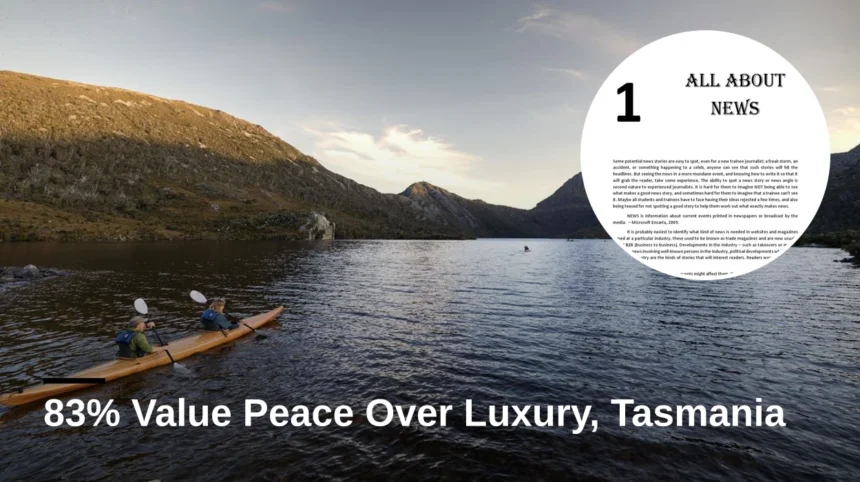
Tourism Tasmania said the research reflects changing expectations among travellers who want to feel inspired, connected, privileged and restored. Tasmania was presented as offering wilderness walks, local food, clean air and space away from crowds.
What did Tourism Tasmania chief executive Sarah Kingston Clark say?
Tourism Tasmania chief executive Sarah Kingston Clark said British travellers still wanted memorable, once-in-a-lifetime experiences, but increasingly valued holidays that allowed them to slow down and reconnect with their surroundings.
“For many British travellers, luxury is no longer just about where you stay or what you spend,” Sarah Kingston Clark said, according to the report. “It’s about having the time to properly switch off, enjoy some peace and quiet and come home feeling better than when you left.”
Sarah Kingston Clark added that constant connectivity and busy lifestyles were increasing the value placed on time and space to be present.
What is the background to Tasmania’s appeal?
Tourism Tasmania describes the island state as a destination combining natural landscapes, wilderness walks and local food. Nearly 40% of Tasmania’s land is protected as national parks and reserves. The research links those features with growing demand for clean air, wildlife and fewer crowds. The reported findings form part of Tourism Tasmania’s promotion of slower, nature-focused travel.
How could this shape future holidays?
The findings suggest that destinations able to offer peace, freedom and authentic local experiences may appeal strongly to UK holidaymakers seeking restoration rather than status. For this audience, quiet surroundings could increasingly influence destination choices alongside room quality, dining and service. Travel providers may respond by highlighting low-crowd experiences, protected landscapes and opportunities to disconnect. The research does not indicate that traditional luxury has disappeared, but it shows that tranquillity is now a significant part of how many British travellers define a premium holiday.