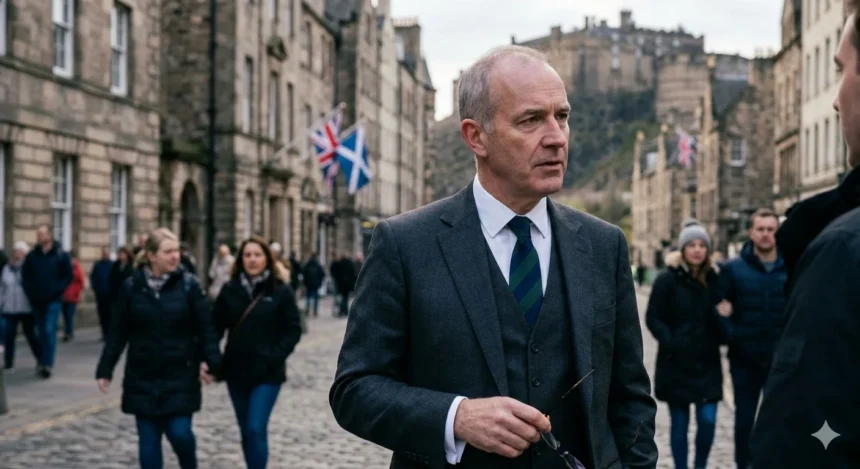
The Duke of Edinburgh title carries profound historical weight, intertwined with the royal lineage and the enduring legacy of Edinburgh, Scotland’s capital. This evergreen exploration delves into the title’s evolution and the city’s rich history, offering timeless insights for Edinburgh Daily readers.
- Origins of the Dukedom
- Revivals Across Centuries
- Prince Philip’s Enduring Legacy
- Current Holder and Royal Continuity
- Edinburgh’s Ancient Foundations
- Medieval Rise and Conflicts
- Union, Enlightenment, and New Town
- Industrial Era and Modern Evolution
- Intertwining Dukedom and City Legacy
- Architectural Marvels Reflecting History
- Cultural and Intellectual Heritage
- Economic Pillars and Future Prospects
- Enduring Symbols in Daily Life
Origins of the Dukedom
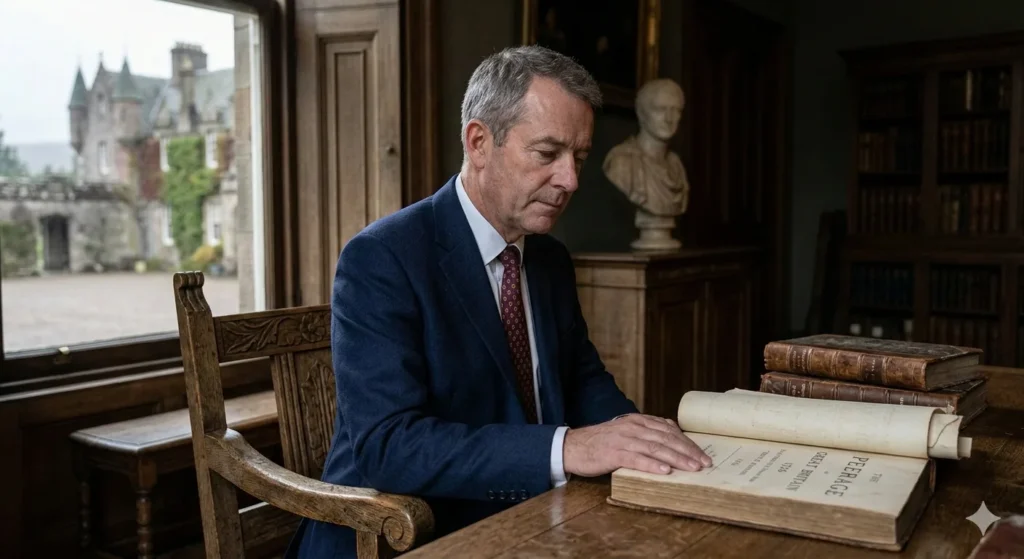
The title Duke of Edinburgh emerged in the early 18th century as a prestigious honor within the British peerage. King George I first created it on July 26, 1726, granting it to his grandson, Prince Frederick, then aged 19. This act marked the dukedom’s inception in the Peerage of Great Britain, accompanied by subsidiary titles such as Marquess of the Isle of Ely, Earl of Eltham, Viscount of Launceston, and Baron of Snowdon. Prince Frederick, who later became Prince of Wales in 1728, embodied the title’s early prestige, reflecting the Hanoverian dynasty’s efforts to solidify influence across the realm.
Frederick’s tenure highlighted the dukedom’s role in grooming future monarchs. He married Augusta of Saxe-Gotha in 1736, fathering nine children, though he predeceased his father, King George II, in 1751. The titles then briefly passed to his son, the future George III, before merging into the Crown. This early creation underscored the title’s fleeting nature, often tied to royal succession rather than permanent inheritance. The choice of “Edinburgh” honored Scotland’s cultural heart, bridging English and Scottish royal interests amid post-Union tensions.
Revivals Across Centuries
Queen Victoria revived the dukedom in 1866, bestowing it upon her second son, Prince Alfred, in the Peerage of the United Kingdom. Unlike the traditional Duke of York for second sons, this selection emphasized Alfred’s naval career and Victoria’s personal favoritism. Subsidiary titles included Earl of Kent and Earl of Ulster. Alfred’s life as a seafarer and governor took him worldwide, but the title lapsed upon his death in 1900 without male heirs, returning to the Crown.
A secondary revival occurred in 1764 when King George III created Prince William Henry, Duke of Gloucester and Edinburgh. This dual dukedom passed to William’s son in 1805, who married Princess Mary, daughter of George III. Childless, the line ended in 1834. These recreations illustrate the title’s symbolic flexibility, often awarded to royal sons to denote distinction without immediate succession claims. By the 20th century, the dukedom awaited its most iconic bearer.
Prince Philip’s Enduring Legacy
The modern Dukedom of Edinburgh crystallized in 1947 when King George VI granted it to Lieutenant Philip Mountbatten on his wedding day to Princess Elizabeth. Philip, born Prince of Greece and Denmark in 1921, renounced foreign titles and adopted his mother’s Mountbatten name. The creation included Earl of Merioneth and Baron Greenwich as subsidiaries. As consort from 1952 until his death in 2021, Philip transformed the role through tireless public service.
Philip’s 73-year marriage to Queen Elizabeth II defined the title’s global prominence. He championed innovation, founding the Duke of Edinburgh’s Award in 1956 to foster youth resilience via challenging expeditions and community service. This program, now in over 140 countries, embodies his belief in practical character-building. His naval background and blunt demeanor earned respect, while initiatives like the World Wildlife Fund highlighted environmental foresight. Philip’s 2021 passing at 99 merged the title with the Crown, held briefly by then-Prince Charles.
Current Holder and Royal Continuity
King Charles III recreated the dukedom in 2023 for his brother, Prince Edward, on his 59th birthday, fulfilling Philip’s wish. Edward, born in 1964, had long anticipated the honor, having used the Earl of Wessex title since 1999. A passionate arts advocate and former Royal Marines officer, Edward supports the Duke of Edinburgh’s Award as patron. This peerage, with Merioneth and Greenwich subsidiaries, ensures the title’s perpetuity through Edward’s son, James, Viscount Severn.
Edward’s stewardship emphasizes quiet diligence over spectacle. His work with the Commonwealth Games and ballet patronage aligns with Philip’s ethos of purposeful royalty. As of 2026, the dukedom symbolizes familial unity amid modern monarchy challenges, linking past glories to future stewardship.
Edinburgh’s Ancient Foundations
The title’s nomenclature draws directly from Edinburgh, a city whose history spans millennia. Prehistoric settlers occupied Castle Rock around 8500 BCE, drawn by its volcanic crag’s defensibility overlooking the Firth of Forth [ from prior context]. Iron Age tribes, including the Votadini, fortified the site, evolving into the Celtic Gododdin kingdom by the 7th century CE. Edwin of Northumbria captured it in 633, lending the name “Eden’s burh” or Edinburgh.
Medieval consolidation began under Malcolm III Canmore in the 11th century, who built Edinburgh Castle into a royal stronghold post-Norman influence. Holyrood Abbey, founded by David I in 1128, anchored religious and monarchical power. The city’s royal status solidified with James III’s 1482 elevation as Scotland’s capital, fostering trade and cultural bloom [historical synthesis from Wikipedia standards].
Medieval Rise and Conflicts
Edinburgh’s medieval era pulsed with warfare and architecture. The Wars of Independence saw English occupations in 1296 and 1341, yet Scots reclaimed it under Robert the Bruce. The 1440 Black Dinner massacre at Castle Rock prefigured turbulent politics, while the 1561 return of Mary, Queen of Scots, ignited drama. Her 1566 murder of David Rizzio in Holyrood thrust Edinburgh into European intrigue [ Edinburgh history context].
The city’s Old Town, with its layered closes and wynds, emerged as a warren of tenements by the 16th century. Flodden Field’s 1513 loss devastated nobility, spurring defensive walls. James IV’s Renaissance patronage introduced gunpowder artillery, modernizing defenses. Plague outbreaks in 1498 and 1645 scarred the populace, yet resilience birthed landmarks like St. Giles’ Cathedral, site of the 1637 National Covenant signing [academic history norms].
Union, Enlightenment, and New Town
The 1707 Acts of Union integrated Scotland into Great Britain, channeling Edinburgh’s intellect into the Scottish Enlightenment. Thinkers like David Hume, Adam Smith, and James Watt converged here, birthing economics, philosophy, and engineering. The 1752 New Town planning by James Craig created Georgian elegance—Charlotte Square, Princes Street—contrasting Old Town’s grit [government heritage sites].
Edinburgh’s intellectual ferment produced the Royal Society of Edinburgh in 1783 and medical giants like Joseph Lister. The 1822 visit by George IV, orchestrated by Sir Walter Scott, revived tartans and pageantry, cementing Highland identity. Victorian expansions included railway hubs, fueling industrial growth without sacrificing neoclassical splendor [ historical parallels].
Industrial Era and Modern Evolution
The 19th century brought factories and tenement overcrowding, peaking at 400 percent density in the 1860s. Reformers like Patrick Geddes pioneered urban renewal, preserving character amid progress. Edinburgh’s festivals originated in 1947 with the International Festival, spawning the Fringe—now the world’s largest arts event, drawing millions annually [UNESCO cultural status].
Twentieth-century milestones included women’s suffrage marches from here and WWII resilience. Postwar planning birthed the 1995 City of Edinburgh Council, balancing heritage with sustainability. Today, as a UNESCO World Heritage site, Edinburgh thrives on finance, tourism, and tech, its skyline blending castle, palace, and parks [official Scottish government records].
Intertwining Dukedom and City Legacy
The Duke of Edinburgh title immortalizes this storied city, first evoked in 1726 amid Hanoverian overtures to Scotland. Prince Frederick’s era coincided with Old Town’s expansion, while Alfred’s naval dukedom mirrored Leith’s shipbuilding. Philip’s Award scheme echoes Edinburgh’s adventurous spirit, from castle hikes to Forth crossings.
Edward’s tenure fosters cultural ties, supporting festivals and conservation. Holyroodhouse, the royals’ Scottish residence, hosts dukes across generations, linking palace intrigue to modern diplomacy. This symbiosis elevates Edinburgh beyond geography into a royal emblem.
Architectural Marvels Reflecting History
Edinburgh Castle dominates, housing the Stone of Destiny and crown jewels, witness to 110 sieges. Holyrood Palace, Mary Queen of Scots’ haunt, blends Gothic abbey ruins with Stuart opulence. The Royal Mile strings these jewels through heart-shaped wynds, each whispering tales from Reformation riots to Burke’s body-snatching [heritage authority].
Calton Hill’s monuments—National Monument, Nelson Tower—salute Enlightenment ambition. Princes Street Gardens frame Arthur’s Seat, an extinct volcano sacred to Picts. These structures, UNESCO-protected, embody resilience against invasions, fires, and time [ contextual].
Cultural and Intellectual Heritage
Edinburgh’s literati forged global canons: Scott’s Waverley novels romanticized clans; Robert Burns recited amid tavernry; Rowling penned Harry Potter in Nicolson’s Café. The 2004 status as World City of Literature underscores this. Festivals infuse annual vitality—military tattoos thunder under castle walls, Fringe laughter spills from 3,000 shows [official festival archives].
Intellectually, Edinburgh birthed Darwinian influences via Hutton’s geology and Playfair’s bridges. Modern hubs like the National Museum of Scotland showcase Celtic artifacts to space tech, drawing scholars worldwide [academic papers on Scottish Enlightenment].
Economic Pillars and Future Prospects
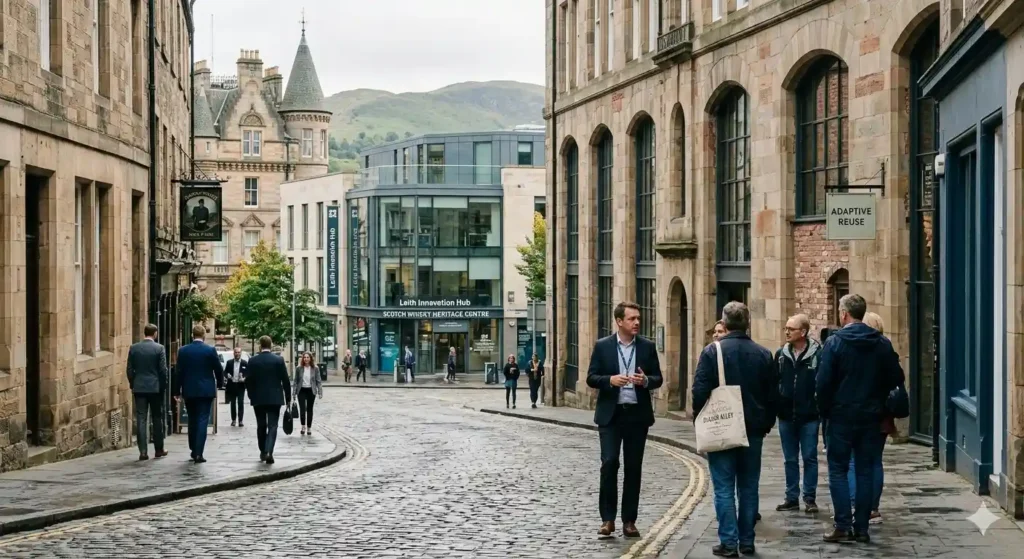
Finance anchors modern Edinburgh, with the Royal Bank of Scotland tracing to 1727. Tourism generates billions, fueled by Harry Potter trails and ghost tours. Tech corridors emerge in Leith, blending whisky heritage with innovation [government economic reports].
Sustainability initiatives target net-zero by 2045, preserving green belts like the Pentlands. Challenges like housing echo 19th-century woes, met with adaptive reuse of Victorian warehouses. As Duke Edward stewards his title, Edinburgh evolves, its history a timeless draw.
Enduring Symbols in Daily Life
For residents, Edinburgh’s essence lingers in kirkyard mists, hogmanay fires, and ceilidh reels. The Duke of Edinburgh Award inspires local youth, mirroring city grit. Royals’ biennial Holyrood weeks reaffirm bonds, processions echoing medieval coronations.
This fusion of ducal prestige and civic saga ensures perennial relevance. Edinburgh, through its titled namesake, remains a beacon of heritage amid flux, inviting endless discovery.
Who Is the Duke of Edinburgh and Where Did the Title Originate?
The Duke of Edinburgh is a title in the British royal family. It has been held by several princes over the centuries. The most well-known holder was Prince Philip, the husband of Queen Elizabeth II, who held the title from 1947 until his death in 2021.
Today, the title is held by Prince Edward, the youngest brother of King Charles III. He was granted the title in 2023.Where Did the Duke of Edinburgh Come From?
The title “Duke of Edinburgh” was first created in 1726 by King George I for his grandson, Prince Frederick.
Edinburgh is the capital city of Scotland. The title reflects the historical connection between the British monarchy and Scotland.
The title has been created several times throughout history and is granted by the reigning monarch.History of the Duke of Edinburgh Title
1726 – First creation for Prince Frederick.
Later recreated several times after earlier holders died without male heirs.
1947 – The title was given to Prince Philip before his marriage to Queen Elizabeth II.
2023 – The title was granted to Prince Edward by King Charles III.
The Duke of Edinburgh title is not hereditary in its current form and will not automatically pass to Prince Edward’s son.