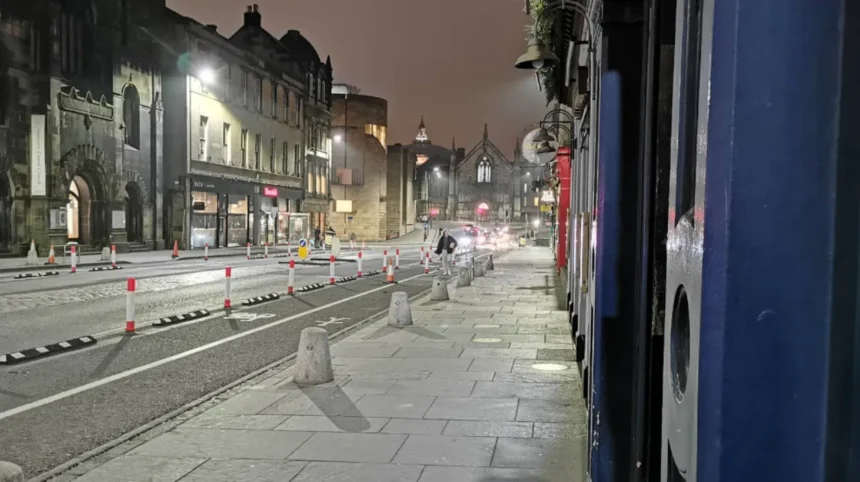
George IV Bridge is an elevated stone arch road bridge and structural street located in the central Old Town district of Edinburgh, Scotland. The multi-arched infrastructure project stands as a major thoroughfare that spans the deep urban valley of the Cowgate. The high-level street connects the northern section of the historic High Street on the Royal Mile directly to the southern university and museum quarters around Chambers Street. Measuring 300 metres in length, the elevated roadway is a prominent civil engineering asset that supports active city transit, local commerce, and massive institutional libraries. The physical structure sits exactly at geographic coordinates 55.94733°N and 3.19171°W, serving as a functional urban divider and a historic monument within a UNESCO World Heritage site.
- Why Was the George IV Bridge Constructed in the 19th Century?
- Who Designed and Built This Historic Elevated Roadway?
- What Are the Key Architectural and Engineering Features of the Bridge?
- Which Prominent Public Institutions and Historic Buildings Line the Street?
- What Is the Modern Cultural and Practical Impact of George IV Bridge?
- FAQs About George IV Bridge in Edinburgh
- What exact year did construction finish on the George IV Bridge?
- Which historic valley does the George IV Bridge pass directly over?
- Who provided the funding to build the public library on the bridge?
- How did the accidental fire of August 2021 affect the bridge structures?
- Where can visitors find the famous Greyfriars Bobby statue on this street?
Why Was the George IV Bridge Constructed in the 19th Century?
The construction of George IV Bridge occurred to resolve severe geographic segregation and deep economic isolation between the medieval Old Town ridge and the rapidly growing residential suburbs expanding across the southern side of Edinburgh. During the early 19th century, transit across the steep, open ravine of the Cowgate required descending down narrow, dangerous pedestrian wynds and climbing up precipitous stone staircases. This geographic barrier restricted vehicle transport, heavy commercial delivery wagons, and smooth pedestrian movement across the city centre. The civic leadership required a level, linear artery that would link the northern road networks of the New Town and The Mound across the Old Town ridge to the southern districts without forcing traffic into the depths of the valley below.
The legal framework for this infrastructural transformation emerged through the formal passage of the Edinburgh Improvement Act of 1827. This legislative mandate authorized the Edinburgh Improvement Commissioners to condemn old buildings, secure public funding, and execute large-scale engineering interventions across the urban landscape. The project was officially designated as the South Approach, and commissioners allocated a strict estimated budget of £33,146 for its physical completion. The structural alignment required the complete demolition of ancient, densely packed medieval housing blocks, including the complete destruction of Old Bank Close, Libberton’s Wynd, and the famous historic meeting place known as John Dowie’s Tavern.
Who Designed and Built This Historic Elevated Roadway?
The lead architect chosen to design the massive elevated roadway was Thomas Hamilton, an eminent Scottish classical architect who lived from 1784 to 1858. Thomas Hamilton designed the overarching structural aesthetic to blend the monumentality of traditional Georgian urban planning with the rugged, dense character of the existing medieval stone tenements. The formal construction phase officially commenced on 15 August 1827 when civic leaders laid the ceremonial foundation stone with massive public celebration. The physical building process required intensive deep excavation, the erection of complex timber centering frameworks, and the placement of thousands of tonnes of heavy local stone.
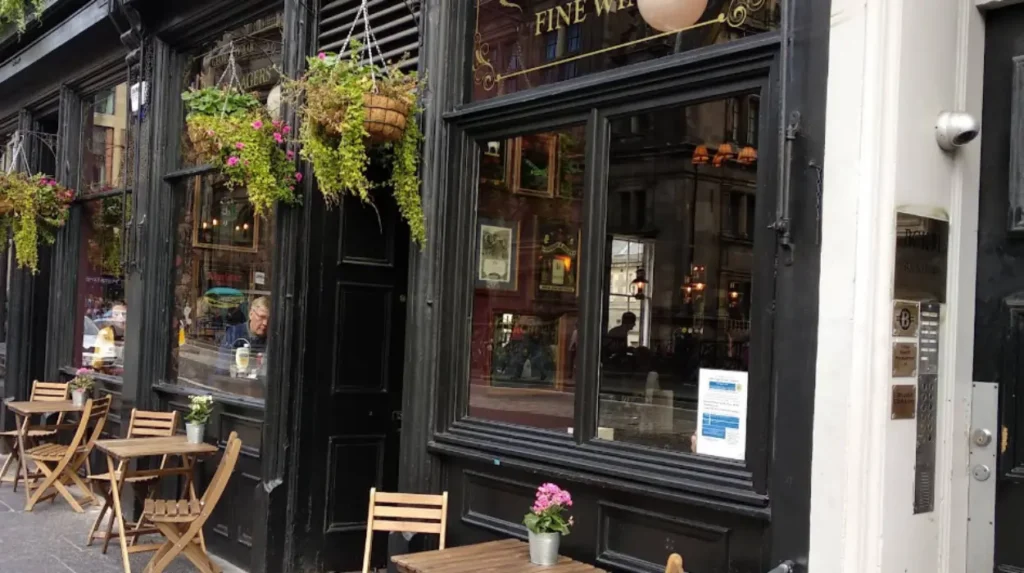
The civil engineering project faced immediate administrative disruptions and severe funding shortages that delayed its operational opening for nearly a decade. Thomas Hamilton resigned his official post as lead architect in 1834 due to persistent structural management conflicts with the Edinburgh Improvement Commissioners. The city quickly appointed architect George Smith to assume full supervisory oversight of the remaining construction work. Contractor George Lorimer managed the primary masonry work, completing the operational road link for a final total contractor cost of approximately £17,950. The bridge became partially passable by the summer of 1834 and achieved full, official engineering completion in 1836. Civic leaders named the structural thoroughfare in direct commemoration of King George IV to honor his historic 1822 royal visit to Scotland, which was organized by Sir Walter Scott.
What Are the Key Architectural and Engineering Features of the Bridge?
The George IV Bridge is a masterwork of nineteen-century civil engineering, featuring ten distinct ashlar masonry spans constructed from local blonde sandstone. The hidden architecture consists of nine semicircular groin-vaulted arches that remain largely concealed beneath adjacent commercial buildings, tenement basements, and modern street-level facades. The most visible engineering component is the massive, single semi-elliptical tunnel arch that spans directly over the open roadway of the Cowgate below. This central span provides exactly 36 feet of vertical headroom for lower-level traffic, rising 50 feet above the stone pavement of the valley floor to the top of the upper road deck.
The structural weight of the upper thoroughfare rests on massive, deeply anchored stone piers that drop straight through the lower urban layers of the city. The upper road deck maintains a flat, wide surface that completely masks the multi-arched bridge system operating underneath the wheels of passing vehicles. The exterior facades display polished ashlar stone blocks, deep stone cornices, and raised architectural dressings that conform to standard classical design principles. This heavy stone composition ensures absolute structural durability against the constant environmental weathering and heavy vibration caused by heavy modern urban transit.
Which Prominent Public Institutions and Historic Buildings Line the Street?
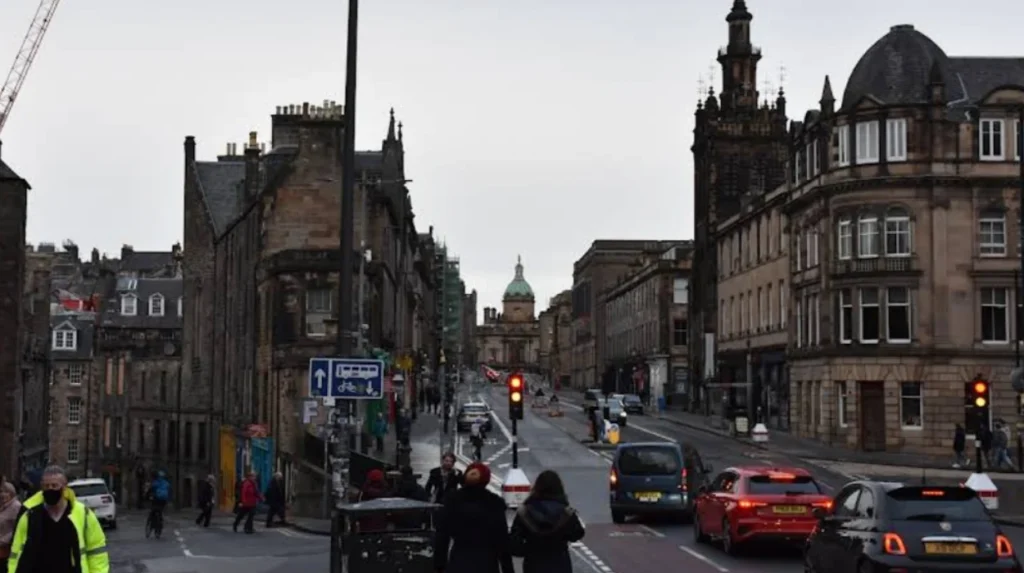
The western side of George IV Bridge is dominated by the imposing facade of the National Library of Scotland, which serves as the premier legal deposit library of the country. The iconic classical-modern structure was designed by architect Reginald Fairlie between 1934 and 1936, though World War II delayed full completion until 1958. The building features an exterior clad in cream-colored Blaxter ashlar sandstone and displays stylized allegorical figures sculpted in deep stone niches by Hew Lorimer. Structurally, the main library building consists of a steel frame encased in thick concrete, supporting two upper public floors that rest on top of seven extensive subterranean bookstack floors dropping far below the bridge deck level.
Directly opposite the National Library of Scotland on the eastern side of the street stands the historic Edinburgh Central Library building. This public learning institution was designed by the 19th-century Scottish architect George Washington Browne and officially opened to the public in 1890. The architecture is executed in an ornate French Renaissance style, featuring the prominent carved motto Let There Be Light across its main stone facade. The construction of this library was fully funded by a massive financial donation from the Scottish-born industrialist and philanthropist Andrew Carnegie, who built it directly on the historical site of an ancient aristocratic mansion.
The streetscape includes several other distinct architectural milestones and historic places of worship that define the visual skyline of the Old Town. The Augustine United Church sits on the eastern side of the bridge, presenting a striking neo-Gothic facade and a prominent multi-tiered tower built in the mid-19th century. At the far northern end where the road hits the Royal Mile stands the Lothian Chambers, a Category A listed classical structure that currently houses the official Consulate-General of France. Further down the street, an old historic place of worship formerly known as the Elim Pentecostal Church has been converted into a public venue known as the Frankenstein Pub.
What Is the Modern Cultural and Practical Impact of George IV Bridge?
George IV Bridge functions as an indispensable modern transport corridor that moves thousands of public buses, commercial vehicles, and pedestrians daily across the urban centre. The street contains a dense concentration of independent cafes, traditional Scottish pubs, and international restaurants that generate major economic activity. The street has a direct connection to international popular culture, as it contains local businesses like the famous Elephant House cafe, which is celebrated as an early writing location for the Harry Potter literary franchise. This cultural connection draws thousands of international tourists to the bridge walkways every year, making it a critical asset for the local tourism economy.
The structural safety and physical integrity of the historical infrastructure have faced major modern challenges, most notably during a catastrophic accidental fire on 24 August 2021. The fire originated in a commercial bakery on the bridge deck, quickly spreading through hidden structural cavities into several businesses located both on and below the bridge level. The incident required nine fire engines and two advanced ladder vehicles to control the flames, resulting in severe smoke and water damage to several historic properties along Candlemaker Row. During subsequent structural plaster restoration work inside the flooded basements, engineers uncovered a intact hidden historic entrance leading directly to Brown Square, a wealthy 1760s residential square that was partially buried during the 1827 bridge construction.
The southern terminus of George IV Bridge forms a vital pedestrian crossroads at the junction with Candlemaker Row and Chambers Street. This exact corner houses the iconic bronze statue of Greyfriars Bobby, a famous 19th-century Skye Terrier monument that honors canine loyalty. Directly across the intersection sits the massive modern complex of the National Museum of Scotland, which holds vast collections of national archaeology, science, and history. The road continues a short distance past this junction, passing the historic Bedlam Theatre building before splitting into the major arterial pathways of Bristo Place and Forrest Road.
FAQs About George IV Bridge in Edinburgh
What exact year did construction finish on the George IV Bridge?
The physical construction process of the bridge officially concluded in the year 1836. The public infrastructure project faced major financial constraints and management changes that extended the total building timeline to nine full years following the initial stone laying ceremony in August 1827.
Which historic valley does the George IV Bridge pass directly over?
The elevated stone bridge passes directly over the deep urban valley of the Cowgate. This geographic placement allows modern vehicular traffic on the top deck to travel smoothly between the High Street and the southern university quarter while lower-level traffic moves perpendicular along the valley floor.
Who provided the funding to build the public library on the bridge?
The Scottish-born industrialist and philanthropist Andrew Carnegie provided the complete financial funding required to build the Edinburgh Central Library on the eastern side of the street. The building opened its doors in 1890 and continues to operate as a completely free public reading and research institution.
How did the accidental fire of August 2021 affect the bridge structures?
The major accidental fire of August 2021 destroyed several commercial storefronts on the upper road deck and caused extensive water damage to historic properties sitting underneath the bridge arches. The subsequent architectural restoration work allowed structural engineers to discover forgotten stone doorways leading to the buried 18th-century foundations of Brown Square.
Where can visitors find the famous Greyfriars Bobby statue on this street?
The bronze monument of Greyfriars Bobby is located precisely at the southern terminus of the street where George IV Bridge joins Candlemaker Row. The iconic statue stands directly opposite the main entrance to the National Museum of Scotland and marks the transition point into the southern university district.